

Bella Wright was a twenty-one-year-old factory girl, the eldest daughter of a working-class family in the village of Little Stretton, near Leicester. She could often be seen riding her bicycle along the five-mile path that led between her family’s cottage and the factory where she worked.
But on the early evening of July 5th, Bella was riding to a different destination: to visit her uncle, George Measure, in nearby Gaulby. At some point along the way, the freewheel on her bike came loose. Luckily, a good Samaritan happened along the path, in the form of a friendly-looking fellow in his mid-thirties, astride a distinctive green bicycle. Bella asked if he had a wrench with which to tighten the wheel. He didn’t, but he offered to accompany her to her uncle’s house, just in case she needed help along the way. Bella readily agreed, glad to have the company.
Bella and the mystery man arrived at George Measure’s house safe and sound, and the good Samaritan waited patiently outside as Bella went into her uncle’s house and fetched a tool to fix her bike. George peered out at the young man suspiciously, not much liking the looks of him. Bella, seemingly not sharing her uncle’s reservations, got her bike repaired and rode off alongside the man on the green bicycle, at a little before nine o’clock.
Half an hour later, a farmer named Joseph Cowell was walking along the Via Devana road when he came across a toppled bicycle, with the body of a young woman lying not far away. Initially thinking that she might still be alive, Joseph summoned a doctor as well as police constable Alfred Hall.
The doctor, examining the body by candlelight, immediately realized that the woman was dead, and surmised that she must have been killed accidentally when her bicycle crashed. The girl did not look as though she had been the victim of violence, after all, and neither man could see any footprints in the area that might suggest another person had been present.
The constable was skeptical of this diagnosis, though, not least because he had noted a few smears of blood on top of a nearby gate, but he acquiesced to the doctor’s opinion for the time being. The remains were taken to a nearby church until further arrangements could be made.
The following morning, Constable Hall, still uncertain about the girl’s cause of death, returned to the church to inspect the body more thoroughly. After wiping off the corpse’s face, his worst suspicions were confirmed: there was a small entry wound in the young woman’s head.
Traveling back to the lane where the body had been discovered, the constable found even further confirmation of his theory when he recovered a .455 caliber bullet—which he had failed to see the night before—only a few feet away from where the body had lain. There was now no doubt that Bella Wright had been murdered.
The most obvious person of interest was the unknown man who George Measure had seen accompanying Bella on her ride along the path. Police distributed wanted posters far and wide that urged the public to be on the lookout for a dark-haired man in his mid-thirties who owned a green bicycle with oddly-shaped handlebars.
Despite the high profile of the case, however, it would be the following year before the identity of the man would be brought to light, and in many ways, his arrest would lead to far more questions than answers.
On February 23rd of 1919, a man named Enoch Whitehouse was maneuvering a coal boat on the River Soar in Leicester when his tow rope snagged something on the bottom. Upon pulling up the rope, Enoch discovered that it had become tangled in the frame of a green bicycle. Remembering the high-profile murder case from the previous summer, he immediately contacted the police.
Investigators dredged the river and recovered the rest of the disassembled bicycle. Though the bike’s brand name and serial numbers appeared to have been partially filed off, there was enough of an imprint left to link the number to the bicycle’s owner, a man named Ronald Light.
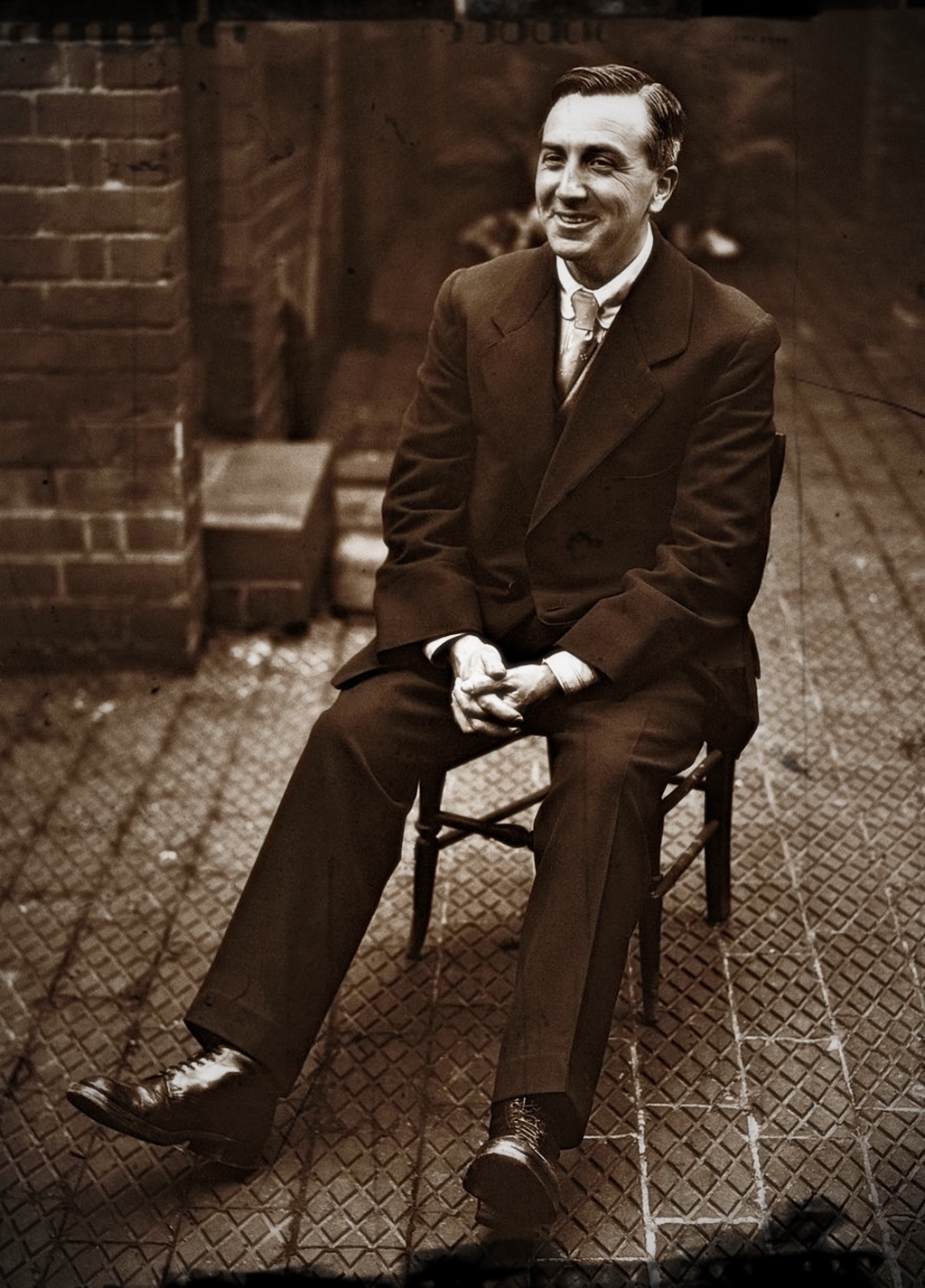
Ronald Light was arrested in Cheltenham on March 4th, 1920, after being linked to the green bicycle found in pieces at the bottom of the River Soar. It came to light after his arrest that a laborer named Samuel Holland had actually seen a man fitting Ronald Light’s description standing on the Upperton Road Bridge dismantling a bicycle and tossing the parts into the water. This had allegedly taken place mere days before the bike became wrapped up in the coal boat’s tow rope in February of 1919.
An even more damning piece of evidence surfaced a little more than two weeks later, on March 19th: a dozen .455 caliber bullets that matched the one found at Bella Wright’s murder scene, and an Army-issued pistol holster were dredged from a canal near where the bicycle was found.
When Ronald Light stood trial for the murder of Bella Wright, he freely admitted that the holster, the bullets, and the bicycle belonged to him, and that he had tried to dispose of the evidence by tossing all of it into the river after having kept it all hidden for many months in a cupboard at his home.
However, he claimed that he had only done this because he feared that he would be implicated in a murder he did not commit, and he stated that he had not wished to upset his mother by becoming involved in the crime. On the stand, he calmly denied having killed Bella, and likewise denied having known her prior to meeting her on the lane where she met her death.
Other witnesses contradicted this assertion, speculating that Ronald, in fact, was allegedly in love with Bella and had been pursuing her despite her lack of interest in him. It also emerged at the trial that Ronald had something of a checkered past, having been accused of sexual assault toward underage girls on several occasions. He had also been fired from a handful of jobs due to his tendency toward pyromania, and had even been expelled from the army at one point, though he later rejoined and served as a gunner in the Honourable Artillery Company.
Though it seemed as though Ronald was the obvious culprit, some reasonable doubt about his guilt was introduced at the trial. A ballistics expert, for example, testified that the bullet found at the scene could have just as easily come from a rifle as a pistol, and further opined that the almost imperceptible wound discovered on Bella Wright’s head suggested that the fatal shot had come from rather far away. The defense wove a somewhat believable scenario that Bella had been accidentally shot by a passing hunter in Ronald’s presence, and that Ronald had fled the scene, fearing that he would be blamed for her death.
The jury evidently found this sequence of events plausible enough that they acquitted Ronald Light. Also working in his favor was the fact that he seemed serene, composed, and articulate throughout the course of the trial. Later investigators into the case theorized that social class might have also been an issue, as Bella Wright was an illiterate factory worker and Ronald Light a well-spoken military veteran, despite his questionable history.
Whatever the truth of the matter, Ronald Light walked free and spent the remainder of his life keeping an excessively low profile. No other suspect was ever sought in the death of Bella Wright, and it was never definitively established whether her death had in fact been a murder or an unfortunate accident.
 Crime Immemorial