
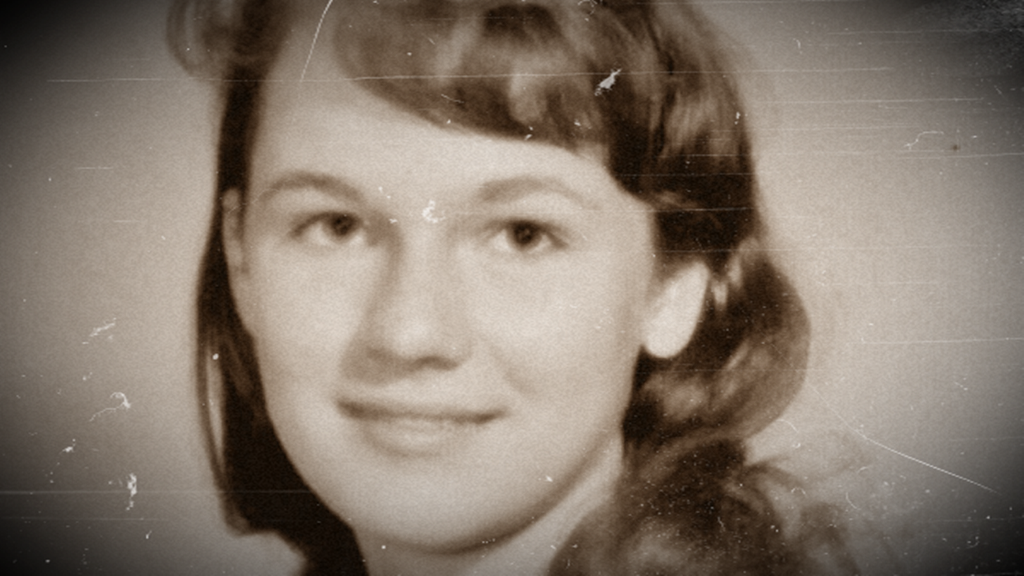
In November of 1969, a terrifyingly random attack on a Pennsylvania graduate student would leave a community reeling, and police scrambling to unlock a motive in a crime that would come to be known as “the murder in the stacks.”
Twenty-two-year-old Betsy Aardsma was originally from the Michigan town of Holland, and after graduating with a degree in art and English from the University of Michigan, she decided to pursue her graduate work at Pennsylvania State University so that she could be near her boyfriend, medical student David Wright. The pair was planning to get engaged on the upcoming Christmas.
Betsy and David had spent Thanksgiving together, and the next day—Friday, November 28th—Betsy had planned to work on a research paper at the enormous Pattee Library on the Penn State campus. At around four in the afternoon, she headed for the library, stopping first in the basement of the building to briefly speak with her English professor in his office, then going upstairs to study among the dim, looming stacks.
Around half an hour later, several witnesses claimed they heard a woman scream and the sound of many books hitting the floor. Upon investigation, bystanders found Betsy Aardsma, collapsed in one of the aisles of shelves. At first, no one noticed any blood, not only because of the nature of Betsy’s wound, but also because she was wearing a red dress. Witnesses told the arriving paramedics that they thought the young woman had simply fainted.
It was only after Betsy had been taken to the on-campus clinic that a doctor noticed a single stab wound that had come from behind, penetrated her heart, and caused blood to fill her lungs. Betsy Aardsma was pronounced dead half an hour after the incident.
The murder caused an uproar on campus, and investigators were at a loss as to why someone would have walked into the library in the middle of the afternoon and stabbed this pleasant young woman to death.
Clues were difficult to come by, as the crime scene had been cleaned by a janitor before it was known that Betsy Aardsma was dead, thus erasing potential evidence. The murder weapon could never be located, though authorities theorized that the killer perhaps had military training, because of the deadly precision with which the stabbing had occurred.
The Pattee Library, additionally, was known as something of a deviant’s hangout at the time, as it was large and poorly lit, with many unseen nooks and crannies that were known to facilitate illicit sexual encounters and drug use. For a while, it was thought that perhaps Betsy Aardsma had inadvertently stumbled onto a scene she wasn’t supposed to see, and was killed to silence her.
Also not helping matters was the fact that over three-thousand people had passed through the library on the day of the slaying, and hardly anyone had noticed anything suspicious. One witness did come forward to report that they had seen a blond man walking away from the area where Betsy was found, and that this man had said, “Somebody better help that girl.” However, the witness description of the man was too vague to be of much use.
Persons of interest in the bizarre killing included a twenty-seven-year-old English professor named Robert Durgy, who had, perhaps coincidentally, also come to Penn State after previously holding a position as a teaching assistant at the University of Michigan, Betsy’s former school. Though he was eventually cleared of suspicion, he was killed in a car accident only three weeks after Betsy’s murder.
A student named Larry Maurer, who had taken Betsy on a casual coffee date not long before the slaying, was also questioned, but he did not resemble the suspect seen fleeing from the stacks, and besides that, one of the witnesses had been a friend of his, who surely would have recognized him had he been spotted running through the library.
Betsy’s boyfriend David Wright was thoroughly investigated as well, though numerous witnesses placed him at a study group in Hershey, Pennsylvania, a hundred miles away from Penn State, at the time of the murder.
Infamous serial killer Ted Bundy was also briefly considered a suspect, as he was known to have attended Temple University in Philadelphia in 1969, less than four hours away from the Penn State campus. Bundy was also known to frequent college libraries.
Perhaps the strangest aspect of the Betsy Aardsma murder, aside from the random and public manner in which it occurred, was the possible connection to the crimes of the so-called “Co-Ed Killer,” John Norman Collins (or Chapman). Collins was suspected of killing seven female college students in Ann Arbor, Michigan between the years of 1967 and 1969, though in the end he was only convicted of one killing, that of Karen Sue Beineman, in 1970.
Some researchers believe that it is too much of a coincidence that Collins allegedly murdered women in the area of Michigan where Betsy Aardsma was attending college, and speculate that it’s possible he might have followed her to Pennsylvania and murdered her there. Investigators in the case, however, have largely ruled him out as a possible suspect.
Other potential persons of interest were a forty-year-old sculptor named William Spencer, who taught a sculpting class at another local college and claimed that Betsy had agreed to pose nude for one of his classes, an assertion that her friends and family dismissed outright. Spencer allegedly announced that he had “killed that girl in the library” during a faculty Christmas function, but actually told police that he had been in the part of the library where the murder occurred and had seen the killer, who he said was wearing an overcoat. Investigators did not believe that he had had sufficient time to get to know Betsy Aardsma before the murder, however, as he had only just moved to town, and at any rate, his story about her posing nude for him was found to be dubious.
The inquiry stalled not long afterward, and over the years the case took on something of an urban legend aspect. This almost mythical vibe was given an enormous boost on November 28th, 1994, the twenty-fifth anniversary of the murder. In a scene that sounds like something straight out of a horror movie, someone left a candle burning in the library aisle where Betsy’s body was found, along with newspaper clippings about the crime, and a message reading, “R.I.P. Betsy Aardsma, born July 11, 1947, died November 28, 1969. I’m back.” A similar tableau was discovered in another part of the library in 1999, and while police believe both of the incidents were simply pranks, there is no denying the skin-crawling creepiness of the entire situation.
In more recent years, compelling speculation about yet another suspect has been put forth in two separate books by investigative journalists Derek Sherwood and David DeKok. Both of these authors looked into the cold case and contended that the most likely killer was a man named Richard Haefner, who at the time of the murder was a twenty-five-year-old geology student at Penn State. He had been friends with Betsy, but was a socially awkward individual who had a history of erratic, borderline stalking behavior and issues with controlling his anger. He was also suspected of stealing several mineral specimens from the geology lab.
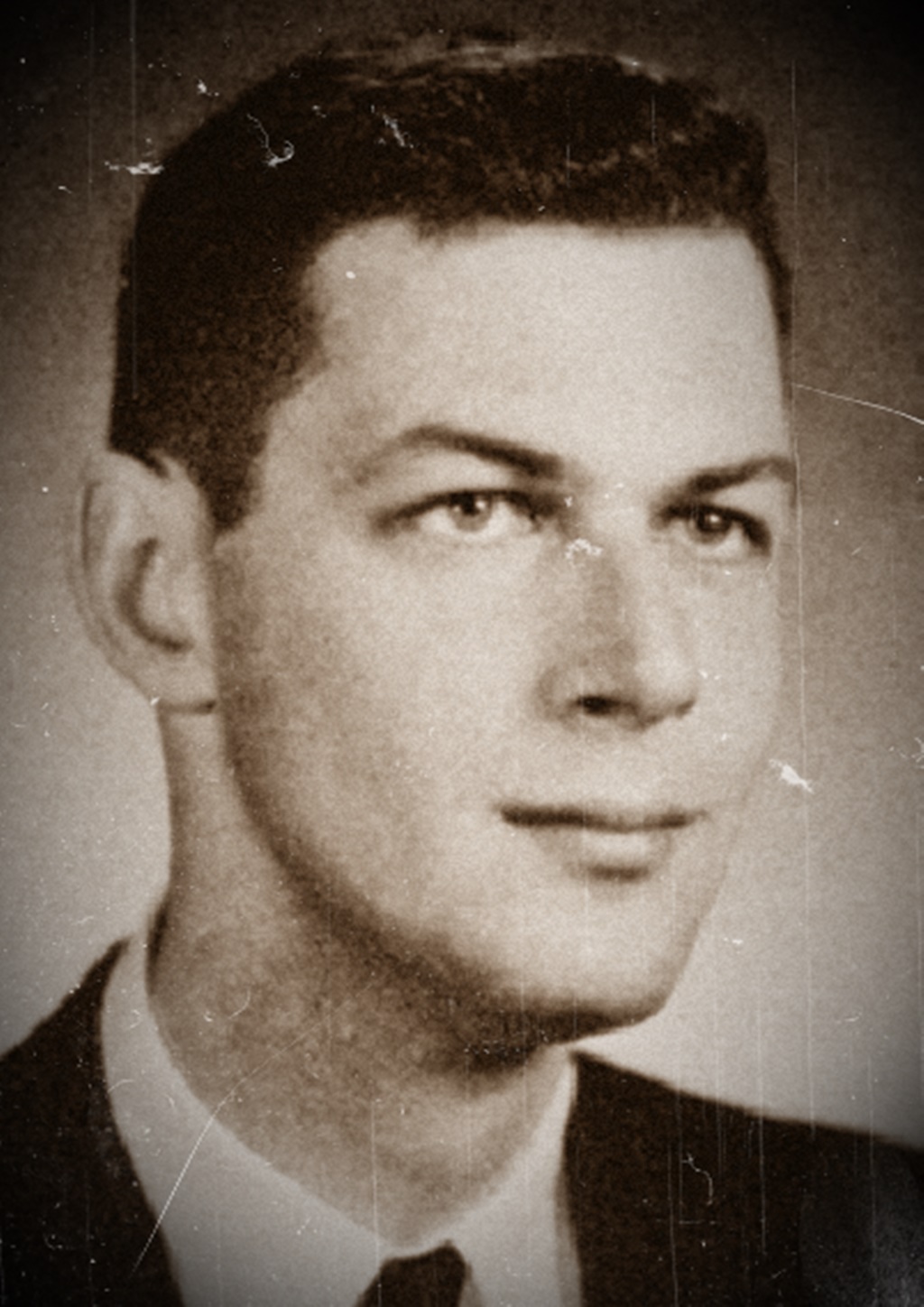
Betsy had reportedly ended her friendship with Haefner not long before she was killed, and her roommate had informed police that they needed to question him, which they did several times following the murder. It’s also notable that Haefner bears a close resemblance to witness descriptions of the man they saw fleeing the scene.
According to authors Derek Sherwood and David DeKok, Haefner also had a troubled trajectory following the 1969 slaying of Betsy Aardsma, having been arrested in 1975 for allegedly molesting two boys who worked in the rock shop owned by his family. His trial resulted in a hung jury, but a furious Haefner filed numerous lawsuits against his accusers in order to get records of the arrest expunged.
Not only that, but both his mother and his nephew reportedly heard Haefner claiming to have killed Betsy, and further knew of other molestation accusations against him dating back to 1967, which had apparently never been prosecuted. A friend of Haefner’s named Lauren Wright also later stated that Haefner had come to his house in a panic the evening of Betsy’s slaying, saying that a girl he dated had just been murdered; this series of events contradicted the account of his movements that Haefner had given to police.
In hindsight, it does seem as though Richard Haefner is the most likely suspect in the murder, but if he was the killer, he will never be punished for the crime, as he died in a hospital bathroom of a ruptured aorta in March of 2002.
The case, therefore, remains open.
 Crime Immemorial