
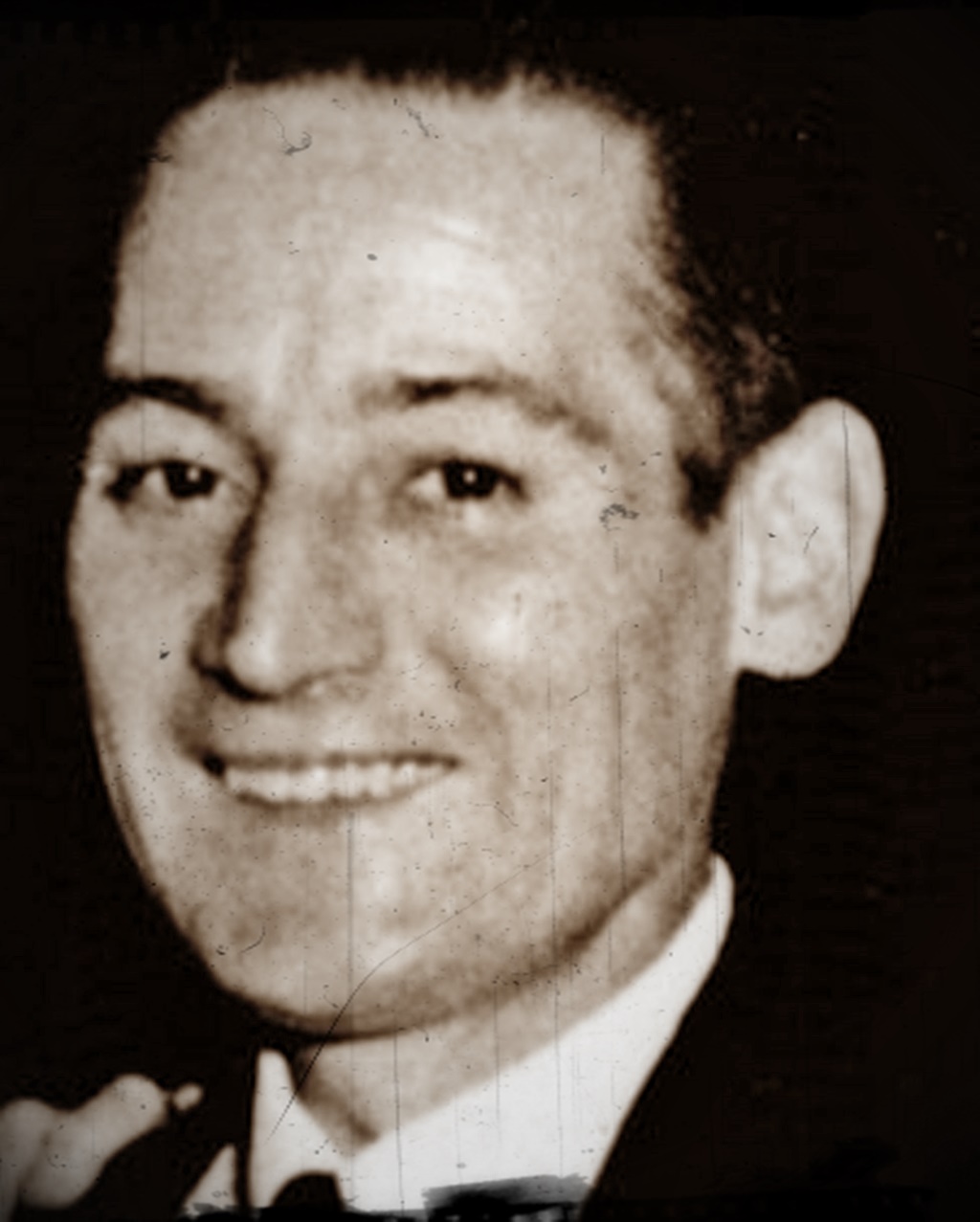
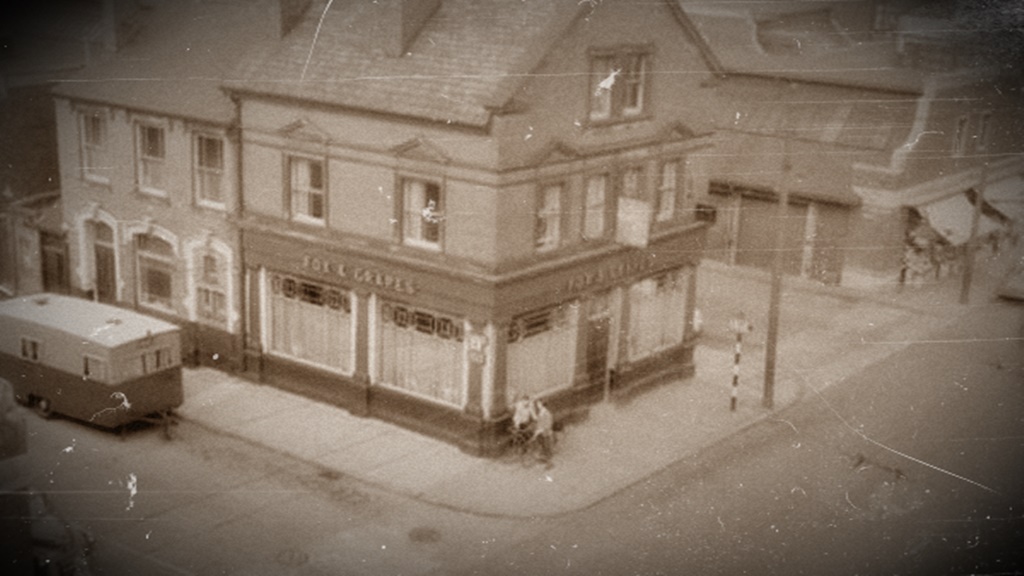
As autumn descended in England, on the evening of September 7th, 1963, forty-three-year-old pub landlord George Wilson was sitting in his establishment—which was also his residence—with his wife Betty, their two children, their dog Blackie, and three other individuals: pub regular Mr. Smith, and a couple named Arthur and Irene Ash, who were learning how to run a pub from the Wilsons. George and Betty’s pub in Nottingham was officially known as the Fox and Grapes, though locals always called it the Pretty Windows, because of its distinctive and elaborate stained glass.
The group had been sharing a round of drinks after the ten-thirty closing, and eventually Arthur and Irene bid everyone else a good night and headed toward home. A little after midnight, George Wilson roused himself from the convivial table and went to take the dog for a walk, as he usually did at this time of night.
About three quarters of an hour later, Betty heard Blackie barking outside, and exited through the side door to see what the matter was. There, lying on the pavement, was George, still alive, but groaning and covered in blood. Scattered around his prone form was his key ring, and several broken slate tiles that appeared to have been dislodged from the pub’s roof.
Betty and Mr. Smith immediately called an ambulance, but by the time it arrived, George had bled to death from the fourteen stab wounds in his head, back, face, and neck. Though police officers on the scene assumed that George had been the victim of a particularly savage robbery, the fact that his wallet still contained a substantial amount of cash soon put paid to that hypothesis.
Investigators put out a call for witnesses to the brutal attack, though most of the reported tips were likely nothing but drunken Saturday night shenanigans. One incident that seemed significant, though, came from a security guard who had been driving near the Pretty Windows pub at around twelve-fifty a.m. when he had nearly hit a man who was running down the street. This man, the witness stated, had been wearing a light-colored raincoat and a fedora, and had been carrying what looked like a chisel in one hand as he ran.
As promising as the lead seemed, the so-called “running man” was never identified. There were a few mysterious events that took place around the area that could have had some connection to the crime, however.
Firstly, at least three other pub landlords in Nottingham reported having received threatening phone calls at around the time of George Wilson’s murder. George himself had received such a threat approximately eight weeks before he was killed, and only a few days afterward, a man named Harold Dawson, the landlord at the Sawyer’s Arms, told police that an individual with a “refined” voice had phoned him and told him he was next.
Though none of the other threatened pub landlords were killed, investigators speculated that the calls might have been part of a poorly-planned protection racket by a local criminal syndicate, especially since all the pubs involved were owned by a single organization called Home Brewery Company Limited.
Another possibility was that George Wilson’s murder had actually been an attempted robbery, but that the panicked perpetrator had been frightened off by the dog, or by Betty opening the side door.
Supporting this theory was the fact that only two days before the slaying, a man named James Betteridge was arrested on the roof of another pub in Nottingham, as he was clearly attempting to break in. He was carrying a knife, wore a belt with a sheath for the blade, and had a scarf covering most of his face.
Though Betteridge was still in police custody when George Wilson was killed and therefore couldn’t have been responsible for the murder, it remained plausible that he was one of a gang of robbers who entered their target establishments from the roof level. This scenario would also explain the shattered roof tiles found around George Wilson’s body.
Nine days after the murder, two young boys who had been playing in Polser Brook found what appeared to be the murder weapon: a Bowie knife with a bloodstained blade, encased in a sheath. Forensic testing of the blood found it to be the same type as that of George Wilson, and fibers discovered on the knife and inside the sheath matched the clothing that George had been wearing when he was murdered.
Authorities photographed the knife and placed flyers bearing its image all over Nottingham, and though there were numerous further tips and even a handful of false confessions, none of them was to pan out.
The murder of George Wilson at the Fox and Grapes, otherwise known as the Pretty Windows, eventually went fallow, and though the case was reopened in 2013, no new information has been forthcoming.
 Crime Immemorial