

The town of Montverde, less than forty miles from downtown Orlando in central Florida, was home to less than four-hundred residents in 1980, and was bordered by Lake Apopka on one side and vast stretches of scenic orange groves on the other. It was also the kind of place where everyone knew their neighbors, and no one locked their doors at night. This small-town utopia, however, would be irrevocably scarred in the spring of that fateful year.
Georgia Jane Crews was a pretty, blonde twelve-year-old who was active in her local Methodist church, enjoyed sewing her own clothes, and was a big fan of country music legend Kenny Rogers. In fact, on the late afternoon of April 8th, 1980, Georgia was planning to go to her best friend’s house to watch her idol in the TV movie The Gambler, and thought she might also drop into the Stop & Go convenience store along the way to pick up a few snacks.
Earlier that afternoon, her parents Linda and Mike, who were commercial fishermen, had gone to nearby Lake Florence to lay out their catfish lines. They had taken their fifteen-year-old son Charles along with them, but sixteen-year-old Tony had stayed back at the Crews’ Highland Avenue home with his little sister Georgia. At around five-thirty p.m., Tony and a friend were listening to records in the house when Georgia told them she was heading out. The girl was accompanied by her faithful and much beloved bulldog, Tiger.
More than an hour went by. The friend that Georgia was supposed to be visiting claimed she never turned up. Tony Crews began to worry, and discovered that his sister hadn’t been seen at the convenience store either. When the rest of the Crews family returned from their work, everyone began scouring the neighborhood for the missing girl, but ominously, all they found was Tiger, who sat resolutely at a crossroads near the Crews home and refused to budge. There was also a trail of child-size footprints that meandered partway up an adjacent dirt road before stopping abruptly.
The tiny, close-knit community was sent into a panic, as not only had a sweet, innocent young girl completely vanished, but no one in town had seen a single suspicious thing. Had a stranger been responsible for taking Georgia, they reasoned, then surely this individual would have stood out, been noticed; this did not seem to be this case. This led many residents to the uncomfortable conclusion that the kidnapper may have been one of their own. Over the subsequent days, more than half of Montverde’s population rallied all of their attention and resources into searching for Georgia.
On April 10th, two days after the child’s disappearance, the phone rang at the Crews household. A male voice on the other end of the line said flatly, “Hello…you know that girl that you’re looking for…yeah, the twelve-year-old…yeah, she’s dead.” Both Georgia’s grandmother and the wife of the town marshal received similar phone calls, but none of them was able to be traced.
Despite these horrifying messages, the Crews family was still holding out some hope that Georgia would be found alive. But less than a week later, their hopes would be cruelly dashed.
On April 16th, an unnamed family was taking a popular shortcut from their apartment complex to the back of a K-Mart store in Casselberry, approximately twenty-five miles away from where Georgia had gone missing. Upon noticing a foul odor, the family followed their noses and soon came across a set of woefully decomposed remains, lying face up in a patch of bushes.
The victim was clad in jeans and a tank top and wore no shoes: a perfect description of Georgia’s outfit on the night she vanished. A comparison of x-rays—which revealed a distinctive bone spur that Georgia had suffered from—confirmed the identification, though the Crews family was spared the agony of seeing the body, as it was no longer recognizable as Georgia. Subsequent checks of dental records and a much later DNA comparison left no doubt of the dead girl’s identity.
An autopsy determined that Georgia had not been sexually assaulted, and that the cause of her death was a single stab wound in her lower back. There was no other evidence at the scene that could point to the killer, though investigators were fairly certain that he had indeed been a local, as the townsfolk feared. The fact that Georgia’s footprints in the road had simply stopped without signs of struggle near her home was a good indication that someone had come along and picked her up in a vehicle, and this someone was perhaps a person she knew and had no reason to fear.
It would be nearly five months before any new developments in the case emerged, and even then, the outcome would remain frustratingly murky.
In September of 1980, an inmate at an Iowa prison by the name of Albert Lara, serving time for the May 1980 murder of fifteen-year-old Jill Annette Peters, confessed to Lake County Sheriff Malcolm McCall that he was also guilty of killing Georgia Crews. Detectives eagerly took his statement, which read, in part, “…I drove down a couple miles or so and pulled over where a bunch of trees were and kind of hid my car and…threw her in the back of the…trunk or whatever. Then I drove on, found some trees, sat there and drank some beer, thought a while, and then I took her out of the trunk and put her in the back seat. I guess I commenced to rape her or something. She started struggling. She got away. I grabbed her, and at the time, my right hand found an object, an ice pick or a screwdriver or something, and I stabbed her on her lower back…”
A deeper delve into Lara’s movements at the time Georgia was slain seemed to suggest that he was in central Florida at the time, but that was the only convincing piece of circumstantial evidence that could be confirmed pertaining to Lara’s guilt. Throwing doubt upon the whole sad affair was the fact that Lara’s statement contradicted certain details of the murder scene, and the further knowledge that Lara had a troubling history of confessing to various violent crimes around the country that there was no way he could have perpetrated. Indeed, in the particular case of Georgia Crews, investigators suspected that Lara was simply copping to her murder so that he would be moved from his decrepit Iowa prison cell to what he hoped would be slightly more agreeable accommodations in Florida.
Given these uncertainties, Lara was dismissed as a suspect later in 1980, and was likewise cleared after a 1994 reexamination of the case. Opinion is divided on whether Lara remains the most likely suspect, but so far, his guilt has never been able to be conclusively proven.
The investigation stood fallow until 2013, when a new push to solve the cold case uncovered a clue that had been dismissed or unnoticed the first time around. In the files, detectives came upon a photograph of a cross necklace that had been found either on or near Georgia’s body at the site where she had been dumped. The Crews family insisted that this necklace did not belong to Georgia; she did indeed wear a cross, they stated, but it was a small gold one that had been a gift from her grandmother. The particular cross found with the girls’ remains was a larger pendant made of silver, and appeared to have been hand crafted out of machine or motorcycle parts.
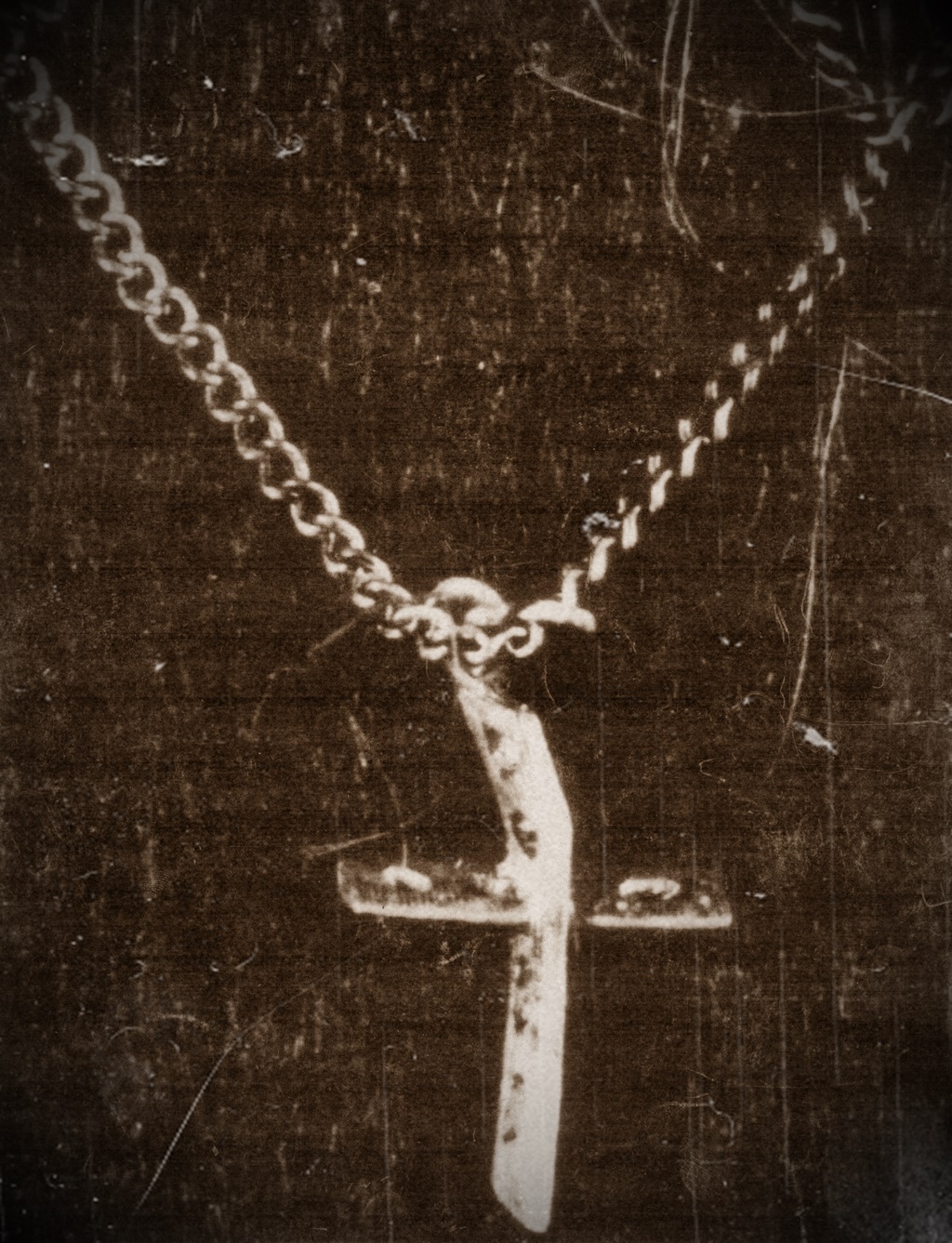
Authorities released photos of the odd piece of jewelry to the public in the hopes of stirring up fresh leads, but as of this writing, no further progress on the murder of Georgia Crews has been made.
 Crime Immemorial