
Early 1968 would see the first in a series of three related murders committed by an as-yet-unidentified serial killer. In February of that year, in the working-class East End of Glasgow, Scotland, a twenty-five-year-old nurse named Patricia Docker left her four-year-old child in the care of a baby-sitter and went out on the town. She had recently separated from her husband Alex, was temporarily staying with her parents, and had started to get into the habit of going out dancing in the evenings at one of the city’s many popular night spots.
Patricia had told her parents that she was going to the more upscale club known as the Majestic Ballroom, but in reality, she ended up at the considerably more down-market Barrowlands Ballroom. It was subsequently speculated that Patricia had not wanted her parents to worry about her going to a club with such a seedy reputation, and so had lied about her destination. Alternately, she may have gone to the nearby Majestic first before heading to the Barrowlands after the Majestic closed its doors at ten-thirty p.m.
However she arrived at the ill-famed nightclub, though, it was presumably the place where she met her killer.
The following morning, February 23rd, 1968, sixty-seven-year-old cabinet maker Maurice Goodman was cutting through a back lane on his way to work when he stumbled across the naked, dead body of Patricia Docker. She had clearly been severely beaten and raped, and had been strangled with her own stockings. Her remains were discovered less than one-hundred yards from her parents’ home.
Her clothing was never found, save for a single shoe which remained on her foot. A sanitary napkin was found near the body, and the fact that Patricia Docker had been menstruating at the time of her murder would prove a somewhat significant detail later on. The contents of her purse had been dumped and scattered around the remains. A subsequent search of the nearby River Cart did turn up a bracelet belonging to Patricia, as well as her empty handbag, though these items provided no clue as to what had transpired before the slaying.
The ensuing investigation by the Glasgow police was initially hamstrung by the fact that they believed she had spent the entire evening at the Majestic Ballroom, and focused their attention there. It didn’t help that a male witness, evidently erroneously, claimed he had danced with her at the Majestic on the night of her death. By the time authorities determined that she had actually been at the Barrowlands, three days had passed and crucial information had likely been lost.
A canvass of the neighborhood around where the body had been discovered was likewise of limited usefulness. A few people reported seeing a woman matching Patricia’s description getting into a car, and one woman claimed she had heard a female voice yelling, “Leave me alone” at some time during the night, but other than that, no one seemed to have seen or heard anything that would aid in the inquiry.
Once it was established that Patricia had ended her night at the Barrowlands, several people came forward and stated that she had been dancing with a few different men that evening, one of whom had red hair, but this vague description produced no leads. Police briefly considered that Patricia had been murdered by her estranged husband, but he was provably in another part of the country at the time of the slaying, and was quickly dismissed as a suspect.
Though the authorities didn’t know it at the time, the murder of Patricia Docker would apparently be only the first in a series of killings centered around the Barrowlands Ballroom and attributed to a serial killer who would later become known only as Bible John. Whoever this mysterious individual was, however, he would not kill again until more than a year later.
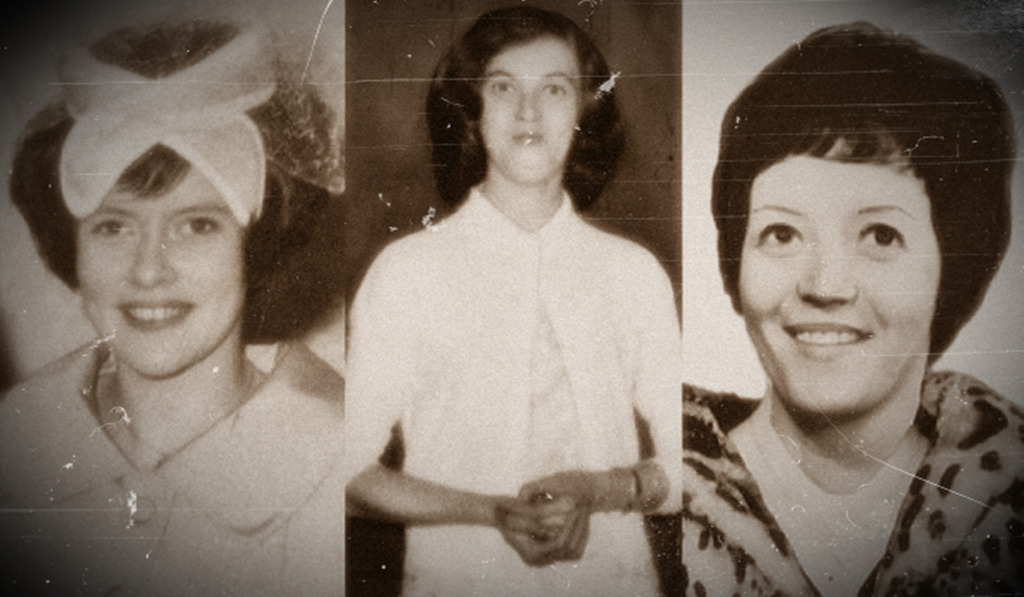
On Friday, August 15th, thirty-two-year-old Jemima McDonald was getting ready for a night out in Glasgow. Like Patricia Docker, who had been murdered the previous February, Jemima was a mother, and had recently separated from her husband. Also like Patricia, Jemima was planning to dance the night away at the Barrowlands Ballroom, the place where she would last be seen alive.
At around midnight, according to witnesses, Jemima left the Barrowlands in the company of a tall, thin, well-dressed man with red hair. She subsequently vanished.
The following day, Jemima’s sister Margaret became concerned when rumors started circulating that a group of neighborhood children had been playing in an abandoned building where they said they saw a body. At first believing that it was probably just kids making up stories, Margaret nonetheless grew more and more troubled with each passing day that her sister Jemima failed to turn up. At last, on Monday, Margaret went to the building herself to have a look.
Inside, Margaret’s worst fears were realized: Jemima McDonald was dead. She had been raped, beaten, and strangled with her own stockings, though unlike Patricia Docker, she was found fully clothed. She was also menstruating, as Patricia Docker had been, a bizarre detail that seemed to suggest a sort of fetish on the part of the unidentified killer.
The contents of Jemima’s handbag were found scattered nearby, though the purse itself was missing, another similarity to the earlier crime scene.
Though investigators went house to house interviewing townsfolk, they received little useful information. The witness description of the man that Jemima had left the Barrowlands with allowed a police artist to construct a sketch of him, which was posted all over the Glasgow nightclubs. Despite this, no new leads emerged.
In fact, it would be Halloween night before a third murder would occur that not only codified the serial killer under the Bible John moniker, but provided some physical evidence that authorities hope might one day put the case to bed once and for all.
It was October 31st of 1969, and twenty-nine-year-old Helen Puttock had gone dancing with her sister Jean McLachlan at the by-now-infamous Barrowlands Ballroom. Although crowds at the club had thinned significantly due to the establishment’s association with two previous murders, the sisters evidently harbored few fears about the place, and even met two men there that night, both of whom said they were named John.
According to Jean’s later statement, one of the men said that he was from the Castlemilk district of Glasgow, while the other remained silent on his origins. The four of them apparently had a few drinks and dances over the course of the next hour, and then left the club as a group.
John from Castlemilk parted from their company shortly after leaving the bar, and went off to catch a bus home. Helen, Jean, and the other John hailed a cab, which was first directed to the home of Jean McLachlan in Knightswood.
During the twenty-minute taxi ride, Jean spoke to the man from the club, whose last name she said sounded like Templeton or Sempleson. She claimed he was in his late twenties, tall and slim, with light reddish hair, a description that matched the man who had been seen leaving the Barrowlands with Jemima McDonald the previous August. She also said that his two front teeth overlapped one another.
Jean further stated that the man was very polite and articulate, though somewhat haughty, and quoted from the Bible quite a bit. He allegedly told them that nightclubs were “dens of iniquity,” called the women adulterers, and referred to the Biblical story of the infant Moses.
Jean McLachlan exited the cab when it stopped in front of her home, leaving Helen Puttock and “John Templeton” in the car alone. The taxi then drove off, and Jean would never see her sister alive again.
The next morning, the body of Helen Puttock was discovered in the back garden of a flat on Earl Street, only a hundred yards away from her own home. Like the previous two victims of Bible John, she had been raped and strangled with her own stockings, and the contents of her handbag had been scattered near the remains, though the purse itself was never found. Again, Helen had been menstruating, and the murderer had tucked a sanitary napkin under her arm. Most disturbingly, the assailant had left a deep bite mark on his victim’s leg.
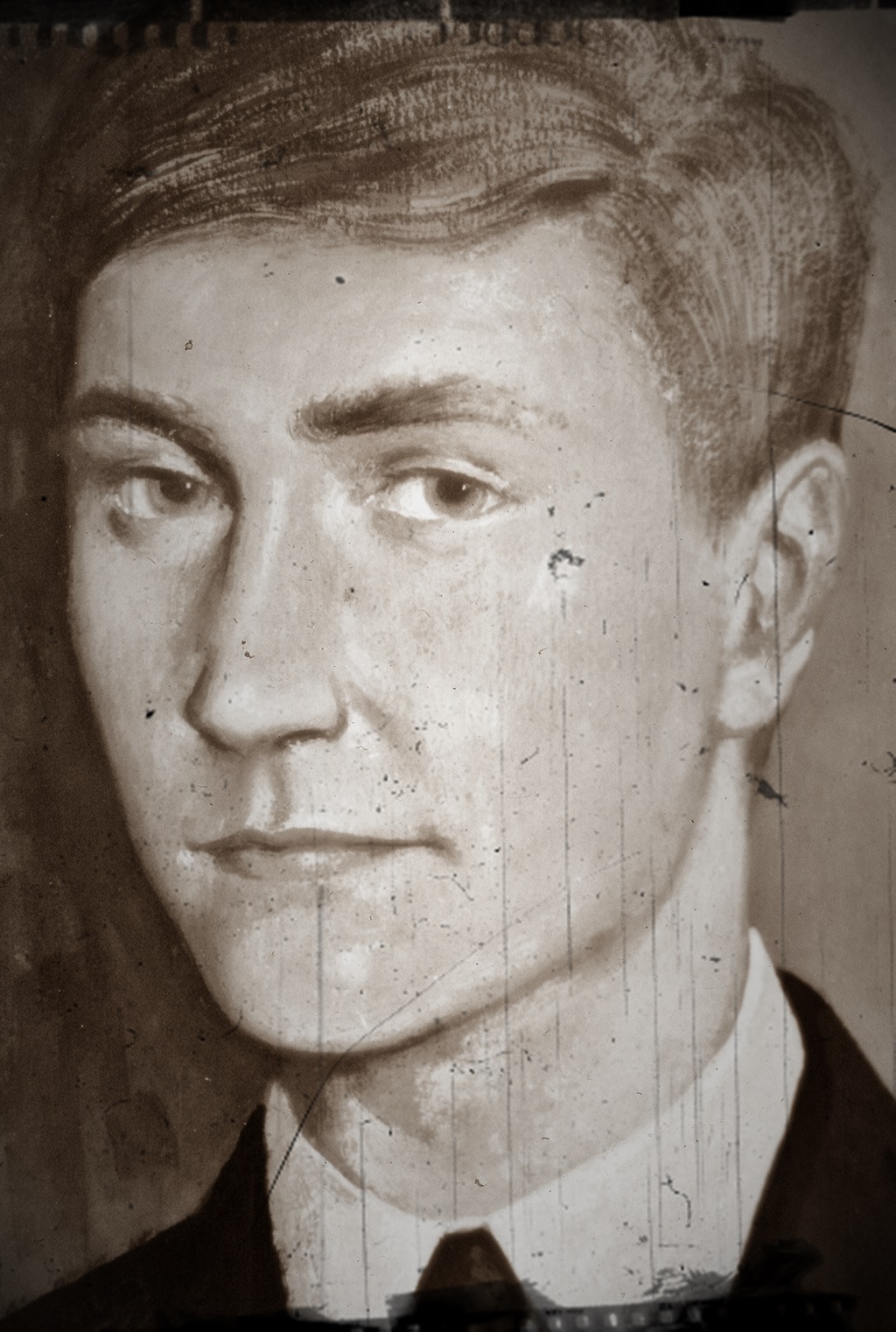
Since Helen’s sister Jean had such a long interaction with the man presumed to be the killer, she was able to provide a great deal of insight, and her intricate description of the man led to an artist producing a detailed painting of the suspect. Further contributing to the case was a witness who claimed to have seen a man matching “John Templeton’s” description getting off a bus at one-thirty a.m. on the morning of the murder and boarding a ferry across the River Clyde. This witness claimed that the man was well-dressed, but had scratches on his face and disordered clothing, as if he had been involved in a scuffle.
But even in light of all the new information and the resolute efforts of the Scottish authorities, including several undercover operations centered on the Barrowlands Ballroom, no sign of the mysterious Bible John could be found, and whoever he was, it seemed that Helen Puttock was his last victim. Investigators assumed that the killer must have moved away, died, or been imprisoned at some point after the October 31st murder.
In later years, a handful of suspects would emerge, though as of this writing, none have been definitively identified as Bible John. Perhaps the most infamous and compelling of these is the previously mentioned rapist and serial killer Peter Tobin, who was convicted of several sexual assaults and at least three murders, and suspected of many more, spanning the years from 1991 to 2006.
Peter Tobin, in fact, was known to live in Glasgow in 1969, and apparently met his first wife at the Barrowlands Ballroom that year, after which he moved away from the city. All three of Tobin’s former wives reported that he raped and beat them, and also allege that he was driven into violent rages by women’s menstrual cycles.
In addition, Peter Tobin was a Catholic with very conservative views, and in his twenties very closely resembled the physical descriptions that Jean McLachlan, as well as other witnesses, gave of Bible John. Lastly, Peter Tobin was also known to use several aliases, one of which was “John Semple,” a rather close match to the name the suspect gave to Jean McLachlan.
Though Peter Tobin’s DNA was later compared to a sample recovered from Helen Puttock’s stockings, the results were inconclusive, and while several individuals have come forward in recent years, claiming that Tobin was indeed the man they saw lurking around the Barrowlands Ballroom in 1969 and acting suspiciously like the killer, it should be noted that Jean McLachlan was adamant that the man she knew as “John Templeton” was absolutely not Peter Tobin.
A similar ambiguous outcome plagued the comparison of the crime scene DNA sample with the profile of John Irvine McInnes, who had committed suicide in 1980 and was a cousin of one of the main suspects. McInnes’ body had been exhumed in 1996 in an effort to try to match the killer’s DNA to that of his relative, but again, this endeavor proved fruitless.
Helen Puttock’s husband George has gone on record as believing that notorious Yorkshire Ripper Peter Sutcliffe, convicted of thirteen murders that took place between the years of 1975 and 1980, should be investigated for the Bible John murders, but so far it does not appear that authorities have taken him up on the idea.
Moreover, there is not even a complete consensus over whether the three murders attributed to Bible John were even perpetrated by the same individual, though due to the similarity of the crimes, the majority of investigators believe they most likely were. There were also a number of women who came forward following the Bible John murders and claimed they had been raped by the same individual; one of these women, Hannah Martin, asserted that she became pregnant as a result, and gave birth to a daughter she named Isobel in 1970. As of this writing, it is unclear whether the daughter has provided DNA evidence to assist in apprehending the purported rapist and possible killer.
Valuable witness Jean McLachlan passed away in 2010, and as DNA evidence has so far proved too degraded to be of any use in the ongoing investigation, police are now skeptical that the puzzle of Bible John’s identity will ever be solved.
 Crime Immemorial
2 thoughts on “The Bible John Murders”