
St. Augustine, Florida was founded by the Spanish in 1565, and is considered the oldest continually occupied European settlement in the United States. Because of its age and colorful history involving bloody battles and pirate raids, the town is packed full of marvelous eerieness: the Huguenot cemetery, crumbling and atmospheric, like something out of a horror movie. The Old Jail, where countless inmates suffered unspeakable torments and died within the ancient walls. The Castillo de San Marcos, a sprawling Spanish fort complete with a cramped dungeon and working cannons lining the battlements.
And, of course, there are the ghost stories. The iconic St. Augustine Lighthouse, standing at the north end of Anastasia Island, boasts at least three spirits, including two little girls who drowned in the waters nearby, and a lighthouse keeper who fell to his death while painting the exterior of the structure. And the Spanish Military Hospital, allegedly built over a Timucuan Indian burial ground, has been the site of reports of an evil spirit wandering the halls of the building, and the disembodied cries of former patients reverberating down the wards.
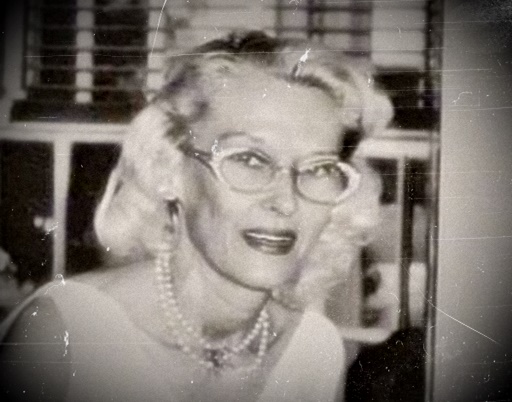
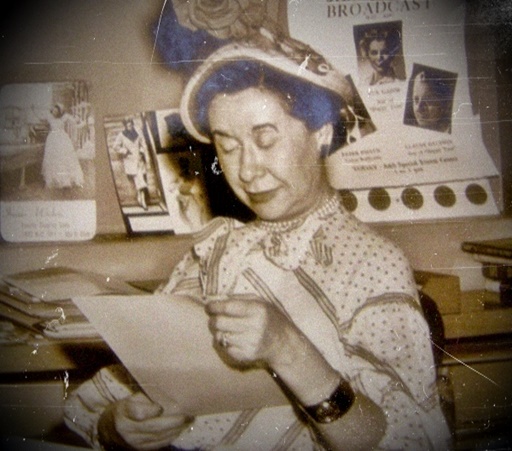
As intriguing as all the hauntings of St. Augustine are, though, there is one more prosaic case that fascinates me more than any ghost story ever could. Actually, I should say that there are two cases, as both of them, though perhaps not linked, were so similar that it’s definitely more frightening that they were probably not connected with one another, that there were two butchering lunatics running around targeting women of a certain age at the same time and place. The cases I’m referring to are the horrific 1974 murders of Athalia Ponsell Lindsley and Frances Bemis.
Even though I grew up only a few miles away from St. Augustine and went there countless times as a child and young adult, I had never heard of these two murders until I began working on the second volume of my true crime series, The Faceless Villain, which featured brief summaries of both these crimes. Part of that may have been the fact that the first slaying took place in 1974, only two years after I was born; the second murder happened about nine months later. I had read a lot of true crime growing up, it’s true, but in my younger years I suppose I stuck more to the “big ticket” serial killers and failed to take a deep dive into crimes that were happening in my own backyard, relatively speaking.
But the more I read about these two cases, the more fascinated I became, and not only because I was familiar with all of the locations and the prevailing culture in which the atrocities took place.
There’s a lot to unpack with these murders: the role of women in middle-to-upper-class Southern society and the way nonconventional women were sometimes looked at askance; the ability for men in power to get away with just about anything through their money and connections; and the way the media can demonize a victim and laud a likely perpetrator for the sake of not rocking the boat with the locals. A crime this savage, this brazen, should have been impossible to get away with, but as we will see, things don’t always go the way we think they should.
So let’s start by talking about the woman at the center of the first tragedy, the one that took place on January 23rd, 1974. Her name was Athalia Ponsell Lindsley.
She was, by all accounts, a stunningly beautiful woman, tall, slim, and graceful, with blonde hair and high cheekbones. She was also extremely intelligent, canny and shrewd, and not at all afraid of speaking her mind, no matter what the consequences. Some have called her abrasive, but this is a loaded term; it may just be that she said things out loud that some people would have preferred that she didn’t say.
She was born in Toledo, Ohio, and brought up by her wealthy family on the shores of the Isle of Pines, in the Caribbean. When Cuba wrested control of the island back from the U.S. in 1936, Athalia’s family moved to Jacksonville, Florida, and after Athalia and her sister Geraldine graduated from high school, the young women answered the beckoning call of New York City.
There, Athalia quickly ingratiated herself into the upper echelons of New York society. She got a great deal of work as a model, appearing in ads for Chevrolet, Listerine, and other big brands. She sang on Broadway, and was a regular on the popular television game show Winner Take All. She also dated some high-profile men, including Joseph Kennedy Jr.—who she was reportedly engaged to when he was killed in action in World War II—and her name was known to pop up in the newspaper’s society pages with some frequency.
Once she entered into her thirties and modeling work began to dry up, Athalia moved with her mother to a mansion in Jacksonville. Athalia cared for her aging mother, but also spent her time running for public office, writing a gardening book, inventing household gadgets, and being active in several political clubs in the area. She was definitely not a woman to rest on her laurels.
By the time the early 1970s came along, Athalia had moved a few miles south, to a large house on Marine Street in St. Augustine, Florida, and was working as a real estate agent. In late 1973, she married the city’s former mayor, James “Jinx” Lindsley, also a real estate agent, though the couple maintained separate residences, partly because Athalia’s house was still on the market and hadn’t had any offers in the ongoing mortgage slump of the early 1970s. In addition to this reason, Athalia’s mother was still alive, and had broken a hip, necessitating near constant care at the Marine Street house, which Athalia selflessly provided. Athalia also cared for several animals at the homestead, including seven dogs, a wounded blue jay named Clementine that she was nursing back to health, and reportedly, a goat. These animals became significant to the story further on down the line.
Athalia had also continued her interest in politics in her new city. In fact, after her mother’s death, she was a common fixture at county commission meetings, where she usually had quite a lot to say about how she thought the city should be run. Many of the locals disliked her for this outspokenness, and also because of the fact that she was an outsider; St. Augustine at that time was intensely insular, and even people who had lived there for a few generations were still not entirely accepted as part of the local community. There was also the fact of her supposedly “unconventional” marriage and living arrangements, and the fact that she had never shown any interest in having children, which was usually a source of gossip in certain circles back then.
Since Athalia seemingly had nothing good to say about how the town was handling its business, she was actually considering a run for the county commission herself. This may have been partly because she simply wanted to be involved in local politics, but another part of the reason was that she may have wanted to usurp the current commissioner, her next-door neighbor and hated rival, Alan Griffin Stanford Jr.
Stanford, as it happens, was also something of an outsider, though perhaps not looked at with quite as much suspicion, since he was at least from the south: Atlanta, Georgia, to be precise. He had moved to St. Augustine by the early 1970s with his wife and daughter. He got a job as the county manager of St. Johns County, which actually required a civil engineering degree, a degree that Stanford did not possess, though he fudged things on his resume a bit, and he was given the job with the understanding that he would finish the degree with a quickness. This lack of credentials was one of the things that would eventually end up causing strife between himself and Athalia Lindsley.
It seems that the feud between Athalia and Alan Stanford began with the dogs. Alan Stanford’s wife, Patti, as well as another of Athalia’s neighbors, Rosemary McCormick, complained that Athalia’s seven dogs were constantly barking, all through the day and night, and were causing an intense noise disturbance. There are a couple of reasons to discount some of the more egregious assertions the neighbors made; for example, the street that Athalia and the complainers lived on, while lined with expensive homes, was quite busy, with a hospital at one end. Traffic was constant, both of the vehicular and pedestrian types. It does seem strange to complain so vociferously about barking dogs when there was no shortage of other annoying noise as well, including frequent ambulance sirens.
Also, Athalia was at home pretty much twenty-four-seven while her invalid mother was alive, and one would think that if the barking dogs were bothering the neighbors, then they would really be bothering the two women who lived in the home with the animals. This does not appear to be the case, however.
There was also the interesting fact that, when the murder occurred and police were streaming all over the house and yard, none of the dogs uttered so much as a whimper, raising the question of how much noise they could have possibly been making beforehand, when there wasn’t nearly so much excitement going on in the vicinity.
Rosemary McCormick, in addition, also took issue with some trees that Athalia had cut back to her property line, and with some bamboo Athalia had planted that purportedly caused a visual obstruction. Just minor squabbles, or so it seemed, perhaps fueled by petty jealousy, boredom, and a dislike for a supposedly haughty newcomer to the city.
Despite the seemingly petty nature of the complaints, though, Athalia was fined for the noise disturbance charge, and would eventually end up kenneling four of the dogs. But apparently, she wasn’t about to let the neighbors’ complaints slide, and for whatever reason, she decided to take out her ire—not on the two women who had started the whole campaign in the first place—but on both women’s husbands, and particularly on Patti Stanford’s husband, Alan.
Author Elizabeth Randall, who wrote a book called Murder in St. Augustine about the case, speculates that the stress of caring for her dying mother and a possible illness of her own may have made Athalia more irritable and sensitive to slights than she would have been otherwise, but this is not known for certain.
Athalia started showing up to the county commission meetings with a list of grievances against Alan Stanford, including the somewhat damning accusation that he was signing documents as the county engineer when he legally didn’t have the credentials to do so, as he was considered only a county manager. These accusations were actually true—Athalia had done her homework, and had used her “intimidating” demeanor to get some dirt on her nemesis from other sources, like disgruntled former employees.
Athalia also often pointed out that Alan Stanford was making many times the salary of other individuals who had previously held the same position, even though he had only been on the job for two years, and that he had had numerous complaints about his “shoddy” job performance. And she wasn’t the only person who noticed; there were locals who agreed with her fiery condemnations of Stanford, though admittedly not many.
During the meetings, Alan Stanford kept his cool as Athalia laid into him, but it seemed that privately, he was seething about it. He was reported to have poured sugar into the gas tank of her car once when she was away on vacation. And allegedly, not long after one particularly argumentative meeting, he had pulled up in front of Athalia’s house as she was saying goodbye to some friends after a party, and he had told her that she was a “vicious, evil woman” and threatened to “fix” her. Athalia told several people about this threat, including her husband and a handful of friends, and she even mentioned it at one of the county commission meetings she attended, though it was only recorded in the private addendum, and not in the public minutes. Another witness also later recalled that Alan Stanford had told her that he was going to “send [Athalia] back where she came from.”
By the beginning of January, it became evident that all of Athalia’s complaining might actually be having some effect. She had written a letter to the Florida Department of Professional and Occupational Regulations on the matter of Stanford’s lack of credentials, and the state board deemed the matter serious enough to send two investigators down to St. Augustine to see what was what. They had set up a meeting with Athalia for January 24th. They arrived in town on January 23rd, 1974—the same day that Athalia would be brutally murdered.
It was a Wednesday, and as was their weekly habit, Athalia and her husband James had spent the day shopping in Jacksonville. They stopped for groceries on the way home, and then Athalia went to her own house on Marine Street to feed the dogs, look after Clementine, pick up the mail, and lock up the house for the night, while James ran a few errands, took care of a few things at their real estate office, then headed to their other house on Lew Boulevard, on the opposite side of the iconic Bridge of Lions. He got there a little before six p.m.
After a bit, he phoned Athalia’s house to ask her to bring a newspaper, since he’d forgotten to pick one up. She didn’t answer, but James was initially not alarmed; he simply thought she was out in the yard, giving the bird some exercise, as she usually did. About six-thirty, though, a friend called him and told him to get over to Athalia’s house right away, because there were police all over the place.
The crime scene was an absolute zoo. One of the first people to pass by Athalia’s house on Marine Street reported to authorities that a woman had fallen out of an upper floor window and wasn’t moving. But that wasn’t even close to what had happened.
When police arrived, they found Athalia Lindsley lying on her front steps. Blood was spattered up the outside wall of the house. Athalia herself had been, in one officer’s words, “butchered.” Her crushed head was only attached to her neck by one thin sinew, and the rest of her body was a mass of large, deep cuts. Several of her fingers had been severed. One of her arms hung on by a thread. Whoever had done this had struck quickly, with unbelievable viciousness. Athalia was probably dead from blood loss in less than a minute. Later forensic examination would determine that the weapon used had been a machete; there had been nine strikes from the large, sharp blade.
From the position of the body, and the fact that nothing in the house had been taken or disturbed, it was surmised that Athalia had most likely been attacked while she was standing on her front steps after having fetched the mail from the box. A bag of groceries sat upright and untouched on the kitchen floor. Athalia’s keys were still dangling from the lock of the back door. Her three remaining dogs, locked up in the garage, were unharmed, and apparently had not barked at all during the entire horrific occurrence. The blue jay, Clementine, was missing, however.
In spite of the fact that it was still only waning daylight on a bustling street, apparently no one had seen the crime occur…that is, except for eighteen-year-old Locke McCormick, who was home from college and staying with his mother Rosemary next door to Athalia’s home.
Locke told police he had been watching television when he heard a strange “clapping” sound from outside at around six-ten p.m., and went to the window to see what it was. He claimed that he saw a man “swinging an object,” as though he was hitting something, but he couldn’t quite tell what it was because he didn’t have an unobstructed view. He described the man as a middle-aged white male with close-cropped brown hair shot through with gray, wearing a white dress shirt and dark pants. Locke then said the man walked quickly off to the southwest. At this point, Locke went outside and saw Athalia’s dead body, immediately realizing what must have happened. He yelled for his mother to call the police and an ambulance.
Interestingly, Locke had first told his mother, upon seeing the man next door, “Mr. Stanford is hitting Mrs. Ponsell.” He informed the press of this fact as well, but later, he changed his story, saying that he wasn’t sure if it had been Stanford after all, that maybe the man he had seen was too broad-shouldered and thick-haired to have been Stanford. This change of heart seems to have taken place only a few days after the murder; reportedly, Alan Stanford’s daughter Patricia had asked Locke point-blank who it was he had seen, and Locke supposedly answered, “It could have been Mr. Lindsley, it could have been your daddy, it could have been my daddy.” This last part of the statement couldn’t have been true, though; Locke’s father was out of the country that day, enjoying a hunting trip in Mexico.
Notably, police did find a blood trail leading over the wall from Athalia’s house to the Stanford house; but in spite of this, it did seem that Athalia’s husband, James Lindsley, was the first suspect. This is, of course, fairly standard operating procedure when investigating a murder of this savagery, not to mention the fact that according to crime statistics, between seventy and ninety percent of female murder victims are killed by an intimate partner or other family member.
Even though James Lindsley was a St. Augustine native and a former mayor, he did have a few past traumas and skeletons of his own. His son had died in a motorcycle accident in 1966, and in 1971, James had been at the wheel when his car crashed, killing his wife Lillian, who was in the passenger seat. It’s possible he was drunk driving, especially since the wreck occurred on New Year’s Eve, but he hadn’t been breathalyzed at the scene of the accident.
James Lindsley offered to take a polygraph, administered by Special Agent Joe Townsend from the Tallahassee field office of the Florida Department of Law Enforcement. He easily passed it.
There was also the small fact that James had been seen by multiple, unrelated people going about his normal business at the time that his wife was being hacked to death: several witnesses spotted him, and some even spoke to him, at his real estate office, picking up milk at a local dairy on the opposite side of the bridge from Athalia’s house, at a drugstore buying cough drops, and getting out of his car at the house on Lew Boulevard at around six p.m.
Although some friends and family members of Athalia’s hinted that perhaps there had been some friction in the barely four-month-old marriage, with some pointing out that James supposedly didn’t even have a key to Athalia’s house on Marine Street and that Athalia had apparently said some unflattering things about him in private letters, it seemed extremely unlikely that James had murdered his wife, not only because he seemed genuinely grief-stricken by what had happened to her, but also because he had been seen by so many witnesses in places other than his wife’s house at the time of her death. In addition, his testimony concerning the timeline of the events of the day of the murder remained consistent in its details, suggesting that he was, in all likelihood, telling the truth.
Investigators also looked into several other potential persons of interest, including a number of people who owned or commonly worked with machetes. This was a more onerous task than might be imagined, since many individuals own machetes in Florida, to cut back palm fronds and the unchecked vine growth seen on many properties.
A man named Gary Powell, for example, was questioned in the murder of Athalia Lindsley. He was from Daytona Beach, but he had been picked up in Duval County, much farther north, on charges of robbery and drug possession. He initially pinged the homicide investigators’ radar because he was found to be carrying a meat cleaver in his car at the time of his arrest. He didn’t seem to have anything to do with killing Athalia in St. Augustine, though, as he didn’t know anyone in the city and as far as could be determined, had never spent any time there.
Another Daytona Beach man arrested for robbing a hotel, Thad Rutkowski, was also investigated after he was found to have a machete on his person when he was apprehended. But again, that line of inquiry went nowhere; Thad didn’t even have a car, making it unlikely that he had traveled the more than fifty miles between Daytona Beach and St. Augustine just to hack a woman to death, a woman he probably didn’t even know.
There was even a vague witness account of an Asian man with bushy hair seen in the area at around the time of the murder; this man was never found, and no one else save for one individual claimed to have seen him. There was also, allegedly, a middle-aged white male who was supposedly seen opening Athalia’s front gate at around four-thirty p.m. on the day she was killed. The only source of this sighting, though, was from a young woman named Adelle McLoughlin, whose father worked for Alan Stanford. She may very well have seen someone matching that description on Marine Street that day, but that didn’t really mean much; as previously mentioned, the street was busy, and there were cars and pedestrians going up and down it all the time.
After all was said and done, there was really only one prime suspect left standing: Alan Stanford Jr. Of course, it was no secret around town that Alan and Athalia had hated each other, and a number of people were aware that Stanford had supposedly threatened her. There was also the interesting timing of the murder: it happened on the same day that those two investigators from the State Board had arrived in St. Augustine to look into Stanford’s alleged malfeasance. It remains entirely possible—plausible, even—that Alan believed Athalia had gone too far, and was threatening his very livelihood and reputation. Fearing the loss of his job, he very well could have snapped.
In addition to having a pretty well-known motive, it was also intensely suspicious that Alan’s testimony regarding his movements on the fateful day were muddled, and details changed frequently. The statements of his wife and daughter, likewise, were confusing and varied from telling to telling. In one iteration, they said that Alan was already home when they arrived back from the nearby tennis courts, sometime between five and five-thirty p.m., and had already changed from his office attire into his “working around the house” clothes. In that version, Patti said she was serving dinner to the family when they all heard the screams of the neighbors who discovered Athalia’s slaughtered body.
In another version, Patti said that the family had finished eating dinner before the screams were heard. In yet another one, they weren’t in the kitchen at all, but standing in the hallway when the sounds alerted them. And later on in that very same interview, she claimed that she had actually been standing at the kitchen sink doing the dishes when the commotion started.
In most versions, though, she did specify that Alan had left to go back to work well before Athalia was murdered at around six p.m. She said that he came home later, after he supposedly went back to his office to pick up a book and a slide rule.
Alan’s wife Patti also changed her story about which door she ran out of—either front or back—when she heard the shouting from the neighbors. When asked about the discrepancies, Patti could only say that her household was too “chaotic,” with her husband and children going here and there, for her to remember things correctly. She couldn’t tell investigators what Alan was wearing when she saw him, how long it took to cook dinner, or what time the family ate dinner, though she did remember exactly what they had eaten: steak, green beans, black-eyed peas, lettuce and tomatoes.
Both Patti and Alan, though, did admit that Alan had downed at least two alcoholic drinks when he got home, and he consumed them fairly quickly, standing over the kitchen sink. The window over the sink would have afforded a view of the front of Athalia’s house, and it’s likely that Alan would have seen her coming home.
The idea has been put forward by a number of researchers into the case that Patti—and perhaps even the couple’s daughter Patricia—had actually seen Alan coming back to their house from Athalia’s, carrying the blood-soaked machete, and were attempting to cover for him. This would explain why their stories were inconsistent, and why Patti became extremely defensive during the interviews. She also made a few strange comments, such as referring to her testimony as “this story” and commenting on the amount of blood at the scene even though she was probably too far away to have seen exactly how much there was.
Daughter Patricia also made this suggestive statement, during one of her interviews: “I had seen what happened out the window, but I didn’t discuss it with anyone.” She said this in answer to a question about why, if she believed a maniac had just butchered her next door neighbor, she had not thought anything about taking her baby sister outside and playing with her on the swing, rather than perhaps doing what a normal person would have done; that is, hiding in their house with all the doors locked.
Alan himself said a few rather bizarre things as well, reportedly asking the investigator who told him that Athalia had been murdered, “Was she shot or was she cut?” Also, the timeline he came up with for his movements on the day of the murder didn’t really add up. He claimed he was supposedly at home when his wife and daughter got there at around five-fifteen, and he even got a friend of his, Commissioner Herbie Wiles, to testify that he had seen Alan driving home at five minutes past five. However, Alan had actually been at a meeting with the two state board investigators until five-fifteen, by their records. If he left work directly after this meeting, it would have taken him between eighteen and twenty-five minutes to get home, by which time his wife and daughter might have already been there.
In addition, he stated that when he got home, he immediately changed his clothes, had a couple of gin and tonics, and saw Athalia watering the plants in her front yard. This was impossible, because Athalia had only just left her husband’s real estate office at the time Alan claimed to have seen her. Moreover, the two state board investigators had also driven past Athalia’s house at around five-thirty, making sure they knew where it was in preparation for their meeting the next day, and both men told police that Athalia was not home at that time.
Alan said that he then left his own house at five-thirty and drove back to his office to retrieve something he had forgotten. This also seems unlikely; what is more likely is the scenario that Alan didn’t even arrive home at all until five-forty at the very earliest.
Alan Stanford did find a handful of witnesses who were willing to state that they saw Alan’s car parked at his office between five-thirty and six p.m. on the day of the murder, but some of the so-called witnesses he rustled up didn’t really do anything to help Alan’s case; for example, a man named Floyd Hardin testified that he saw Alan driving along King Street at six-forty-five, but this was well after the murder took place, and there was evidence to suggest that Alan actually did drive back to his office after the murder had occurred, possibly to clean up, so even if Hardin had seen him, it might have been in the course of this activity. Not only that, but Floyd Hardin was indebted to Alan Stanford, who was not only his boss, but let him live in a county-owned lighthouse for free.
The other sightings of Alan at his office at the time of Athalia’s murder were either found to be misremembered times (i.e. the times recalled by the witnesses did not match up with official work logs), or were given by people who liked Alan or were likewise indebted to him. It also came to light that Alan had specifically asked several people to give him an alibi, saying to one potential witness, “It’s very important for me to find someone who saw my car in front of my office yesterday afternoon at 6:00 p.m. It was there.”
Another troubling fact that later revealed itself was that Alan Stanford had “borrowed” a large machete from work in December of 1973, and had reportedly never returned it.
It should be noted here that Alan Stanford did take a polygraph test, but it was administered by a private individual—specifically a man who gave polygraph tests to employees and potential employees of Zales Jewelers—and not by anyone attached to the local police or sheriff’s department. Alan supposedly passed the test, although it emerged later that the man who administered the test was actually not permitted to give the tests to anyone not affiliated with the company he worked for.
Motive and witness testimony aside, what physical evidence was there to suggest that Alan Stanford had perhaps murdered Athalia Ponsell Lindsley? Two days after the murder, police secured a search warrant of the Stanford home. They didn’t find anything directly pertaining to the crime, but there were two bloody concrete blocks and a bloody napkin discovered in the garage, as well as a pair of tennis shoes in the dryer. A search of Alan’s car also turned up some bloodstains on the steering wheel and the seat. There was also blood found on the grass, leading roughly from the crime scene to the three-foot-high wall dividing the Stanford and Lindsley properties, and blood found on the ground and on a signpost next to Alan’s office.
This was fairly damning, but without a murder weapon, the authorities were doubtful that they would be able to bring a case against Stanford. Sheriff Garrett placed an ad in the St. Augustine Record over the weekend of February 16th and 17th, offering a five-thousand-dollar reward to the person who found the murder weapon. The day after the ad ran, someone came forward.
This someone was Dewey Lee, a World War II veteran, general handyman, and local scavenger. Though the timing of the find seemed a little too coincidental, Dewey actually had a friend in the police department who knew about the old man’s proclivities for garbage picking, and told him to be on the lookout for the machete. Dewey had actually been searching for the murder weapon for a couple of weeks by the time the ad ran.
It turned out that Dewey had finally searched a marshy area near one end of Ribera Street, only a couple of miles away from Athalia’s house. There, in the mud, he found not only a rusty machete with what appeared to be bloodstains on it, but also a bundle of items wrapped up in a towel.
Inside this bundle were several objects of interest. There was a once white but now blood-soaked man’s long-sleeved dress shirt. There was a pair of men’s dark pants with blood on one leg. There was a purple tie, a black belt, and a white handkerchief. There was a cloth diaper with blue and orange paint and blood on it. And there was a Hamilton brand men’s wristwatch with blood all over the face. Digging a little further into the swamp also uncovered a pair of men’s black wingtip shoes.
Not only did the clothing and shoes closely match what Alan Stanford had worn to work on the day of the slaying, but the pants could be definitely linked back to Patti, who had purchased them for Alan at the Kixie Clothing Store with her Bank Americard. Additionally, the paint on the diaper was an exact match to two cans of blue and orange paint that Alan had bought with his credit card two years before, and the serial number on the watch was linked to Alan Stanford through jeweler Charles Tanner, who had once repaired it. Alan Stanford Jr. was arrested for the murder of Athalia Ponsell Lindsley on February 22nd, 1974.
Not surprisingly, though, given his position, Alan had some powerful friends on his side. His bail, set at only twenty-thousand dollars, was paid, and the judge didn’t seem to have any qualms about releasing Alan into the community to await his trial, even though it’s quite possible he had hacked a woman to death in broad daylight on the front steps of her home. Alan’s lawyer pointed out that Alan had been a suspect in the crime since the beginning and hadn’t made any attempt to skip town, so it was safe to let him run around loose until he had his day in court.
Even his place of employment was inclined to go easy on him; instead of firing Alan outright, they simply gave him an extended leave of absence, with the unstated implication that he could have his well-paying position back once all this unpleasantness had blown over.
The prosecution wasn’t sweating it, though. They thought they had plenty of evidence to convict Alan Stanford. Not only had he provably threatened the victim more than once, but both his and his wife’s statements were inconsistent and constantly changing. Combined with the wealth of physical evidence—the bloody clothes, the watch, the paint, the machete—the case looked for all the world as though it was going to be a slam dunk.
But Alan Stanford had an ace up his sleeve in the form of his defense attorney, Walter Arnold Jr., whose hefty fee was paid by Alan’s wealthy father-in-law. He also had help from the local Episcopal church, where Alan was a vestryman; the congregation raised enough money for Alan and his family to live on while the trial was going on.
Alan got another lucky break when a motion by the prosecution to move the trial to another county—since Alan Stanford was well-known in St. Johns and since public sympathy was largely on his side there—was refused.
Prior to the trial, Alan’s attorney was, incredibly, able to file a successful motion suppressing the evidence that had been discovered in the Stanford home, including the bloody napkin and concrete blocks. Although the even more incriminating evidence found in the marsh was allowed to be presented, Alan’s defense strategy was to use the timing of the finding of the machete and other items to his advantage, and claim that the police and/or James Lindsley had conspired to plant the items to make Alan appear guilty and draw suspicion away from the true murderer, Athalia’s husband James himself. The fact that Dewey Lee had received five-hundred dollars immediately upon finding the machete was thus spun as a “payoff” by the authorities. Dewey Lee’s reputation was also dragged through the mud during the trial, with the defense even insinuating that he may have killed Athalia himself, and the fact that he was an alcoholic with not much of an education didn’t much endear him to the jury.
There was also the about-face by the only direct witness to the murder, eighteen-year-old Locke McCormick, from next door. Although at the time the crime occurred, he had told his mother and a newspaper reporter that he was sure that Alan Stanford had been the killer, by the time he was on the stand at the trial, he said he was no longer certain, and even went so far as to state, “It was nobody I’d ever seen before.”
Walter Arnold Jr. was also able to cast some doubt on James Lindsley’s motives, bringing up the death of his first wife in the 1971 car accident, the fact that James and Athalia had married so soon after meeting, and the testimony of a couple of Athalia’s friends and family members, who said that Athalia had called James a thief, a leech, and a liar. The defense also pointed out that James had contested Athalia’s will, though in reality this occurrence wasn’t as incriminating as it might have appeared on the surface. And finally, Walter Arnold made sure to announce that James kept a machete in the trunk of his car, conveniently neglecting to mention that as a real estate agent, James often needed a machete to clear brush around properties he was showing; and that the police had already examined this machete and found that not only was there no blood on it, but it was too small to have inflicted the wounds on Athalia’s body.
The prosecution, despite having a mountain of evidence on its side, made some fumbles too, that likely helped Alan Stanford’s case. When Alan’s daughter Patricia was on the stand, for example, claiming that her initial police interview answers had been inconsistent because she had been “sleepy” and was giving “impulse answers,” the prosecutor failed to hammer home the fact that, had Patricia believed that a random madman had been running around the neighborhood hacking women up with a machete, she would not have taken her three-year-old sister out into the backyard only minutes after hearing about the crime to play on the swing. The fact that she was comfortable doing this would lead one to believe that she probably knew exactly who the murderer was.
Essentially, the defense’s entire case rested on the framework that Alan Stanford had been set up, and that the evidence that seemed to damn him had in fact been planted by authorities who were out to get him. Considering the solidity of the prosecution’s case, this scenario seems farfetched, but it must be remembered that the vast majority of people in St. Augustine believed that Alan Stanford was innocent: he was a well-liked local official, he had a family, he was active in the church. And on top of all that, not many of the townsfolk had much liked Athalia Lindsley, so the quiet undercurrent of the whole affair may have been that even if Alan did kill Athalia, then maybe she deserved it.
At the trial, the defense painted Athalia herself as a wackjob, an emotionally volatile woman with a houseful of goats and barking dogs who had set her laser-like sights on Alan Stanford with the express purpose of bringing him down, seemingly for no reason whatsoever. When Alan took the stand in his own defense, he came across as a soft-spoken, reasonable man who had no severe beef with Athalia, who he called “erratic” and “mentally deranged,” and hinted might have “a criminal background” and “five husbands” (she didn’t have either of those things). He painted himself as the victim, claiming that police had searched his home with none of his family members present, and had left the place a shambles. He leaned hard into relating how difficult this ordeal had been for him and his family, how he had lost his income, how his reputation had been tarnished, perhaps irrevocably. The jury, already favorably disposed to his claims, appeared to eat it up.
And on Tuesday, February 4th, 1975, the verdict came down the pipe: Alan Stanford was acquitted.
He didn’t get away completely scot-free, however. Although public opinion in St. Augustine had been overwhelmingly in his corner, after the acquittal, his reputation suffered irreparable damage, just as he had complained it would. Alan and Patti ended up moving out of St. Augustine not long after the end of the trial, settling first in Miami and then in Mount Pleasant, South Carolina. Patti died there, of lung cancer, in 1987. Interestingly, in her will, she left all of her considerable fortune to her daughters, and none to Alan. Furious, Alan fought this tooth and nail, firing Patti’s trustee and taking the duties on himself, so he could administer funds where he saw fit.
And administer he did; he spent most of Patti’s money, including the funds that had been set aside for the college funds of the Stanford children. Daughters Patricia and Sherry Stanford ended up having to sue their father; the case was settled out of court, and Alan had to turn over all of his checks and have his name removed from all of Patti’s former accounts.
Alan eventually retired and remarried. He died, also of cancer, in 2006. The obituary did not even mention the fact that he had once been tried for murder in a high-profile Florida case.
In her book Murder in St. Augustine, author and researcher Elizabeth Randall came up with a pretty compelling scenario for what might have actually happened on the day that Athalia Ponsell Lindsley was murdered. It may not be entirely correct, but it fits all the facts in the case.
According to this hypothetical timeline, Alan Stanford left work after his meeting with the two state board investigators, sometime around five-fifteen or five-twenty. The meeting likely had not gone well, and Alan was very upset, fearing that he was going to be losing his job. He drove home, probably arriving there at about quarter to six. Given the bloody clothing in the bundle later found in the marsh, Alan likely did not change into his casual clothes when he got home, as he told police he did. In fact, he must have gone right to the sink and poured himself a couple of gin and tonics…maybe more than a couple. He was standing there at the sink, downing the liquor, stewing, looking out the window. And then, just before six p.m., he would have seen Athalia pull into her driveway and take a bag of groceries around to the back door.
Livid, he probably went to the garage, picked up the machete, and crossed the yard, jumping over the short wall that separated the two properties. Then, it’s surmised that he stood on her porch, his back flat against the wall, the machete held up next to him, ready to strike. Alan would presumably have been somewhat familiar with Athalia’s routine, and would have been expecting her to emerge from the front door to gather her mail and take Clementine for her daily exercise. Athalia might have walked down the drive to the mailbox with the bird walking behind her, not noticing Alan secreted on her porch, perhaps looking down at whatever correspondence had arrived that day. The moment Athalia stepped back onto the porch, though, Alan would have been on her. She tried to fight him, it seems, putting up her hands before her face and getting her fingers sliced off in the process, but it was over in seconds.
After the slaying, Alan likely crossed back to his own home, at which point he may have been seen by his wife and daughter, who would have arrived home after he had already gone across the street. Alan then apparently went into the garage, where he wiped some of the blood off of himself with the cloth diaper with the paint on it. He must have retrieved a change of clothes from the laundry hamper, then set out in his car to go dispose of the evidence, at some point also returning to his office in order to give himself an alibi for the time of the murder.
Whether this scenario is true or not, it does seem a lot more plausible than any of the other fanciful tales spun by Alan and his family about the events of January 23rd. But if Alan did kill Athalia, he never served any time for it, or for anything else. He went to his grave as a free man.
Now, earlier on I mentioned that there were actually two murders that took place in St. Augustine only a few months apart, and although the victim profile and modus operandi were eerily similar, it doesn’t appear that the crimes were actually connected, though it’s just possible they may have been. Alan Stanford Jr. was arrested in late February 1974 on suspicion that he had murdered Athalia Ponsell Lindsley, but he was released on bail pending the beginning of his trial, which didn’t begin until January of 1975. The second victim, Frances Bemis, was killed in early November of 1974, and while there is clear reason to believe that Alan Stanford at least had motive to kill Athalia Lindsley, it doesn’t appear that he had any reason at all to target Frances.
Perhaps coincidentally, Frances Bemis also lived on Marine Street, was an acquaintance of Athalia’s, and had even given a statement to the press following Athalia’s murder, asserting that even though there was a deranged killer running around loose, she wasn’t going to let that fact stop her from taking her nightly walks around the neighborhood. “I think St. Augustine is the safest place I have ever lived in,” she was quoted as saying. In her particular case, this would turn out to be an ironically prophetic statement.
In 1974, Frances was seventy-six years old, and in many ways was similar to Athalia, personality and lifestyle-wise. She was outgoing, social, outspoken; some even called her “caustic.” She was born in Georgia, but like Athalia, had moved to New York when young to pursue a career, in her case as a publicist. She had attended both Oglethorpe University and the University of California, and had served in the Women’s Auxiliary Army Corps during World War II, stationed in Daytona Beach, organizing entertainers for the USO.
In New York, she was a well-known fixture, working as an organizer for parades, fashion shows, and other events put on by massive, popular department stores. She wrote for newspapers and produced radio shows. She even did public relations for Ford at the 1939 World’s Fair. She was a compelling woman, ambitious and well-loved, with a very successful career and a wealth of friends and appreciative colleagues.
When she retired to St. Augustine at the age of fifty-six, she also delved into local politics and social life, much as Athalia had. Frances, in fact, was instrumental in setting up a welcoming committee for new residents, and one of her main goals was to foster deeper friendships and alliances between longtime locals and new transplants to the city.
This worked for a while, but in the end, the old habits in St. Augustine died hard; after she retired as the head of the welcoming committee, no one took her place, and the group eventually withered on the vine. Frances doesn’t seem to have minded all that much, though; she was very active in the local art community, hosted lots of parties, and did a great deal of charity work, regularly giving funds to mental health charities and the Humane Society. She was also a civil rights activist, in opposition to many of the more conservative white residents of St. Augustine, and worked extensively with the historically black Bethune-Cookman College, who housed many of her papers after her death.
And only a little over nine months after Athalia Lindsley was slain, Frances Bemis—yet another extraordinary woman with perhaps inconvenient opinions and a tendency to freely say what was on her mind—would also be cut down in a horribly brutal fashion.
It was November 3rd, 1974. As previously mentioned, Frances was in the habit of taking a one or two mile walk along Marine Street every evening with her dog. The only thing she ever carried with her, other than her dog’s leash, was a flashlight.
That particular night, a woman named Virginia Wrigley thought she heard someone screaming outside of her house at around seven p.m. At first she thought it might be a child. She later stated that she had opened her window and shouted out to see if the screaming person was all right, but received no reply. She called the police, and though she said that they never came out to check what was happening, police records show that an officer was sent to the area to investigate the sounds, but apparently found nothing.
The following day, though, another woman was out walking her dog in the morning when the dog walked straight to the battered corpse of Frances Bemis, located in a vacant lot south of Marine Street.
Frances Bemis had not been robbed, since she carried no money or purse. Her clothing was disordered and mostly torn and removed, but she had not been raped. Someone, however, had bashed the seventy-six-year-old woman’s head in with such force that her brain was clearly visible. The assailant had also beaten her severely over the rest of her body, breaking nearly all of her bones, and it appeared that he had also tried to strangle her with a fragment of her own clothing. He had then attempted to set the body on fire, but the flames had gone out.
Mindful of the many mistakes made at the Athalia Lindsley crime scene just nine months before, police were extra careful to cross all their t’s and dot all their i’s this time around. They carefully preserved all the evidence, including pieces of a concrete block which had likely been used to beat the victim to death.
Despite the painstaking nature of the investigation this time around, authorities had absolutely no leads in the vicious murder. The savagery of it suggested a personal vendetta of some kind, though no one could think of any earthly reason why anyone would want to kill Frances Bemis; she seemingly didn’t have an enemy in the world. Several sex offenders were interviewed, as were a handful of men recently released from prison, but none of these persons of interest panned out. A neighbor and friend of Frances’s, Jean Troemel, thought that perhaps a man who was renting a room in Frances’s house was the culprit, but again, this avenue seemed to hit a dead end.
Naturally, of course, there were rumors swirling around St. Augustine that Alan Stanford had killed Frances Bemis. True, he had been arrested for the Athalia Lindsley murder, but he was free on bail, and even though it would have been intensely foolish of him to have killed again while he was living under suspicion for one murder already, what if, some speculated, Frances Bemis had known something that could have put Alan away for Athalia’s killing? Then he would have a motive for getting rid of her.
There was some witness testimony to back up the assertion that Frances might have had crucial information about the earlier murder. A neighbor of hers, Kathleen Shropshire, told police that Frances had said to her one evening, “I am sure Alan Stanford killed Mrs. Lindsley,” she was quoted as saying. “I know a man that knows something. I am trying to get him to go to the law.”
Kathleen Shropshire also stated to authorities that she was certain she saw Alan Stanford walking quickly down Marine Street at around seven p.m. the night Frances Bemis was murdered.
Over the years, gossip around town blossomed into a whole conspiracy theory, where Frances had been writing a book about Athalia’s murder and was perhaps planning to name names. After her death, though, a search through her papers yielded no evidence that she was working on a book about that subject; she had been working on a book, but it was a sort of autobiography of her own experiences working in New York City. In fact, the murder of Athalia Lindsley was only briefly mentioned in some notes she made for someone else who was interested in writing a book about the murder.
During the FBI’s investigation into the case, they apparently requested two sets of fingerprints from suspects. One was Alan Stanford, and the other was a man named Gerald Austin, who lived on Eugene Street in St. Augustine. There has never been any clear answer as to why this man was suspected, but in any case, he was never charged, and obviously, neither was Alan Stanford.
The bizarre thing about these two murders is the fact that they were, in many ways, so much alike, but it seems somewhat farfetched to assume that they were committed by the same person. I suppose it’s just remotely possible that both women were the victim of a serial killer, but I can’t quite bring myself to absolve Alan Stanford of Athalia’s murder, given the overwhelming evidence pointing to his guilt. If he did kill Athalia, though, did he kill Frances Bemis as well? Were the two crimes connected? Did Frances get murdered because she knew too much? Or were the crimes completely unrelated? And if so, is it even more horrifying to think that the relatively small town of St. Augustine was housing two brutal killers in the midst of all that historic splendor back in 1974?
The main suspects in the case are now dead, as are most of the witnesses, so at this stage, it seems unlikely that the mystery will ever be resolved to anyone’s satisfaction..
 Crime Immemorial