
On the day before Valentine’s Day of 1983, a body was found alongside a West Virginia highway, and although law enforcement weren’t aware of it yet, the dead woman may have been the first discovered victim of a possible serial killer who seemed to target red-haired females.
An elderly couple was traveling along Route 250 in Littleton, West Virginia when they saw what appeared to be a nude mannequin just off the side of the road. They stopped their vehicle for a closer look, and realized instead that the naked corpse of a woman had been dumped just off the shoulder of the highway.
The victim was thought to be between thirty-five and forty-five years old, stood about five-foot-six, and weighed one-hundred-thirty-five pounds. She had reddish-auburn hair, and likely brown eyes, though the state of decomposition of the remains made her eye color difficult to determine. Other distinguishing marks included a Caesarean scar across her abdomen, and another small scar on one of her index fingers. A post-mortem determined that she had been dead for approximately two days.
Because there was snow on the ground but none on the body, and because there were signs of footprints in the frost, it was believed that the woman had been killed elsewhere and dumped there not long before the couple happened across her. The cause of death could not be verified with any certainty, though the pathologist surmised that she had been strangled or suffocated. She did not appear to have been sexually assaulted, and her excellent physical hygiene made detectives doubt that she was a transient or a sex worker.
The victim was never identified, and thus became known as Wetzel County Jane Doe. When information about her death was released to the public, a witness came forward and claimed they had seen the unknown woman in a bar in Wheeling, West Virginia not long before her body was found. Another witness reported seeing a middle-aged white male of average height and weight near the spot where the woman’s body had been dumped. Police sought the man for questioning, but his identity was likewise never established.
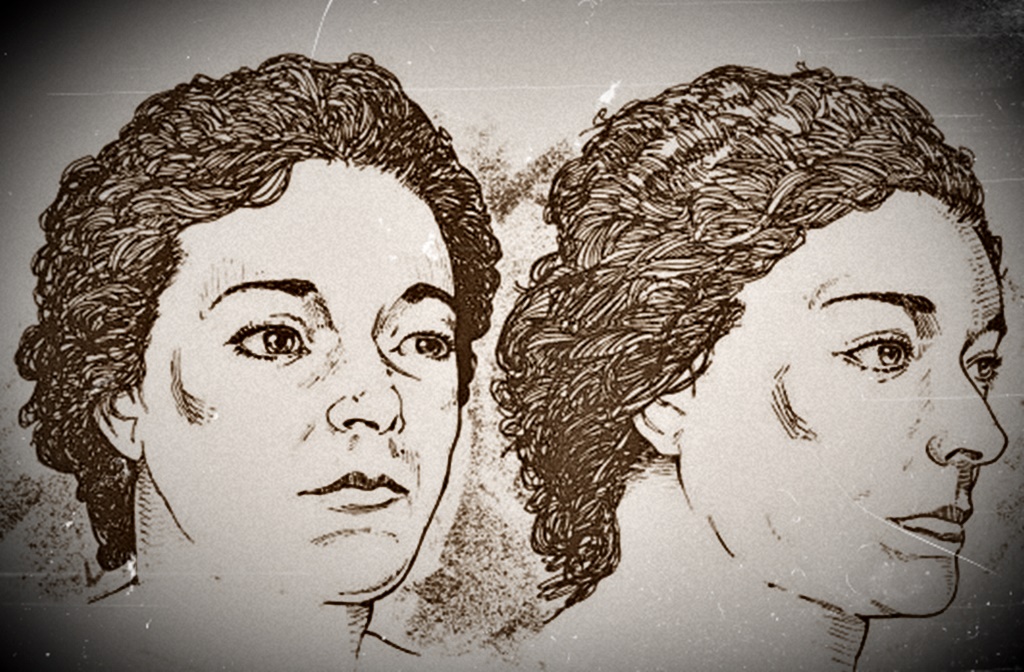
It is still unclear whether Wetzel County Jane Doe was indeed the victim of the serial killer responsible for the so-called Redhead Murders that would take place throughout the 1980s across a vast swath of states, including not only West Virginia but also Pennsylvania, Kentucky, Tennessee, Arkansas, and Mississippi. This killer, sometimes referred to as the Bible Belt Strangler, seemed to target prostitutes or hitchhiking women and girls who had red or auburn hair, and is believed to have murdered between five and fourteen victims.
One possible early crime in the series, taking place nearly two years prior to the discovery of Wetzel County Jane Doe, was the murder of a young woman in Dixon, Missouri, whose body was found near Highway MM on May 25th, 1981. Initially referred to as Pulaski Jane Doe, the victim was believed to be between twenty-five and forty years old, and had been beaten in the face and strangled to death with her own pantyhose. Her hair was black, not red, but authorities later tentatively connected her with the series because of the similarities in the modus operandi. In 2019, the DNA Doe Project provisionally named the woman as thirty-three-year-old Karen Kaye Knippers, and this identification was legally confirmed in 2021.

In the fall of 1984, the first crime definitively linked with the Redhead Murders series occurred. Lisa Nichols (who sometimes used the last name Jarvis) was twenty-eight years old, originally from West Virginia but distant from her family. She had apparently been traveling around the United States for a time, and had recently been staying with an unnamed couple in Florida.
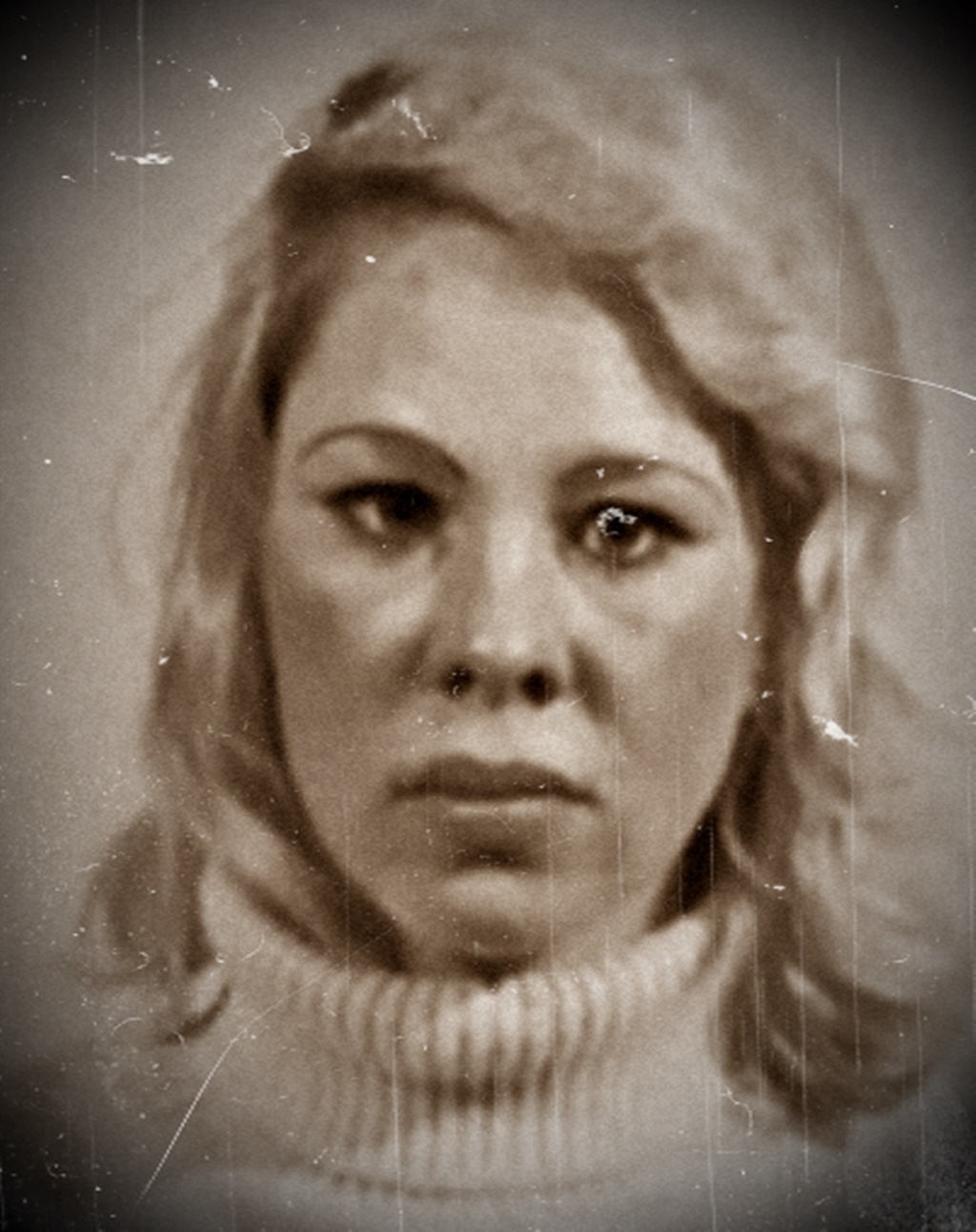
On September 16th, 1984, however, her traveling days were found to have come to an end; her body was discovered along Interstate 40 in West Memphis, Arkansas. She had been strangled, and was found clad only in a sweater, though it did not appear as though she had been sexually assaulted. Authorities assumed that she had been hitchhiking and had perhaps been murdered by a truck driver.
Because she had strawberry-blonde hair and had been murdered along a truck route, investigators would later connect her death to the earlier Jane Doe slain in 1983, and posit that a serial killer who targeted red-haired women was beginning a killing spree in the American Bible Belt.
On the very first day of 1985, it seemed that this probable serial killer had struck again. In this case, a bound and decomposed body was discovered down an embankment off the side of Interstate 75 near the town of Jellico, Tennessee on January 1st. Like Wetzel County Jane Doe and Lisa Nichols before her, this victim was a redhead, and had been strangled or asphyxiated, though not sexually assaulted.
Additional details about the young woman included the fact that she was somewhere between seventeen and thirty years old, stood between five-foot-one and five-foot-four, weighed around one-hundred-ten pounds, had green eyes and freckles, and wore jeans, a tan shirt, and a tan pullover-style sweater. Further, she had a partial upper denture replacing two of her front teeth. She was found to be approximately eleven weeks pregnant at the time of her death, which was estimated to have occurred seventy-two hours prior to her remains being recovered on the side of the highway.
For many years, this woman—like many of the victims in the Redhead Murders series—remained unidentified, but in 2018, police finally matched her fingerprints to a set of prints already on file. The unknown victim was twenty-one-year-old Tina Farmer, who had been reported missing from her Indiana home by her parents in late November of 1984. The last known sighting of Tina had been in Indianapolis, when it was believed that she had been spotted in the company of a truck driver heading for Kentucky. This detail strengthened detectives’ later suspicions that the serial killer thought to be responsible for the slayings was a trucker, perhaps based around the Knoxville or Nashville areas of Tennessee.

Tina Farmer would be far from the last victim of this elusive killer, and more would turn up as 1985 wore on.
Only three weeks later, as a matter of fact, another young woman would be found dumped on the side of a highway. The unidentified victim—discovered on the morning of January 24, 1985 in Olive Branch, Mississippi—had been strangled, and likely sexually assaulted. She was thought to be between twenty and forty years old, stood around five-foot-three, and weighed between one-hundred-five and one-hundred-thirty pounds. She appeared to be a heavy smoker, had bitten her fingernails down to the quick, and had three piercings in each ear. When her body was found, her shoes, jacket, and underwear were missing. Her identity is still a mystery, and she is known only as Desoto County Jane Doe.

On March 29, 1985, a set of skeletal remains was found off Interstate 40 in Waynesville, North Carolina. This young woman had reddish-blonde hair, and was only positively identified in 2012 as twenty-seven-year-old Priscilla Ann Blevins. Her cause of death could not be determined, given the state of decomposition. Priscilla had disappeared sometime around July of 1975, meaning that if the man responsible for the Redhead Murders had killed her, then he had been operating for far longer than anyone realized.
Two days later, back in Tennessee, another possible victim came to light. This woman, whose skeletal remains were found on the side of Interstate 24 in Pleasant View, Tennessee on March 31st, and who would become known as Cheatham County Jane Doe, was white, likely between thirty-one and forty years old, and stood about five-foot-one. Cause of death was undetermined, but thought to have occurred sometime between November of 1984 and January of 1985.
On the following day, April 1st, yet another young woman was found and thought to be related to the same series. Her body turned up inside an abandoned refrigerator that had been tossed on the side of Route 25 near the town of Gray, Kentucky. The front of the appliance bore a grim hallmark in the form of a sticker reading “Super Woman.”
This particular victim, unidentified for decades, was thought to be between twenty-four and thirty-five years old, with long red hair and light brown eyes. She was small, no taller than four-foot-eleven, and sported a scar on her abdomen consistent with a prior C-section.
The girl was found naked save for two pairs of socks and a gold necklace with two pendants, one of an eagle and one of a heart. A pair of boots was also found nearby and believed to have belonged to her. She was thought to have been murdered only a few days before her body was found in the refrigerator.
This victim was known only as Kentucky Jane Doe or The Redhead in the Refrigerator until October of 2018, when DNA evidence finally identified her as twenty-nine-year-old Espy Regina Black-Pilgrim, originally from Spindale, North Carolina. Witnesses later came forward and claimed that they had seen a young woman matching her description at a truck stop in Corbin, Kentucky on March 31st, 1985, and that she had been attempting to hitch a ride back to her home state.

Then, on April 3rd, 1985, there was a sixth discovery: a partial skeleton was found near a strip mine, only four miles from Jellico, Tennessee, where the body of Tina Farmer had been discovered on the first of January. This victim was thought to be much younger than the other casualties of the alleged Bible Belt Strangler, perhaps between nine and fifteen years old, and believed to have been murdered between one and four years prior to her body being found, though cause of death is unverified.
A few articles of clothing, a pair of size five boots, and a necklace and bracelet fashioned from plastic buttons were also recovered from the dump site, though it is uncertain whether these items belonged to the victim.
Though the remains were too decomposed to determine hair or eye color, this victim—known as Campbell County Jane Doe—is usually linked to the other Redhead Murders due to the specific location and circumstances of her death. Facial reconstruction images have been produced, and a later isotopic analysis suggested that the girl likely hailed from either Florida or central Texas, though it appeared that she had recently moved to another area of the country, perhaps the Midwest, the Southwest, or the Pacific Coast.

Eleven days later, on April 14th, another possible victim of the Bible Belt Strangler was found dead, also in Tennessee, but this time in Greeneville, approximately one-hundred-twenty-five miles away from the sites where Tina Farmer and Campbell County Jane Doe had been dumped. This victim stood around five-foot-five, weighed approximately one-hundred-thirty-five pounds, and was likely between fourteen and twenty years old, though possibly a bit older. She had light brown hair with auburn highlights, and pink-painted fingernails.
Unlike most of the other suspected victims of the Redhead Murders, this young woman had not been strangled or asphyxiated, but had died as a result of blunt force trauma to the head. She also had a single stab wound that may have contributed to her death, which was estimated to have taken place three to six weeks before she was discovered.
In late 2018, the young woman was identified through DNA comparison as seventeen-year-old Elizabeth Lamotte, who was originally from New Hampshire and had gone missing from a group home in Manchester in early April of 1984.

On April 20th, 1985, the body of a thirty- to forty-year-old woman was found in Wrightsville, Arkansas, another probable casualty of the Bible Belt Strangler. She stood about five-foot-three and had at one point broken her left femur. Though details of her cause of death have not been publicized, the victim did have reddish hair; she remains unidentified, and is referred to as Pulaski County Jane Doe.

The FBI became involved in this particular string of murders in mid-1985, but it seemed that the killer took something of a hiatus at this stage, as another possible victim in the series wouldn’t materialize until more than two years later.
On August 29, 1987, a woman who would come to be known as Roane County Jane Doe was discovered in Tennessee. She had brown hair that was dyed red, stood about five-foot-eight, and was probably in her thirties or forties. She had breast implants, and had had both a hysterectomy and a tracheotomy. Further, she had an old gunshot wound in her back; the bullet was still lodged in her spine. It appeared that whoever had killed her had attempted to burn her body, but were unsuccessful. She remains unidentified.

In September of 1988, the body of another young woman was found near Interstate 59 in Rising Fawn, Georgia. She had been raped and strangled. Investigators determined that the victim was Stacy Lyn Chahorski, a red-haired woman in her twenties who had called her mother not long before she vanished and stated that she was going to be hitchhiking from North Carolina back to her home in Michigan.

The last known possible victim in the Redhead Murders series was discovered off Highway 102 in Rogers, Arkansas on May 7th, 1990. This woman, believed to be in her late twenties to early thirties and standing approximately five-foot-five, was shot and then set on fire. Authorities also believed that her killer had run her over with a vehicle in order to make identification more difficult. She is known only as Benton County Jane Doe.
It is still unclear how many of these crimes were committed by a single offender. Complicating the issue further is yet another Tennessee murder, that of the red-haired Nancy Lynn Blankenship, who disappeared in December of 1983 when she was twenty years old and had just discovered she was pregnant.
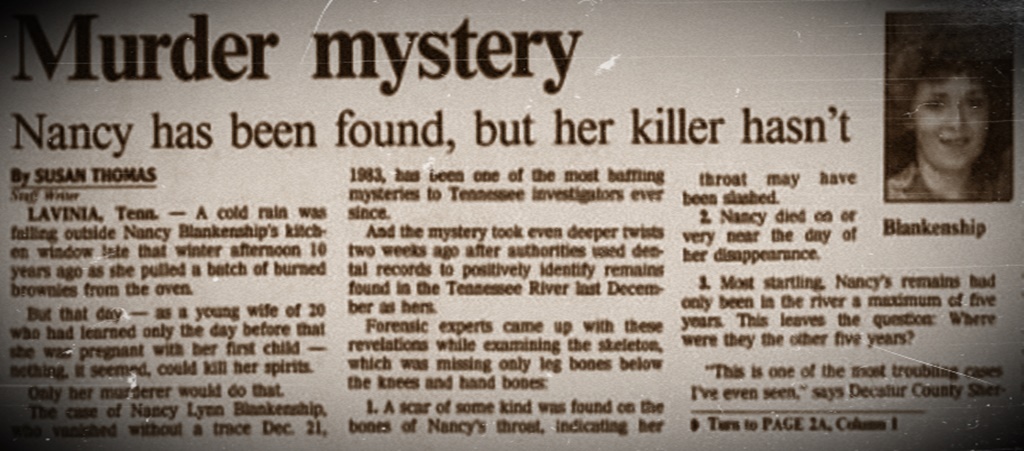
Her strangled body was recovered from the Tennessee River in 1994, but strangely, a post-mortem determined that her remains had only been in the water for five years at most, even though she had been missing for more than a decade. While authorities speculated that her husband may have killed her, it is possible that she might have been yet another statistic in the Redhead Murders series.
Though there are many similarities in these cases, there are also enough differences that it is still just plausible that some of the crimes are unrelated. That said, there have been some promising persons of interest investigated for the Bible Belt Strangler murders. One of these suspects, a truck driver from Cleveland, Tennessee named Jerry Leon Johns, came to the attention of police when he was arrested for attempting to strangle a red-haired woman named Linda Schacke in Knoxville in March of 1985.

According to the victim, Johns came into the club where she worked and flirted with her, after which she accompanied him back to his hotel after her shift was over. Shortly thereafter, though, Linda stated that the man pulled a gun on her and claimed he was an undercover narcotics officer. He then abducted her, tried to strangle her with a piece of her own t-shirt, and left her for dead in a storm drain.
Johns was questioned regarding twenty unsolved murders across several states, but he denied being the Bible Belt Strangler, though he did manifest a keen interest in serial killers and their psychology, according to investigating officers. He was still in custody when Espy Pilgrim was murdered, however, making it unlikely that he was responsible for the entire series of crimes. He was jailed in 1987 for the kidnapping and attempted murder of Linda Schacke, and eventually died behind bars in 2015, but a year later, investigators announced that his DNA was found to match that recovered from the body of Tina Farmer, who had been murdered at the tail end of December 1984 and found on New Year’s Day of 1985. It is not known how many of the Redhead Murders can be laid at the feet of Jerry Leon Johns.
In an eerily similar circumstance, another trucker named Thomas Lee Elkins was arrested in 1986 after kidnapping and allegedly raping a red-haired twenty-year-old. She was able to escape his clutches and reported him to authorities. By that time, Elkins already had a growing rap sheet, having been accused of rape and kidnapping in Louisiana in 1980 (though the charges were eventually dropped) and convicted of rape and indecent liberties with a child in 1981 in Illinois.

While in custody on the 1986 charge, he bragged to his cellmate that he had murdered three red-headed women in Tennessee, bringing him to the attention of the FBI. Then, in 1990, he allegedly committed aggravated sexual battery in Florida, and a year later kidnapped and raped a sixteen-year-old girl at a Texas truck stop. Both these charges subsequently earned him two concurrent twenty-year-sentences.
In October of 2012, however, he removed his ankle monitor and escaped from the halfway house he had been paroled to in Houston, Texas, though he was recaptured in Dallas only seventeen days later.
In 2018, a sociology class at Elizabethton High School in east Tennessee, at the behest of their teacher Alex Campbell, spent an entire semester compiling a profile of the perpetrator of the Redhead Murders; it was this class, in fact, that redubbed the killer The Bible Belt Strangler. Their analysis, which was submitted to FBI profilers and believed to be a fairly accurate picture of the probable assailant, hypothesized that the killer was a white male born between 1936 and 1962, of above average height and weight, who worked as a long-haul commercial truck driver and was likely based out of Knoxville, Tennessee, as that was the geographic center of the dump sites of all the related victims. Further, his trucking route would be concentrated largely along the Interstate 40 corridor and its offshoot highways.
In addition, the class speculated that this serial killer was most likely “mission-oriented” rather than driven by a sexual motive, as few of the victims were thought to have been sexually assaulted or tortured, and there did not appear to be an “overkill” component to their deaths. Mission-oriented killers are those who murder as a means to an end, as a way of essentially punishing people they see as morally or religiously transgressive or somehow a blight on society. Lastly, the profile theorizes that the Bible Belt Strangler is probably of above-average intelligence, may have come from an unstable home, and is likely married or in a long-term relationship.
The FBI investigation into the murders remains open.
 Crime Immemorial