
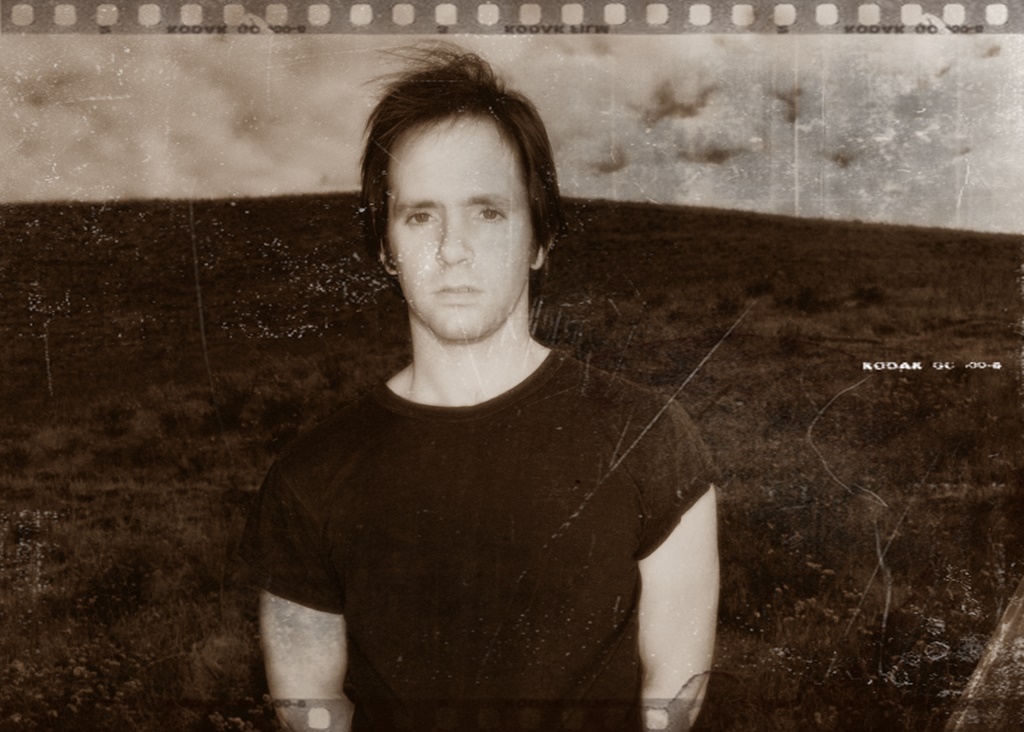
In early March of 1983, within the hip, underground music and film scenes of Los Angeles, California, a murder would take place that snatched from the world a man whose name is not all that well known today, even though at the time he stood at the nexus of everything that was experimental and up-and-coming in the 1980s; a man so connected that his biographer Josh Frank linked him “to every major pop culture event of the last thirty years.”
Peter Ivers was born in Chicago, but didn’t live there long before moving to Arizona with his family, and then on to Boston. When he grew older, he studied classical languages at Harvard, but later found his passion and became a musician and songwriter, playing harmonica and singing, and releasing his first album in 1969. He also performed live as the opening act for The New York Dolls and Fleetwood Mac on separate occasions.
Despite the relatively low profile of his own work, Peter had many influential fans and friends, and was instrumental in many burgeoning entertainment scenes after moving to Los Angeles in the early 1970s. Most famously, in 1977, he wrote and sang “In Heaven (The Lady in the Radiator Song)” for David Lynch’s debut film Eraserhead, and later was able, through his girlfriend Lucy Fisher, to arrange a screening of the movie for Francis Ford Coppola and Mel Brooks, who would go on to offer David Lynch the director’s chair on The Elephant Man, a move that surely launched Lynch’s long and esteemed career.
Peter was also closely allied with John Belushi, Harold Ramis, and other well-known L.A. comedians, and was involved with both National Lampoon and Saturday Night Live. He played harmonica with John Cale, and was called the greatest harmonica player alive by no less than Muddy Waters. He produced an EP by Swans’ frontman Michael Gira, and later wrote songs for the Pointer Sisters and Diana Ross.
Perhaps his best-known credit today, however, was as host of the television program New Wave Theatre, which started its life on a local UHF station in Los Angeles before going national on the young USA Network as part of their Night Flight variety show. The program featured live performances by new wave and punk bands from the L.A. area, such as the Dead Kennedys, Fear, 45 Grave, The Circle Jerks, and The Angry Samoans, as well as interviews with the bands, skits, and weird interstitial video clips.
While Peter Ivers was the theatrical, sardonic face of New Wave Theatre, the show had been created by Canadian David Jove, who had reportedly spent the sixties hanging out with the Rolling Stones, calling himself Acid King Dave, and allegedly participating in the notorious Redlands drug bust of Mick Jagger and Keith Richards. He later went on to helm another alternative-music-based variety show called The Top, which also featured comedians such as Bill Murray, Dan Aykroyd, Chevy Chase, Andy Kaufman, and Rodney Dangerfield. David Jove’s name would come up in a far more sinister capacity after the spring of 1983, however.
On March 3rd, Peter Ivers, then thirty-six years old, was found bludgeoned to death by a hammer in his Los Angeles loft. Police who arrived to investigate the homicide, for whatever reason, seemed rather cavalier about securing the crime scene, allowing Peter’s friends and admirers to go through his apartment, contaminating any evidence that might have been present. Most infamously, New Wave Theatre creator David Jove was permitted to take the bloodied blankets off of Peter’s bed, an act that fueled speculation later on that Jove had been the killer.
Indeed, many of Peter’s friends still maintain that David Jove was the most likely suspect, due to his purportedly provocative and bullying behavior, with one acquaintance in particular comparing him to Charles Manson. Comedian Harold Ramis, also briefly a suspect before being cleared, admitted that of everyone in their circles, Jove was the only person he couldn’t rule out in the murder.
On the other hand, others who knew Jove, including many L.A. musicians who had featured on his show, believed that he was innocent. David Jove passed away from pancreatic cancer in 2004, denying killing Peter until the very end.
Other theories had it that perhaps Peter Ivers was slain by someone targeting David Jove, or was perhaps just the unlucky victim of a random homicide perpetrated by someone looking for money or drugs. The neighborhood where he lived, it should be noted, was essentially Skid Row, populated by squatters and a magnet for crime.
Unsurprisingly, given the slapdash nature of the LAPD investigation, the murder of Peter Ivers very quickly went cold, and the name of this multi-talented man, who was at the hub of so much of the cultural vanguard of the era, slowly drifted into relative obscurity. When Josh Frank and Charlie Buckholtz wrote a biography of Peter in 2008, it prompted authorities to reopen the case, though missing and tainted evidence is still impeding the investigation to this day.
Harvard University established the Peter Ivers Visiting Artist Program shortly after his death, at the behest of his girlfriend Lucy Fisher.
 Crime Immemorial