
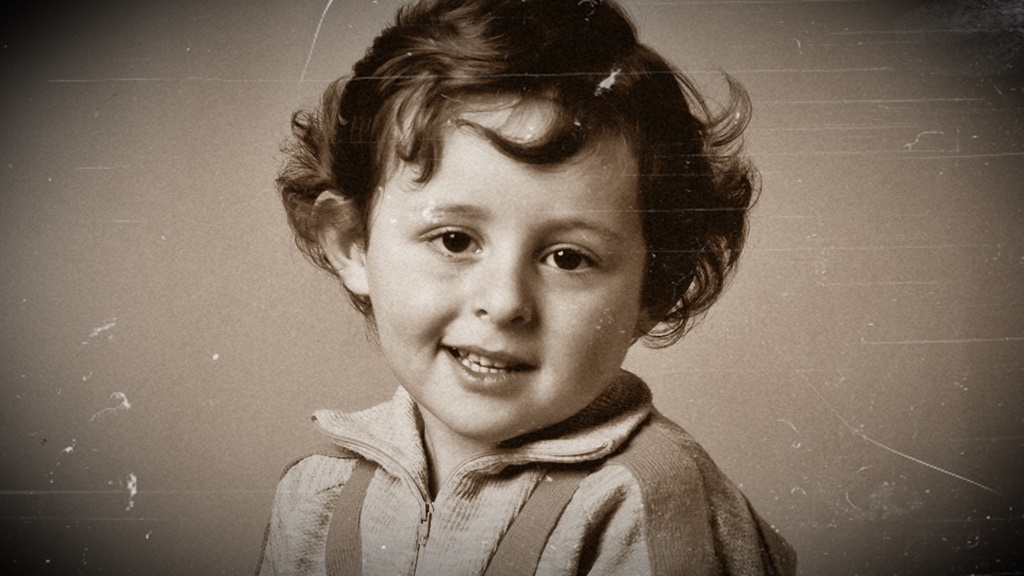
In 1984, the murder of a small child in the rural backwaters of France would kick off an almost unbelievable saga of family jealousy, suicide, and murderous revenge that would come to be known as the Grégory Affair.
Four-year-old Grégory Villemin lived with his parents, Christine and Jean-Marie, in the small, working-class village of Lepanges, which also housed numerous members of their extended family. While the town was generally fairly poor, Jean-Marie had done a bit better for himself, rising to the rank of supervisor at a local car parts factory, a promotion that apparently stirred up a furious envy in one or more residents of the village. Jean-Marie Villemin, starting in September of 1981 and continuing into the autumn of 1984, was receiving anonymous phone calls and letters, threatening vengeance for some unspecified slight. The boy’s paternal grandparents, Albert and Monique Villemin, were also targets of the harassment. These missives had clearly come from someone close to the family, as they contained accurate details of their lives and relationships, as well as charming sentiments such as, “I hate you so much, the day you die I will spit on your grave.”
On the afternoon of October 16th, 1984, the letter-writer evidently decided to make good on all of his prior threats. Little Grégory was playing in the front yard of the family’s chateau at around five p.m., with his mother watching over him through the front window of the house. She looked away for only a few moments, and when she looked back, the child was gone.
Thirty minutes later, Grégory’s uncle Michel received one of the threatening phone calls. The voice on the other end of the line said, “I have taken the boy of the boss. I have thrown him into the Vologne.”
Sure enough, when police searched the river later that evening, they discovered the drowned body of the four-year-old, his ankles and wrists bound with rope, his wool hat pulled down over his face. On the day after Grégory’s remains were found, another anonymous letter arrived in the Villemin’s post box, reading, “I hope you die of grief, boss. Your money will not bring your son back. This is my revenge.” After the story broke, the media began referring to the anonymous letter writer as “The Crow.”
Shortly after the boy was murdered, authorities honed in on a suspect: Jean-Marie’s cousin Bernard Laroche. Handwriting analysis suggested that he could have penned the letters, and his sister-in-law Murielle Bolle informed police that she had witnessed him taking little Grégory to the Vologne in his car.
It seemed an open and shut case, but only days later, Muriel recanted her statement, claiming it had been coerced, and the handwriting evidence was deemed inconclusive. Bernard Laroche was released, after which Jean-Marie publicly declared that he was going to kill Laroche.
Then, in a shocking twist, further handwriting analysis appeared to implicate none other than Christine Villemin, Grégory’s twenty-four-year-old mother, in the murder of her own child. And as if this wasn’t incredible enough, while she was undergoing an investigation, her husband Jean-Marie shot and killed Bernard Laroche with a hunting rifle, just as he had stated he would, a crime for which he would ultimately serve less than three years in prison.
Christine, six months pregnant at the time, was indicted in the murder of her son, and endured a roasting by the media, who proclaimed her a “witch.” She suffered a miscarriage following her arrest, in which she lost one of the twins she had been carrying. She also went on an eleven-day hunger strike, but was eventually released. Despite the scorn heaped upon her by the public and an intense probe into her involvement, she was ultimately cleared of all charges in 1993, as there was no compelling evidence linking her to the slaying.
The case was reopened in 2000, at which point DNA samples were taken from the stamps on the anonymous letters. The results of the tests, though, were inconclusive, as were further DNA tests carried out in 2008 and 2010 on Grégory’s clothing and the rope that had been used to bind him.
But in 2017, there was something of a break in the investigation. Based on new evidence that had come to light, three suspects were hauled into custody: Jean-Marie’s uncle Marcel Jacob; Jacob’s wife Jacqueline; and Jean-Marie’s half-sister Ginette Villemin. Jean-Marie’s parents were also detained and questioned, but ultimately released, as was Bernard Laroche’s sister-in-law Murielle Bolle. Authorities suspected that Marcel, Jacqueline, and Ginette had perhaps conspired with Bernard Laroche to engineer a campaign of terror against Jean-Marie Villemin because they were jealous of his wealth relative to theirs. At this stage, however, they are still uncertain who actually carried out the murder of little Grégory.
And in a tragic coda to the entire sad incident, shortly following the 2017 reopening of the case, a man named Jean-Michel Lambert, who had served as the magistrate when the case was first being investigated in 1984, committed suicide by putting a plastic bag over his head. A note he left claimed that he could no longer handle the stress that had resulted from the case being reopened.
In 2018, Murielle Bolle published a book called Breaking the Silence, in which she claimed that both she and Bernard Laroche were innocent of the murder, and that police had forced her to make the statements implicating Laroche. Countering this narrative was Murielle’s cousin Patrick Faivre, who stated that Murielle’s original testimony of Laroche’s guilt was correct, and that Murielle’s family had actually physically abused her into recanting this testimony. Murielle Bolle subsequently charged Patrick Faivre with lying about the whole ordeal, at which point Patrick Faivre went to the police, accusing her of defamation. She was indicted on this charge in 2019.
The Grégory Affair was a nationwide obsession in France, and remains so to this day, with more than a dozen books and thousands of articles written about the crime. As of this writing, the mystery remains frustratingly unresolved.
 Crime Immemorial