
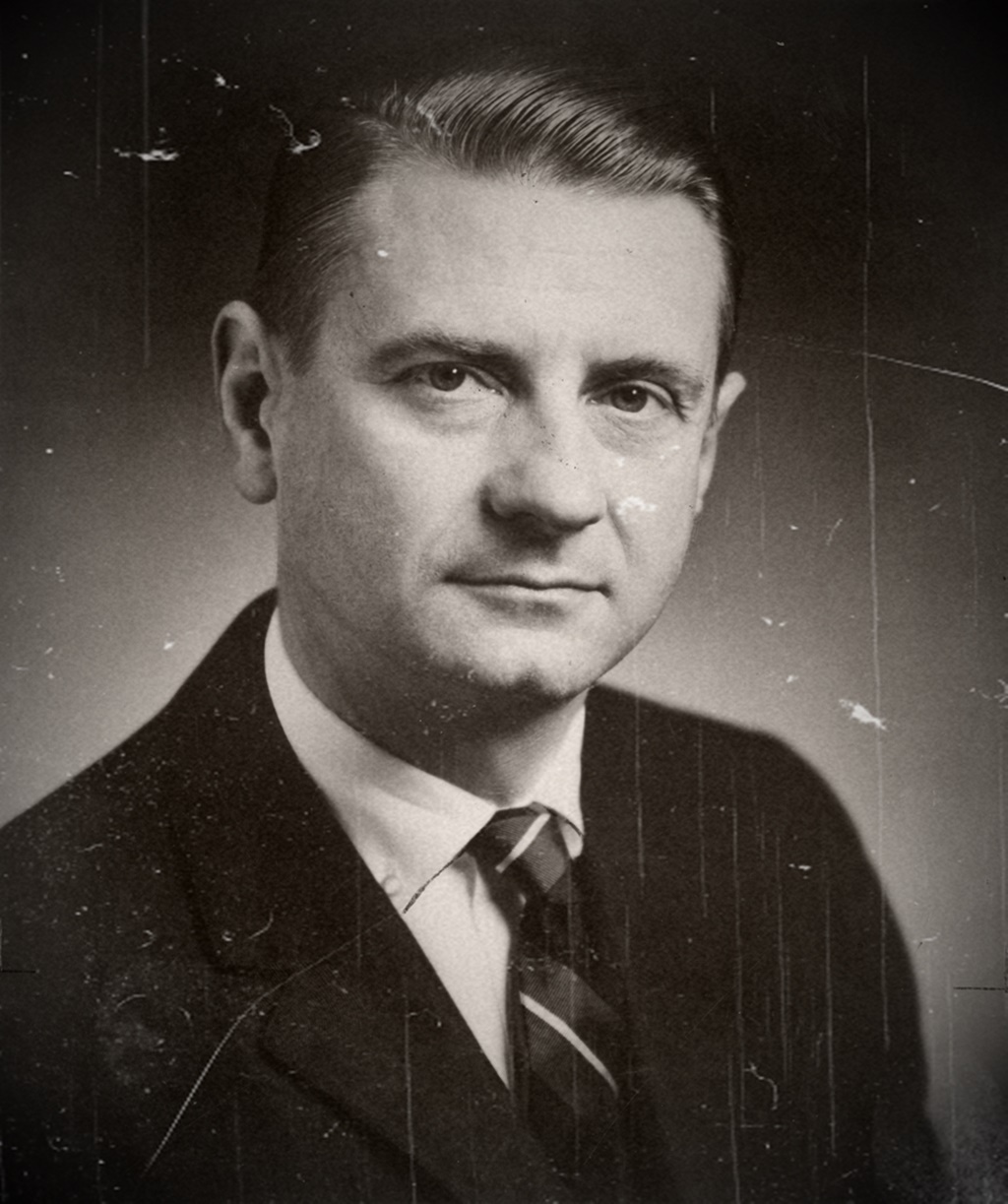
In Columbus, Ohio, in 1966, an apparently random murder of a man associated with Ohio State University may have been connected with the victim’s prominence in the civil rights movement.
Clergyman and theologian Robert Warren Spike had long been a fixture among activist communities fighting for racial equality. Having started his career in Greenwich Village, New York in the late 1940s, he would eventually enjoy national distinction as the executive director of the National Council of Churches’ Commission on Religion and Race, under whose auspices he would participate in 1963’s March on Washington and 1964’s Freedom Summer.
In early 1966, forty-two-year-old Robert Spike took on a professorship at the University of Chicago Divinity School, and on October 16th, he was at Ohio State University, dedicating a new Christian center near the campus.
Following the dedication, at a little past ten p.m. on that Sunday, Robert spoke to a graduate student named James Grippney, who lived at the center and was apparently the last person to see the clergyman alive.
The next day, Robert’s body was found by a janitor, lying face up in a pool of blood in one of the guest rooms of the Christian center. He was clad in nothing but a green raincoat, and it appeared that he had been bludgeoned to death with a hammer. There was no sign of a struggle in the room, and Robert’s wallet was untouched, indicating the crime had not been a robbery.
Police fanned out, searching nearby campus buildings and outlying properties, but turned up nothing of note, though it was suggested that a neighboring fraternity house was missing a hammer that had been in use by students who were decorating for the imminent homecoming weekend.
One of the strangest clues recovered from the scene was a briefcase containing several nude photos of both women and men, as well as the addresses of three local nightclubs. Because of this briefcase, investigators attempted to link the murder to Robert Spike’s alleged bisexuality.
However, due to Robert Spike’s importance in the civil rights movement, many researchers suspect that he was actually assassinated, and that the photos were planted at the scene in order to throw detectives off the trail.
No suspects were ever identified, no arrests were ever made, and the murder of the eminent theologian and activist remains a frustrating mystery. Following his death, Martin Luther King Jr. was quoted as saying, “We will always remember his unswerving devotion to the legitimate aspirations of oppressed people for freedom and human dignity. It was my personal pleasure and sacred privilege to work closely with him in various undertakings.”
 Crime Immemorial