
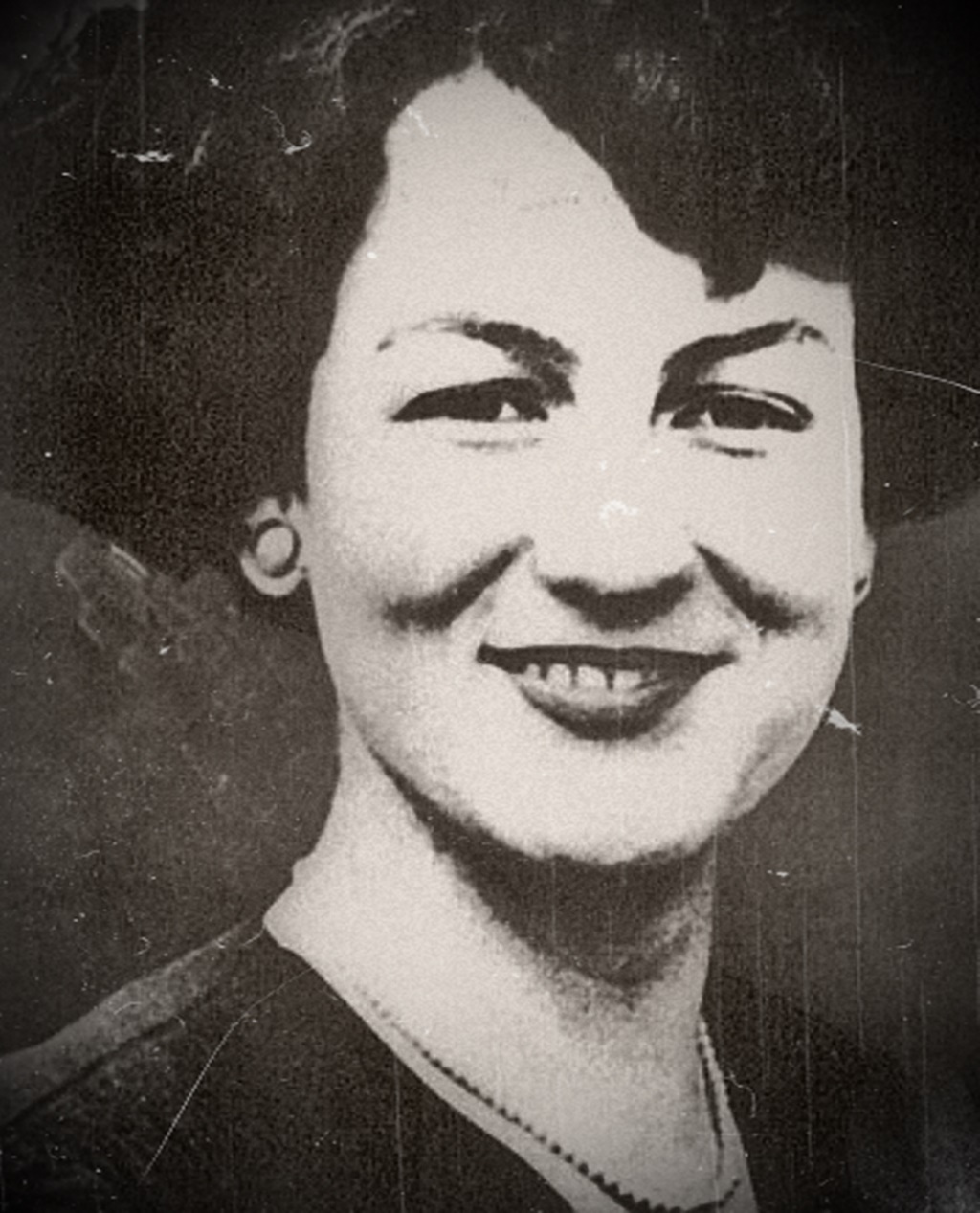
In the early 1950s, a vicious murder in Australia would grab country-wide headlines, mainly due to the random brutality of the killing, and the well-liked and beautiful young victim. To this day, the murder is the oldest cold case in Queensland, and is often cited as the crime that robbed the sleepy town of Brisbane of its innocence.
Betty Shanks was twenty-two years old, and worked in a government office, as a personnel trainee for the Commonwealth Department of the Interior. As part of her job, she attended night classes after work every Wednesday and Friday. Ordinarily, the lecturer would give Betty a lift home after class was over, but on this particular Friday, September 19th, 1952, the lecturer and his wife had to attend a wedding rehearsal later in the evening. He did, however, drop Betty off at the Days Road tram stop so she could take the tram to her home in the Brisbane suburb known as Wilston. She lived in a house on Montpelier Street with her parents, and the house was only a short walk from the tram’s terminus at Grange.
At a little after nine-thirty p.m., the tram dropped Betty off, and she began to walk down Thomas Street toward home.
Around ten minutes later, several residents of the neighborhood heard what sounded like a woman screaming, and though a few of the neighbors peered out their windows, no one saw anything unusual, and most assumed that the sound had simply been some teenagers messing around on the school grounds nearby.
At around ten-forty, another neighbor, a former cricket player named Jimmy Coats, claimed he heard a slight moaning, and then the sound of a motorbike engine. He also said that he looked out his windows, but didn’t see anything to cause alarm.
At the Shanks home on Montpelier Street, Betty’s father David had been waiting up for Betty to get home from work, and as each hour passed, he began to get more and more concerned. At last, at around one-thirty in the morning, he called the police and reported her missing.
A little more than four hours later, off-duty policeman Alex Stewart went outside to get his newspaper when he noticed something lying on the lawn of his neighbor’s house on the corner of Thomas and Carberry Streets. As he got closer, he discovered that it was the body of Betty Shanks, who it appeared had been brutally beaten to death. She had been killed less than two hundred yards from the tram stop and a little more than three hundred yards from her own front door.
Police descended upon the tragic scene. It looked as though Betty had been savagely kicked in the head multiple times before being strangled. The beating she had taken was so severe that her jaw had been fractured in two places and one of her molars had been knocked out through a wound in her cheek. There also appeared black smudges on her face and hands, as from shoe polish, and there was also a strange pattern of irregular dots stamped into her forehead.
Though the contents of her purse were scattered around the yard, it did not appear that anything had been stolen, and though her clothes were somewhat disordered and her underwear had been removed, later examination demonstrated that she had not been sexually assaulted.
Two large, bloody handprints were found on the top rail of a fence very near the body, indicating that the murderer had vaulted over it as he fled the crime scene.
The town of Brisbane was utterly shocked by the ghastly slaying, as it had previously been the kind of place where no one bothered to lock their doors at night and everyone knew their neighbors. No one could fathom why anyone would want to kill Betty Shanks, who by all accounts was a vivacious, friendly, hard-working young woman with no enemies in the world.
Police quickly began to follow up on the few leads they had. At least eight people came forward to confess to the killing, and though these confessions were thoroughly looked into, all of them turned out to be false. Investigators also interviewed all local residents who had recently been discharged from mental hospitals.
A taxi driver told police that he had seen a young man in a blue shirt and jeans with short hair and a “moon face” jumping a fence near the crime scene at around ten-thirty p.m., and claimed he saw the man again several hours later, standing on a bridge less than a mile from the murder site. Investigators combed the entire area and staked out several locations, but no sign of anyone matching the man’s description was ever found.
More promisingly, three witnesses said they had seen a man in a brown suit hanging around the Grange terminus at around nine-thirty p.m., as though he was waiting for someone. The descriptions the witnesses gave were similar to one another, but unfortunately not detailed enough for investigators to track down a suspect.
Ken Blanch, a reporter for The Telegraph and one of the first journalists on the scene, believed that if the man in the brown suit was indeed the killer, then he couldn’t have been waiting for Betty Shanks specifically, because she did not usually ride that tram at that time of the evening, as she almost always got a ride home from class with her lecturer.
One woman who did ride that particular tram routinely, Blanch pointed out, was Ena Hamilton, who worked at a nearby doctor’s office and normally rode that tram home on Friday nights after work. She also ordinarily walked the same route down Thomas Street that Betty Shanks took on that fateful night, and was said to be similar in appearance to Betty as well. In fact, the only reason why Ena Hamilton was not on the tram on September 19th was because she had gotten off work a little earlier than usual. Blanch theorizes that the killer was actually targeting Ena Hamilton, perhaps to rob her of her keys to the doctor’s office so that he could steal drugs.
Ken Blanch also surmised that the strange pattern of marks left on the victim’s head had been caused by a canvas gaiter, of the type worn by military men over their boots. He further pointed out that Jimmy Coats, the neighbor who claimed he heard moaning at ten-forty p.m., an hour after Betty Shanks was supposedly killed, was a veteran of the Korean War. Blanch, therefore, believes that Coats was the likely killer, as the testimony Coats gave at the inquest didn’t match up with the recollections of other witnesses.
However, another researcher into the case, historian Lyle Reed, thinks that the marks on her forehead, as well as the other gruesome facial injuries, could not have been caused by a covered boot, and argues that Betty Shanks was actually deliberately run down by someone riding a motorbike, who later came back to see if she was dead. Finding her still alive, he finished the job by strangling her. Reed points to the testimony of neighbor Jimmy Coats, who told police that he heard a motorbike engine passing at two different times, and also claimed to have heard someone moaning at around ten-forty p.m. Unlike Ken Blanch, who thinks the inconsistencies in Jimmy Coats’s story make him a suspect in the murder, Lyle Reed believes that Coats was telling the truth, and that the murder was actually a two-stage event. It should be noted, however, that the pathologist’s report from the time leans heavily toward the theory that Betty Shanks was repeatedly kicked in the head, and not struck by a vehicle.
Yet another hypothesis, this one outlined by author Ted Duhs, was that Betty Shanks was either involved with or had rebuffed a married man named Eric Sterry, who had allegedly met Betty in the course of doing some locksmithing work at her parents’ home. According to Eric’s daughter, Desche Birtles, her father was a violent and abusive man who had actually been discharged from the RAAF in 1945 because of mental health issues.
Desche claims that her parents’ marriage was failing, and that Eric had become enamored with Betty Shanks, though it is unknown if Betty returned these feelings. Desche further states that on the night of the murder, she and her younger brother rode in the car as their father drove to the tram station at Grange to wait for Betty, and that shortly after the tram arrived, Eric Sterry left the children in the car and was gone for two hours. Desche, who was eight years old at the time, also claims that the next morning, her father asked her to clean the driver’s side floor of the car, and also scrub the soles of his shoes, which were coated in some slimy brownish substance.
Ted Duhs, who wrote the book laying out Desche’s case, claims that she gave him a family photo album which contained a photograph of Betty Shanks; it was the only photograph of a non-family member in the entire album. It also apparently contained a photograph of Eric Sterry in a brown suit, looking very much like the description of the man that three witnesses saw on the night of September 19th, hanging around the tram stop.
Despite continued interest in the case in Australia and a still-open $50,000 reward for information leading to the arrest of her killer, the murder of Betty Shanks remains unsolved. While there are several theories floating around, all of which seem somewhat plausible, there is not enough evidence to definitively close the book on Brisbane’s most notorious cold case.
 Crime Immemorial