
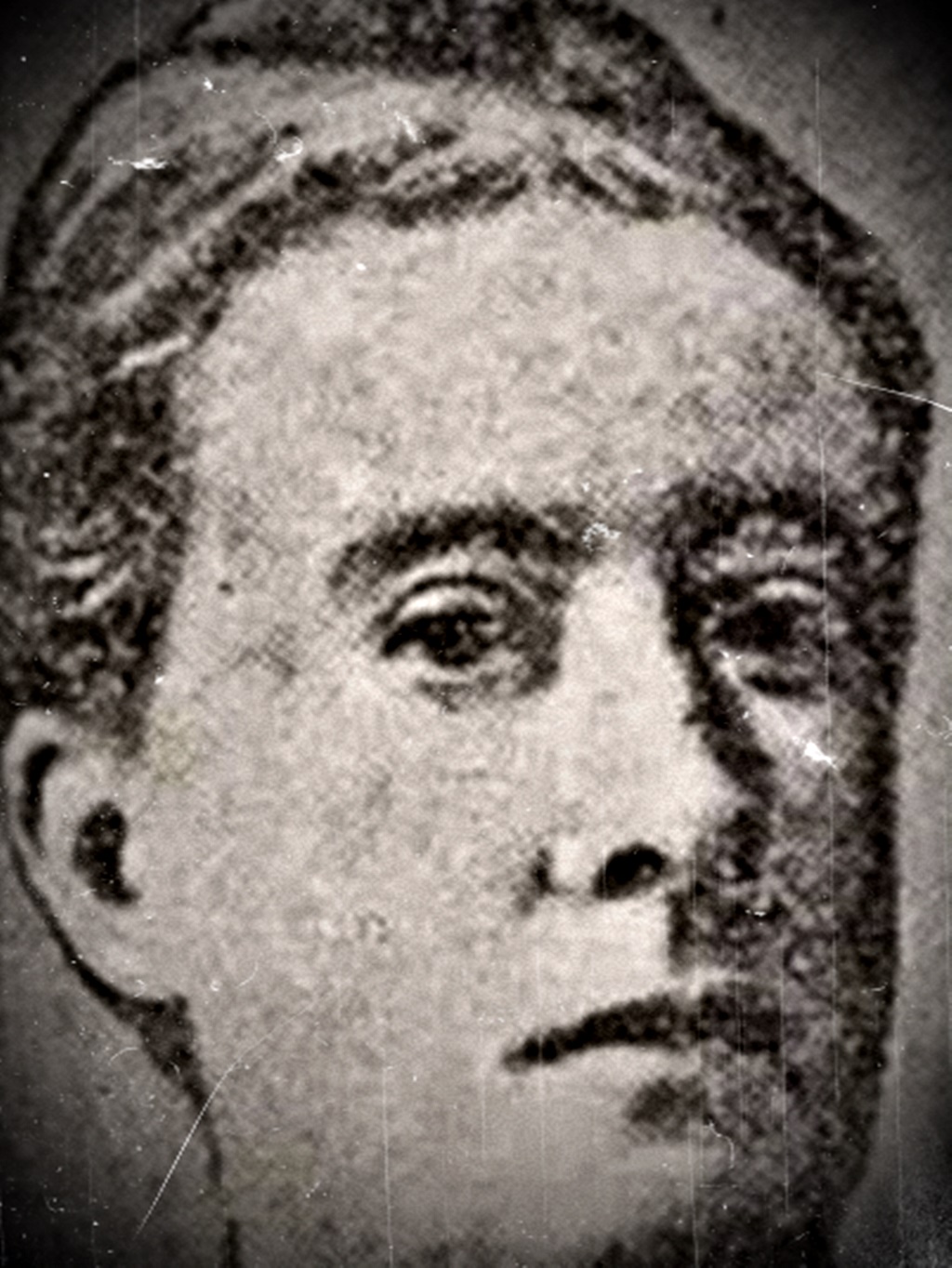
Caroline Mary Luard was in many ways the quintessential society woman of the late Victorian era. She had been born into a wealthy family, and in 1875 married Charles Edward Luard, a professional soldier who had retired in 1887 with the rank of Major-General in the Royal Engineers. The couple was spending their later years living in a charming house called Ightham Knoll, in Kent; Charles Luard devoted himself to local politics and sporting clubs, while Caroline filled her hours with charity work and social engagements. They were, by all accounts, upstanding and well-liked members of the community, and hardly the types of people to end up becoming infamous for all the wrong reasons.
It was a pleasant afternoon in late August, and at around two-thirty, the Luards decided to go for a walk with their dog. Caroline only planned to go a mile or so up the road before turning back, because she was expecting a friend named Mrs. Stewart for tea at four o‘clock. Charles, though, intended to continue on for a few more miles to the Godden Street Golf Club. He and his wife would be taking a holiday soon, and he wanted to retrieve his golf clubs to take along on the trip.
Charles arrived at the links at around three-thirty, picked up his clubs, and began to make his way back home. Roughly thirty-five minutes later, Charles bumped into the local vicar, Reverend Cotton, who offered him a ride in his vehicle, even though he had been traveling in the opposite direction. Charles appreciated the lift, and loaded his golf clubs into the vicar’s car. Reverend Cotton dropped off Charles and the golf clubs at Ightham Knoll at four-twenty-five in the afternoon.
But as soon as Charles entered the house, it was clear that something wasn’t quite right. Mrs. Stewart had arrived for tea, but Caroline was nowhere to be seen. Mrs. Stewart had been waiting for her friend, thinking perhaps she had simply been delayed on some errand, but Charles knew that Caroline should have been back from her walk long ago. He set off along the path to look for her.
At around five-thirty on the afternoon of August 24th, 1908, Charles came across the murdered body of his wife Caroline, lying on the verandah of an empty summer house which was owned by the Luards’ neighbors. It appeared that someone had shot her in the head at very close range, stolen the three rings from her fingers, and vanished into the surrounding woods. The only evidence of the murderer at the site was a set of footprints leading away from the house.
An investigation was immediately undertaken. Police dispatched bloodhounds at the scene, but the dogs could only follow the killer’s trail to the main road before it petered out. Witnesses were interviewed, several of whom reported that they thought they had heard gunshots coming from the direction of the summer house at around three-fifteen. A priest who had been driving through the area that afternoon claimed that he had seen a shifty-looking man coming out of the woods at around the time of the murder, but no suspect fitting the description was ever found.
Upon examination of Caroline’s body, it was found that she had been violently hit on the back of the head, at which point she had fallen to the ground and vomited. The killer then aimed a .320 revolver behind her right ear and shot her from only a few inches away, shooting her a second time in the left cheek for good measure. After he was sure she was dead, he apparently removed her gloves and pulled the rings from her left hand, tore a pocket from her dress that presumably contained some money, then beat a hasty retreat into the surrounding woods.
Other than robbery, no obvious motive could be determined for Caroline’s vicious and apparently random murder, and as the weeks wore on, it started to become clear that police had exhausted all their leads and were no closer to catching the culprit. Unfortunately, in the vacuum created by the lack of progress on the case, the townsfolk began to come up with their own theories, informed by their own petty biases and penchant for vile gossip.
Rumors began to circulate that Charles Luard himself had killed his wife, had taken the rings to make it look like a robbery, and was using his money and influence with the police to cover up the shocking crime. Charles, the locals whispered, had been having an affair, and wished to get rid of his wife for good so he could run away with his alleged mistress. Or perhaps, the wagging tongues speculated, Caroline had been the one with the illicit lover, and Charles had decided to savagely punish her for her faithless transgressions.
Feeding into the town’s sordid hypotheses about Charles’s political influence allowing him to get away with murder was the fact that the first inquest was conducted at Ightham Knoll itself, and that Charles was known to be good friends with Henry Warde, the chief investigator on the case.
There was also a handful of odd pieces of evidence that served to cast further suspicion on the man, especially if one was already inclined to see him as a killer: he told police, for example, that though he owned a few guns, he could not remember where he kept the ammunition for them. Further, police suspected that the killer must have known Caroline, because he apparently knew about the expensive rings she wore under her gloves, and also knew that she often walked along the wooded path near the summer house. And there was also the matter of a pocket that had apparently been removed from Caroline’s dress by her murderer; this pocket was reportedly later found tangled up in a sheet by a maid at the Luards’ home.
Not content with simply spreading these stories through word of mouth, some enterprising townsfolk even took it upon themselves to write anonymous, hate-filled screeds to Charles Luard, accusing him of murder and conspiracy, and threatening revenge for his terrible deeds.
The castigation of the murdered woman’s husband began to take on the aspect of a witch hunt, and no amount of contradictory evidence appeared to sway the locals from their crusade. It did not matter to them that Charles Luard had been spotted several times that afternoon by many different people, all of whom had seen him either heading toward the Godden Street Golf Club, actually at the club itself, or heading back toward home. At three-fifteen, when gunshots were heard from the summer house, Charles Luard would have been at least a half-mile away from the scene of the crime.
In addition, Charles had never owned a .320 revolver; the three firearms he did own were all of smaller caliber, and could not have been responsible for the wounds that killed Caroline. Neither the murder weapon nor Caroline’s stolen rings were ever found, either in Charles Luard‘s possession or elsewhere. The pocket that locals believed had been torn off the dress and later turned up at the Luard house had actually still been attached to the dress when police arrived, and had simply come loose from the dress and become tangled in with the sheet when it was used to transport Caroline‘s body to Ightham Knoll.
Finally, there was seemingly no motive at all for Charles to gun down his wife in cold blood; no evidence of an affair was ever produced, and those acquainted with the couple, including friends and household staff, claimed they had been happy and very content in their marriage.
However, the fact of Charles’s seemingly airtight alibi did not stem the tide of hostility from the locals, and at last the man had reached the limit of his tolerance. He arranged to put the contents of the house up for auction, and placed an ad for someone to take over the remainder of the lease on Ightham Knoll. On September 17th, after leaving the second inquest, he traveled to Barham Court, a house near Wateringbury, to stay with a friend, Colonel Charles Edward Warde, brother of Chief Constable Henry Warde.
Charles Luard had informed his son, also named Charles, of his mother’s death, and the young man, who had been stationed in South Africa, was expected to arrive in Southampton by ship on September 18th.
But on that very morning, Charles Luard rose early and had breakfast, then wrote a few letters before leaving the house, walking to the Teston railway station, and throwing himself in front of the 9:09 train bound for Tonbridge. Charles had pinned a note to his coat which read, “Whoever finds me take me to Colonel Warde.”
A suicide note later found in Charles‘s room read, “I am sick of the scandalous and lying reports, and I cannot face my son.”
An additional letter he had written and addressed to Colonel Warde said, “I am sorry to have returned your kindness and hospitality and long friendship in this way, but I am satisfied it is best to join her in the second life at once, as I can be of no further use to anyone in future in this world, of which I am tired, and in which I don’t wish to live any longer. I thought my strength was sufficient to bear up against the horrible imputations and terrible letters which I have received since that awful crime was committed which robbed me of all my happiness. And it is so lonely. And the goodness, kindness, and sympathy of so many friends kept me going but somehow now the last day or two something seems to have snapped. The strength has left me, and I care for nothing except to join her again. So good-bye, dear friend, to both of us.”
Colonel Warde was left with the unhappy task of going to Southampton, boarding the ship on which the younger Charles Luard had just arrived, and informing him that his father was now dead as well.
Charles Luard’s tragic suicide, sadly, only provided grist for the mill of the rumor-mongers, who now suspected that police had been poised to arrest Charles for his wife’s murder, and that Charles had killed himself in order to avoid prison or the hangman. At the inquest following Charles’s death, however, the coroner had a different opinion, and openly accused the gossiping townsfolk of being morally responsible for the man’s gruesome death.
In April of the following year, a man named David Woodruff was arrested for Caroline Luard’s murder, despite a conspicuous lack of evidence connecting him with the crime. It was widely suspected that Woodruff was simply framed by Chief Constable Henry Warde in order to finally close the case, and this suspicion was confirmed when it was discovered that the alleged killer in question had been in jail on the day of Caroline’s death. David Woodruff was released by the sheepish police, and no further arrests were made.
On August 10th, 1910, a man named John Dickman was hanged at Newcastle Prison. He had been convicted of the robbery and murder of John Nisbet, which had taken place on March 18th on a train bound from Newcastle-on-Tyne to Alnmouth. There were rumblings at the time of Dickman’s conviction that he had been framed for the crime, but a later book about the murder put forward the theory that Dickman had been responsible, not only for the murder of a man named Hermann Cohen in 1909, but also that of Caroline Luard.
It was speculated that Caroline had answered an ad placed by John Dickman in which he had requested financial assistance, and that she had sent him a check for an undisclosed amount. Dickman then supposedly altered the check to a much larger sum, and evidently he decided to kill her after she threatened to expose his fraud.
The only source for this fanciful tale, however, was a story supposedly told by a judge to the court stenographer at Dickman’s trial; no other evidence exists to support it, and no other suspects have ever been seriously considered, though other conspiracy theories have been known to pop up from time to time.
 Crime Immemorial