
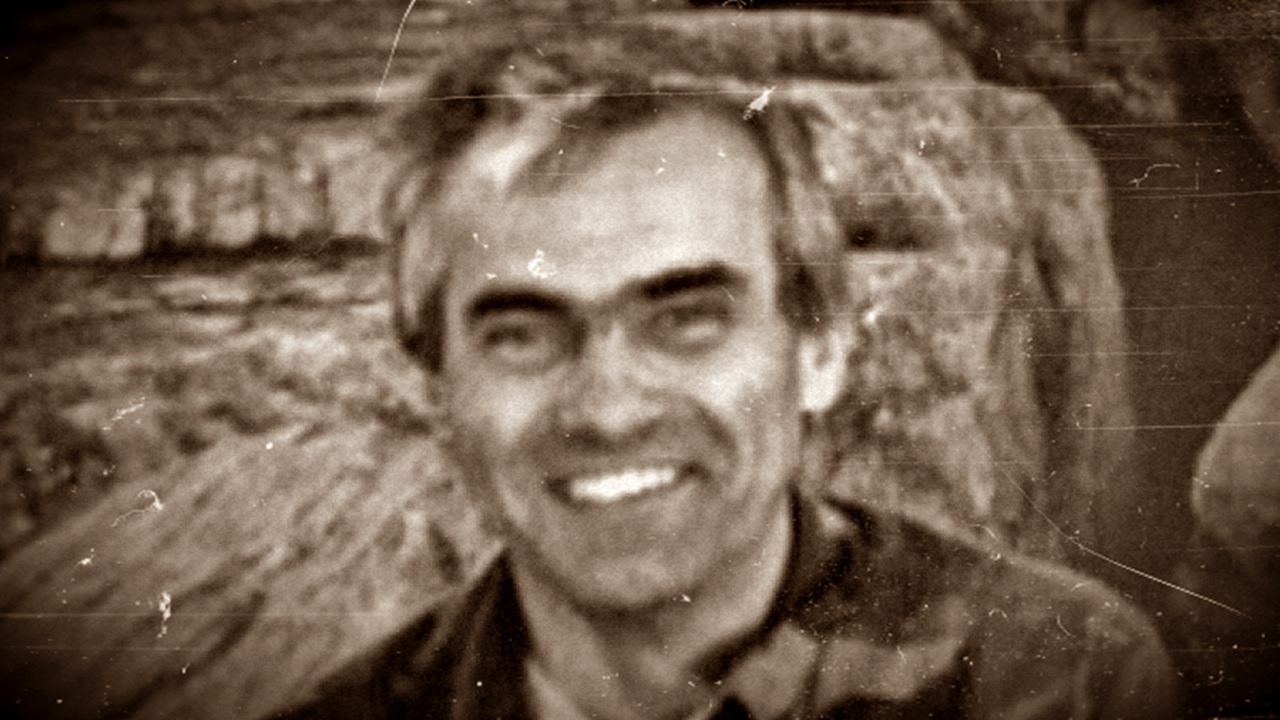
September 11th, 2001, was, of course, a day that changed everything in the United States; a day that saw the callous slaughter of nearly three-thousand people by a group of terrorists; a day that caused unimagined upheaval to the culture at large, and whose after-effects still resonate right up until the present day.
However, there was one murder that took place on September 11th, 2001, that had nothing to do with terrorism or the World Trade Center, and tragically, that murder remains unsolved. In fact, because the victims of the 9/11 terror attacks are not counted under the FBI’s official homicide statistics (since including them would skew the data), this one particular homicide stands as New York City’s only “official” murder of September 11th.
Henryk Siwiak was forty-six years old. Originally from Krakow, Poland, Henryk had been laid off from his job with the Polish State Railway in late 2000, and had traveled to the United States shortly afterward in order to find better-paying work. His wife of twenty years, Ewa, remained in Krakow and worked as a biology teacher at a high school; the couple had two children: Gabriela, who was then seventeen, and Adam, who was ten.
Henryk’s sister Lucyna had moved to the New York City borough of Queens six years previously, and Henryk had been staying with her and working anywhere that would have him, sending money faithfully back to his family in Poland. He was struggling to learn English, but knew just enough to get by. Though he liked New York City very much, he did eventually want to save enough money to go back to Krakow and build his family a new house.
Henryk’s latest employment gig was working at a building site in Lower Manhattan, and as he usually was, he was working there on the morning of September 11th, and thus was a direct witness when the first plane hit the towers. The building site where he was working shut down as chaos began to reign in the city. Henryk managed to quickly take the subway back to the safety of his sister’s home in Far Rockaway.
Though Henryk had survived the events of the morning, however, he now had another problem: he was again unemployed. Like many in the United States, immigrant or not, Henryk could not afford to go a single day without working, and so began scouring the newspaper want ads for another position that would bring in a wage.
He spotted an immediate opening for a cleaning job, and went to the employment agency in Bay Ridge that had published it; this particular agency specifically catered to the Polish community. In one tragic detail of the case, the husband of the woman who owned the employment agency actually worked at the World Trade Center, and was later confirmed killed in the attacks.
Henryk was able to secure the temporary overnight position, which entailed cleaning a Pathmark supermarket in Farragut, Brooklyn. The store manager wanted him to report for work that very night, and Henryk agreed.
Once he returned to his sister’s home, Henryk borrowed a map from the landlady, and between the two of them, they thought they had worked out the location of the store. Henryk then called his wife back in Poland, told her that he was all right, and also informed her that he had been able to find work for that evening. Ewa begged him not to go out that night, fearing that the streets would be more dangerous than usual because of the attacks that morning, but Henryk needed the money, and downplayed her concerns. His landlady also reportedly advised against going out into the anxious and fearful atmosphere of the city, but Henryk was again insistent.
He set out on the subway later that night, clad in camouflage pants, black military-style boots, a dark jacket, and a backpack containing a change of clothes. Because the Pathmark store was located on Albany Avenue, Henryk believed he could get there by disembarking at the Utica Avenue station; however, this station was located near the opposite end of the long avenue, and the supermarket was actually more than three miles south of where Henryk thought it was.
Henryk was seen by witnesses sometime around eleven p.m., walking along Fulton Street. Evidently, he took a wrong turn on Albany Avenue, away from the supermarket instead of toward it, and unknowingly ended up in a particularly crime-ridden area of the Bedford-Stuyvesant neighborhood, a block notorious for drug dealing and gang activity.
Approximately forty minutes later, some residents reported that they heard loud voices arguing outside their homes, and then heard a series of gunshots, though no one would admit to seeing what had happened, primarily because they were too afraid to look out their windows.
Henryk Siwiak, bleeding from a wound in his chest, rang the doorbell of 119 Decatur Street looking for help, but again, the inhabitant was too frightened to answer the door, and minutes afterward, Henryk collapsed and died on the sidewalk.
Due to the terrorist attacks that morning, police resources were understandably stretched very thin, and few officers were available to investigate the shooting of Henryk Siwiak. In addition, forensic teams were otherwise engaged, and the murder scene therefore had to be processed by a team that previously only investigated non-violent crimes. Despite this, authorities did manage to locate seven shell casings from a .40-caliber handgun at the scene; though presumably seven shots had been fired, Henryk was hit only once, in the lung. A canvass of the neighborhood for witnesses or further information produced no useful leads or suspects.
There seem to be two lines of thought on the motivation behind the murder of Henryk Siwiak. Many investigators believe that the crime was most likely a robbery gone wrong; the area where the shooting occurred, they point out, was a hotbed of robberies and other criminal activity, and many residents of the block were extremely hostile toward outsiders. If an assailant or group of assailants had attempted to rob Henryk, authorities speculate, he might not have understood what was happening, since he spoke so little English.
However, it should be noted that Henryk was found with seventy-five dollars in cash in his pockets. This fact does not necessarily mean that the motive for the shooting was not robbery; merely that the crime might have been botched or interrupted.
Members of Henryk’s family, though, as well as some investigators, believe that Henryk may have been targeted that night because the killer or killers thought he had something to do with the earlier terrorist attacks. He was dressed in clothing that appeared somewhat “military,” and though he was Polish, he had darker skin and hair, and a thick accent that might have led someone to mistakenly think that he was Middle Eastern.
As tragic as the events of September 11th, 2001 were, there is something unusually poignant about the murder of Henryk Siwiak, which occurred only hours after the worst terrorist attack in American history, and became overshadowed and largely forgotten as a result. Many investigators who worked on the case still regret that the mayhem of that day led to a drastic shortage of resources to solve this one man’s murder, and sadly, Henryk’s widow Ewa also seems to have come to terms with the fact that her husband’s killer may never be found.
A large reward is still available in the case, and reminders about it are publicized on every anniversary of the 9/11 attacks. Authorities continue to urge any witnesses to come forward and help them resolve the mystery.
 Crime Immemorial