
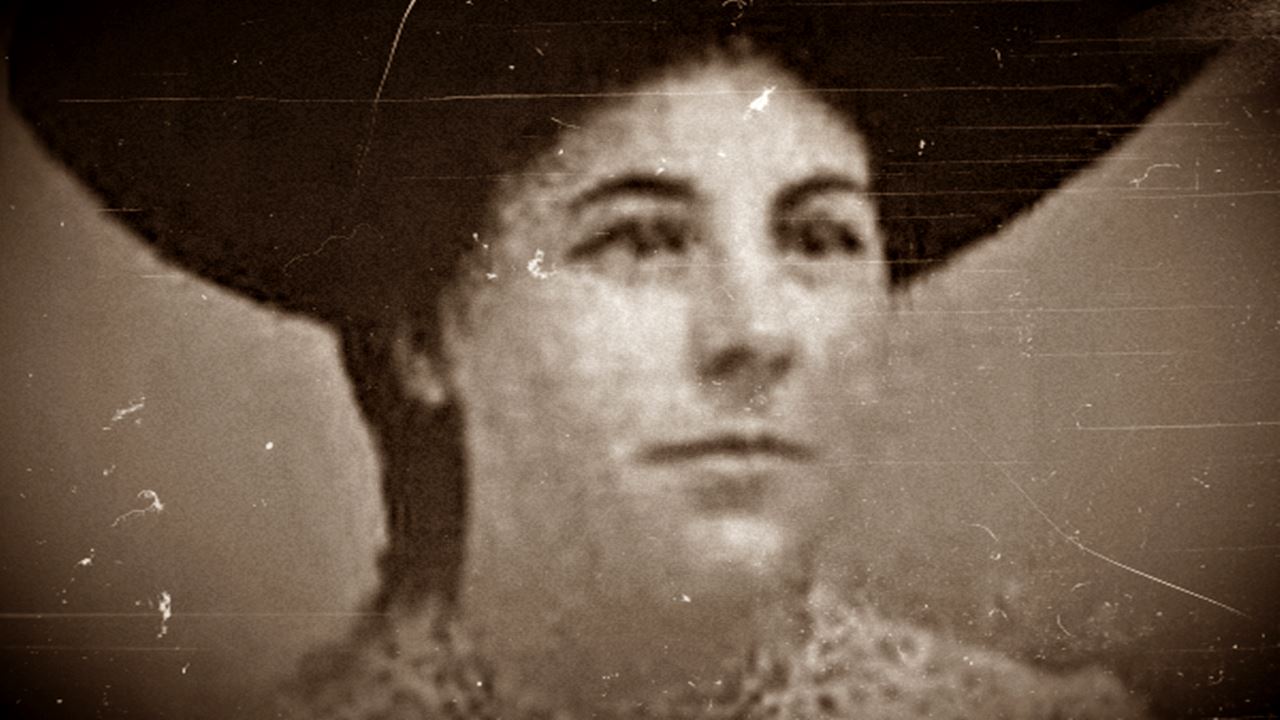
September 24th, 1905 was a Sunday, and twenty-two-year-old bookkeeper Mary Money had received her week‘s wages on the previous day. The dairy that employed her, owned by a man named Mr. Bridge, was in Lavender Hill, Clapham, and it also served as Mary’s home, as it did for some of the dairy’s other employees, including Mary’s good friend, Emma Howe. The pair had spent most of Sunday together with some of their other friends, and Mary had been her usual cheerful self.
At a little before seven o’clock, Mary told Emma that she was going for a brief walk, and didn’t expect to be gone very long. This was slightly out of character, as Mary rarely went out on Sundays, but it wasn’t an unusual enough event to arouse Emma’s suspicions. Indeed, Mary’s demeanor was as bright and carefree as ever. She put on a dress, placed the whole of her wages in her black knitted purse, grabbed a white handkerchief, and set off out into the evening.
Shortly after leaving the dairy, she stopped by the candy store near the Clapham Junction station, and bought a packet of chocolates, talking and joking briefly with the shop assistant, Francis Golding, who she knew quite well. Mary, despite having told Emma that she was simply going for a walk, revealed to Francis that she was actually going to Victoria, which would indicate that she planned on catching a train. She did not state the reason for going to Victoria, or the time of the train that she planned on taking, but Francis did not attach any particular significance to this.
Mary Money was next spotted at twenty past seven by a ticket collector at the train station. She also told this man, who was presumably unknown to her, that she was going to Victoria.
Three hours and thirty-five minutes later, Sub-Inspector William Peacock, a work crew foreman, was walking through Merstham Tunnel on the Brighton line. A train from London had passed through forty-five minutes earlier, and he and his workers were keen to resume their duties in the tunnel.
Peacock had progressed about four-hundred yards into the darkness when the eerie glow of his lamp illuminated what appeared to be a battered hat lying to one side of the tracks. A bit farther along, the swinging circle of lamplight revealed a misshapen bundle of rags, and then a single shoe, which aroused Peacock’s suspicions. He leaned in closer, finally spotting a pool of blood and realizing that he was looking at the horribly mutilated body of a woman.
The head and face of the corpse were violently smashed, so much so that the features were indistinguishable; in fact, one side of the face was completely flattened, likely by one of the train‘s wheels. The left arm was likewise crushed, the right thigh was fractured, and the left leg had been all but wrenched completely off. What remained of the lower portion of the body was riddled with copious cuts and bruises. The clothing of the deceased was garishly spattered with blood, and the walls of the tunnels were also splashed with it, up to a height of approximately forty feet.
Peacock alerted the Merstham station master, and with the help of his work crew, brought the body to the station, where police were immediately summoned. The remains were then taken to the nearby Feathers Inn, at the instruction of police officers who arrived at the scene.
Examination of the corpse—later determined to be only about an hour old—uncovered no identification of any kind: no purse, no money, and no train ticket. A description of the deceased was summarily released to the public, and on Monday morning, a farmer named Robert Money contacted police. Upon viewing the body, he confirmed that the dead woman was his sister Mary.
Initially, it was speculated that the woman had deliberately jumped to her death, either from the 9:13 train from London Bridge to Brighton, or the 9:33 from Charing Cross to Reading, both of which would have passed through the tunnel at the relevant times. Alternately, it was theorized, she may have walked into the tunnel and thrown herself in front of one of the aforementioned trains.
But several facts worked against the suicide hypothesis. Firstly, a white scarf was discovered pulled over the woman’s nose and crammed savagely into her throat to a depth of about ten inches, as though it had been used as a gag. There were also injuries on the lips and the roof of the mouth, indicating that someone had forced the fabric violently into the throat, leaving marks indicative of fingernails or a sharp stick. Secondly, a series of bruises and other injuries found on her hands and fingers were believed by the coroner to have occurred prior to her death, suggesting that she had fought with an attacker, though the coroner found no evidence that she had been raped.
As the investigation continued, witnesses recalled details to the police that further confirmed that Ms. Money had fallen victim to a particularly grisly murder. A guard on board the 9:33 train from Charing Cross stated that he saw a woman fitting Mary’s description in the first class compartment, and that she was sitting closely beside a thin man with a moustache, who was wearing a bowler hat. The guard believed that he saw this same man disembark from the train at the Redhill station at around twenty minutes past ten.
Likewise, a signalman at Purley Oaks, the last stop before Redhill, claimed that he had glanced through the window of the first class carriage and saw what appeared to be a man and woman either struggling or engaged in particularly enthusiastic amorous shenanigans. At the time, he did not consider it to be a serious enough situation to report to authorities, as the first class carriage of the train was often sought out by couples looking for some measure of privacy.
Though the carriage of the fateful train was examined by police, there did not appear to be any signs left behind to suggest that a violent tussle had taken place, but inspectors noted that there had been no doors left open on the train when it arrived at Redhill, as would have been the case had Mary simply jumped out of the train. A night watchman who had walked through the Merstham Tunnel at ten o’clock had reportedly found nothing amiss, strongly indicating that Mary, likely still alive when she was pushed, must have been ejected approximately ten minutes later, when the Charing Cross train would have gone through the tunnel.
If the man with the moustache was indeed Mary’s killer, then it’s likely he overpowered and gagged her in a very brief period of time, threw her out of the train as it passed through the Merstham Tunnel, then quickly closed the carriage door and calmly got off the train at Redhill station, never to be seen again. The vague description of the man given by the guard was unfortunately of no help; thousands of men in the area sported moustaches and wore bowler hats, as this was a fashionable look at the time.
Further compounding the mystery was the fact that Mary Money had no known male suitors, at least none that she took seriously, and she had not seemed distressed or worried when she set out on her Sunday night journey to Victoria. Emma Howe stated that Mary did not go out with men very often, and when she did, it was only as casual friends. Mary’s brother Robert also claimed that even though Mary often had men running after her, that she rarely gave them the time of day, and didn’t seem particularly interested in settling down. Francis Golding, the assistant from the candy store and a friend of Mary’s, confirmed that Mary was a respectable girl who didn’t seem to have much time or inclination for dating. A young man who worked as a railway clerk and had dated Mary in the past was questioned briefly, but had been provably in another town when the murder occurred, and reportedly was on friendly terms with the victim, regardless.
The autopsy of Mary’s body revealed that she had eaten a meal about three hours prior to her death, which would indicate that she had probably had dinner with the man she was going to meet before they had boarded the train. It is strange that she gave friends and family no hint whatsoever that she was dating a man on the sly, and no evidence was found to suggest that she had a secret paramour who she didn’t want anyone to know about. In fact, both Emma and Robert stated that Mary had been acting no different than usual in the weeks prior to her death. Her entire demeanor reportedly did not imply that anything unusual was going on at all; though she admittedly had not told Emma Howe where she was going or that she was intending to meet a man, she did tell others that she was boarding a train for Victoria, so it does not appear that she was attempting to disguise her whereabouts.
Mary’s black knitted purse and white handkerchief were never found, and nor was the train ticket she presumably purchased before boarding the 9:33 for her final ride. The mysterious man with the bowler hat who allegedly shared his victim’s first class carriage and then allegedly got off the train at Redhill was never identified, and a motive for Mary’s brutal slaying was never discovered.
 Crime Immemorial
One thought on “Mary Money”