
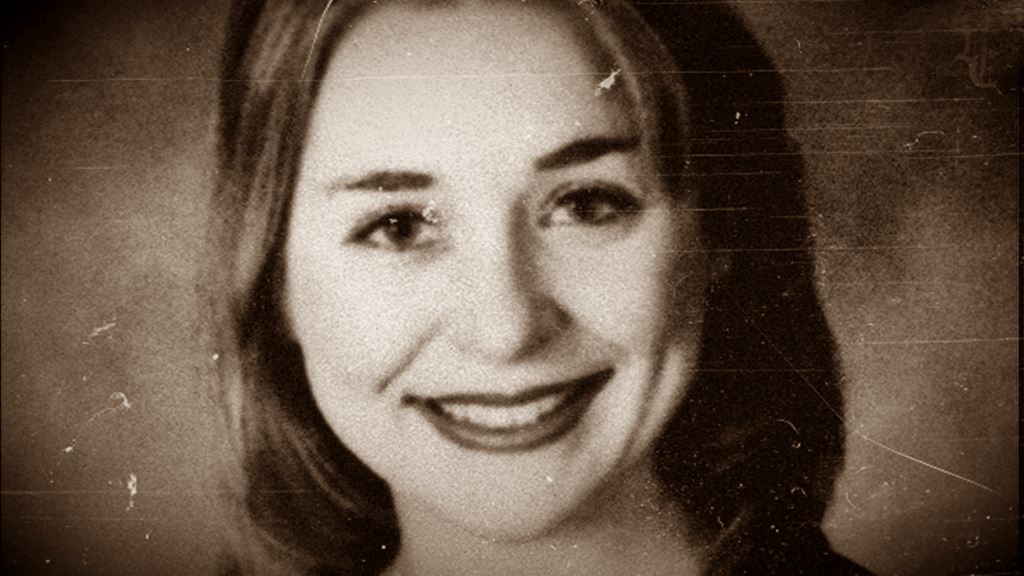
As winter of 1998 descended, a brilliant and promising young woman would be viciously slain in the street near the campus of one of the most prestigious universities in the world.
Suzanne Jovin was twenty-one years old, a senior majoring in political science and international studies at Yale University in Connecticut. She had been born in Germany, to American parents who were both well-regarded scientists, and Suzanne had initially been planning to follow in her mother’s footsteps, studying cell biology, but after having trouble in some of her initial science classes, decided to switch to politics, with a view to eventually going into diplomatic service.
Suzanne was a popular, hard-working student who spoke four languages, played the cello and the piano, and was active in various sports. Her friends remember her as a fun, compassionate young woman with a beautiful singing voice, strong opinions, and a fervent desire to help others. While at Yale, in fact, she became very active in a volunteer program called Best Buddies, which matched college students with disabled adults, and by her senior year, she was directing the program on her campus.
On the evening of December 4th, 1998, Suzanne had organized a pizza party for Best Buddies at the Trinity Lutheran Church on Orange Street in New Haven, Connecticut, and after it was over, she stayed until around eight-thirty p.m., cleaning up after the function. She then drove another volunteer home in the Yale-owned vehicle she had borrowed for the occasion, and afterward dropped the car off at the lot on the corner of Howe Street and Edgewood Avenue at around eight-forty-five p.m. Suzanne then walked the two blocks back to her own apartment, which was on the second floor of a building on Park Street whose ground floor housed the Yale police substation.
Only five minutes after she arrived home, some of her friends passed by the building and shouted up to her window to ask her if she wanted to go to the movies with them. Suzanne declined the invitation, telling them she had a lot of work to do. She then sat down at her computer and wrote an email, in German, to a friend of hers, in which she said that she could loan her some books after she retrieved them from “someone” who had borrowed them. Suzanne wrote that she would leave the books in a locker in the lobby of the apartment building, and gave the recipient of the email the access code for the door of the building.
Apparently, Suzanne then realized that she had forgotten to drop off the keys to the vehicle she had borrowed and returned earlier, so she set out on foot a few minutes later to take the keys back to the Yale-owned lot. At around nine-twenty-two p.m., she encountered a friend of hers named Peter Stein, who was out for a walk. They only spoke for a few minutes, but Peter later stated that Suzanne had told him she was exhausted and was looking forward to getting back home and getting some sleep. He said she was carrying some papers in her hand and did not appear to be distressed or nervous in any way.
Another student who was returning from a hockey game also spotted Suzanne about three minutes later, though she was reportedly walking north on College Street, not necessarily the direction she would be travelling if she were going back toward her apartment. Apparently she did return the keys to the borrowed vehicle at some time between nine-twenty-five and nine-thirty.
Less than half an hour later, though, a call came in to 911 dispatchers, reporting that a young woman was lying face down and bleeding at the corner of East Rock and Edgehill Roads, in a wealthy neighborhood less than two miles from the Yale campus. When police arrived, they found Suzanne Jovin with her feet in the road and the upper half of her body lying on the grass. She had been stabbed in the neck and the back of the head seventeen times, and her throat had also been cut. Later examination determined that her killer had stabbed her so savagely that the knife point had broken off in her skull. Though Suzanne was just barely alive when authorities reached her, she was pronounced dead shortly afterward.
The victim was found fully clothed, and had not been raped. There was still money in her pocket, she was still wearing jewelry, and her wallet was later found back at her apartment; this suggested that robbery had not been the motive for the seemingly random attack. Detectives also recovered a Fresca soda bottle from a nearby bush that had both Suzanne’s fingerprints and the partial palm print of an unknown individual on its surface. During the post-mortem examination, skin scrapings containing DNA were also obtained from beneath the victim’s fingernails.
Several witness accounts of the possible killer were reported in the days following the slaying. A few people reported having seen a tan or brown van parked near the area where Suzanne’s body was found. In addition, one woman claimed she saw a blond, athletically-built man in his twenties or thirties with a “chiseled” face, clad in a green jacket and dark pants, running as fast as he could in the opposite direction from the intersection where the remains were discovered. The witness stated that this man had peered quickly into the passenger side window of her car before running off, and that this occurred shortly before ten p.m.
A few locals also reported hearing the sounds of a man and woman arguing in the area and something that sounded like a scream, though it was unknown if this was related to the Suzanne Jovin case. There were also reported sightings of two different men seen walking near Suzanne shortly before she was found stabbed; these included a black or Hispanic man wearing a dark hooded sweatshirt, and a blond-haired white man wearing glasses and “nice” clothes.
Because the site where Suzanne’s body was found lay nearly two miles from the spot where she was last seen alive, investigators assumed that she must have gotten into a vehicle, either voluntarily or under threat, and been driven to the place where she was murdered, as there was no way she could have reached the site by walking or running there in such a brief amount of time. If she had gotten into a car willingly, police theorized, then there was a possibility that the killer was someone who knew her.
To that end, investigators initially focused on a popular lecturer at Yale and a man who happened to be Suzanne’s senior essay adviser: James Van de Velde, who was then thirty-eight years old. Van de Velde had a Ph.D. in international security studies, had previously done work for the Pentagon and the State Department, and was a member of the U.S. Naval Intelligence Reserves.
Friends and colleagues were shocked that Van de Velde’s name had come up as a suspect in such a vicious crime, for the man was the very picture of professionalism and propriety. Though it seemed that investigators were so keen to solve the crime that they were willing to insinuate all kinds of things about the well-liked professor—including the supposition that he had been having an affair with Suzanne Jovin that eventually went sour—there was in reality no reason to believe that Van de Velde had perpetrated the attack. There was not even a whiff of a rumor that Suzanne and Van de Velde were romantically involved, and besides, Suzanne had seemed quite happy with her longtime boyfriend Roman Caudillo, who had been ruled out of the investigation early on because he had demonstrably been in New York City on the night of Suzanne’s slaying.
Though Suzanne had reportedly been extremely frustrated with what she perceived as Van de Velde’s lack of interest in her senior essay, and had complained to friends and family that he had been putting her off and delaying getting back to her about discussing it, this seemed a very thin motive for murder. Van de Velde was initially very cooperative with police, offering to take a polygraph and a blood test, and giving authorities free license to search his car and apartment. Apparently, nothing untoward was discovered.
Despite the flimsy evidence, however, police dogged the professor for probably far longer than they should have, and Yale University was forced to suspend him so that he wouldn’t be a distraction in his classes, a move which damaged his reputation and career for quite a long time afterward.
The investigation was thereafter plagued by unexplained secrecy and inaction, and forensic examination on the palm print and the DNA evidence recovered from the scene was not even performed until late 2000. At that time, it was discovered that neither the DNA nor the palm print on the Fresca bottle matched James Van de Velde; indeed, the fingernail scrapings taken from Suzanne Jovin’s body actually matched a technician at the crime lab, suggesting that the DNA evidence had been tainted.
James Van de Velde later sued both Yale University and the New Haven Police Department, and ended up with an settlement of approximately two-hundred-thousand dollars, though outrageously, the State’s Attorney did not admit publicly that Van de Velde was no longer a suspect in the murder until mid-2013. James Van de Velde was ultimately able to get his career back on track, going on to teach at Johns Hopkins University.
As for other suspects in the murder, there have been very few, though a composite sketch of the square-jawed young blond man seen running away from the scene of the crime has been released to the public. There was also some speculation about a former Yale student known only by the pseudonym “Billy,” who committed suicide in 2012 and allegedly told friends that he was afraid he would get arrested for the murder. Billy also spoke German, as Suzanne did, reportedly owned a green jacket like that seen on the man running from the scene, and allegedly had problems with women.
There have also been theories that Suzanne was murdered by a police officer, perhaps one that worked in the station on the ground floor of her apartment building. This hypothesis is admittedly tenuous, with only the baffling mishandling of the case and the detrimental focus on James Van der Velde to support it; proponents argue that the police department was attempting to cover up for one of their own by deliberately sabotaging the investigation.
Another possibility was that Suzanne was murdered by a complete stranger for totally random reasons, or that she was slain by the unknown “someone” who had borrowed her books and who she had mentioned in the email to her friend a short time before she died.
Some investigators have even asserted that Suzanne Jovin’s killing might have been motivated by terrorism, as her senior thesis was about Osama bin Laden and Al Qaeda, though the majority of the detectives working the case consider this angle to be farfetched at best.
The case is still open, and a new appeal for information was launched in 2018. So far, there have been no new developments.
 Crime Immemorial