
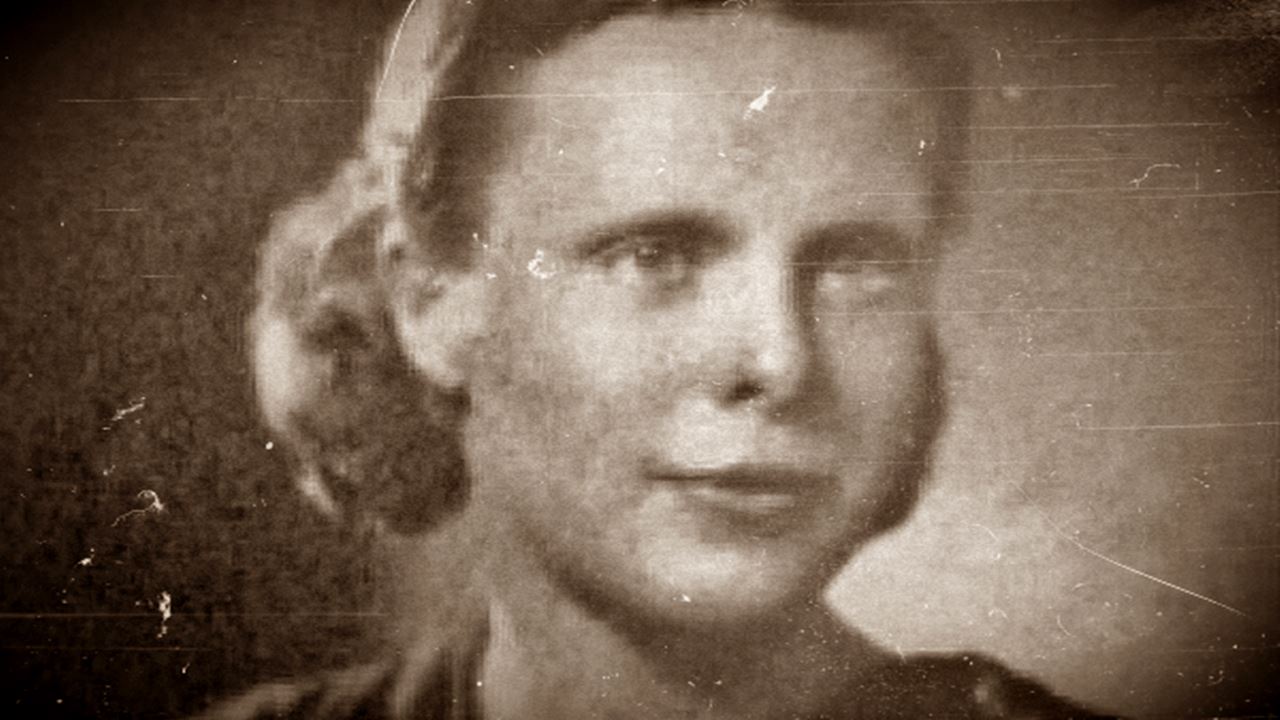
Pamela Werner was the adopted daughter of Edward Theodore Chalmers Werner, a retired British diplomat who had remained in the Chinese capital after his retirement, becoming an expert in the language and culture of the country and often lecturing at Peking University. Though his wife Gladys Ravenshaw had died in 1922, E.T.C. Werner had stepped up and raised Pamela on his own from the time she was five years old, sending her to elite private schools and instilling in her a fierce independence. Father and daughter lived just outside the city’s heavily-guarded Legation Quarter, which was home to many of Peking’s foreign residents, including journalists, political refugees, and various diplomats.
In January of 1937, Pamela was only a few weeks away from her twentieth birthday. Though her biological heritage was not known, as she had lived the first two years of her life in a Catholic orphanage, her pale complexion and gray eyes suggested she might have been the child of exiled Russian whites, as many of the foundlings in the area were. Whatever her origin, though, it seems that her striking looks were attracting some unwanted attention, and her father had begun to become concerned. Evidently, he felt that her social life was becoming a little too active, and there was also the small matter of the headmaster of her school, Sydney Yeates, allegedly making sexual advances toward her. Werner was planning on sending his daughter back to England to finish her schooling, and by all accounts, Pamela was not all that happy about it.
On the morning of January 7th, Pamela hopped on her bicycle and set out to a dental appointment she had scheduled. A little while later, she returned home and wrote some letters, then went out again a few hours later. She told household servant Ho Ying that she would be back for dinner by seven-thirty.
Between three and four o‘clock that afternoon, she was spotted at the Wagons Lits hotel, a popular gathering spot for foreigners living in Peking. She was going to be meeting her friend Ethel Gurevitch, who she had made plans with the day before. While she waited, she perused the hotel’s brochure and inquired to an employee about renting a room there. Perhaps she was planning on moving out of her father’s house so that she wouldn’t have to return to England, or perhaps she was simply thinking about setting up a romantic getaway with a young man she was interested in at school. Whatever the case, she did not book a room, but simply asked for information and left, then returned a short time later to meet up with Ethel.
The two young women went to the Gurevitch home and had tea with Ethel’s mother, though Pamela claimed she was not hungry and didn’t eat very much. After tea, the girls went to a local ice skating rink, arriving at around six o’clock and meeting up with another friend, Lillian Marinovski. The three young women skated and socialized at the crowded rink until seven-thirty, at which point Pamela realized she would have to be getting home for dinner.
Both Ethel and Lillian were reportedly uneasy about Pamela going home in the dark all by herself, but Pamela seemed unfazed. She had grown up on the streets of Peking and often traveled around the city on her bicycle alone, with nothing untoward befalling her, so she saw absolutely no reason to think that this time would be any different. Her two friends watched as Pamela headed off into the darkness with her ice skates thrown over one shoulder.
Back at the Werner household, Pamela’s father returned home at eight o’clock, and though he wasn’t terribly alarmed about Pamela’s absence at first, by the time ten-thirty rolled around, he began to get extremely concerned. He sent Ho Ying to the skating rink to see if she was still there, but when the servant arrived, the rink had closed and the employees were cleaning up. Ho Ying asked about Pamela, but the rink had been so crowded that evening that none of the workers had noticed her in particular. Ho Ying returned home with the bad news, at which point Werner retrieved a flashlight and began combing the streets around their home for his missing daughter.
Unfortunately, his search would be to no avail, and Pamela’s gruesome fate would not be discovered until the following morning.
At a little after eight o’clock, two rickshaw drivers and an elderly local man noticed a pack of wild dogs worrying at a bundle of rags near the base of the Fox Tower. Upon closer examination, it was discovered that the bundle was actually the horribly mutilated body of a young woman of European descent.
When authorities first arrived, they presumed that the girl was simply another in a series of Russian migrant suicides that were a grimly common occurrence during the upheaval that preceded the Japanese takeover of the city later that year. However, it was quickly established that the extensive wounds on the body suggested something far more sinister. The identity of the victim was confirmed a short time afterward, when E.T.C. Werner happened upon the scene during his own search and recognized some of his daughter’s clothing and jewelry. Pamela was clad only in her undergarments, stockings, and shoes, though her outer clothing was found near or under the body. Her bicycle and skates, and perhaps her sweater and coat, were missing, however. The spot where her body was found lay only about 250 yards from the Werner home.
Pamela Werner had been murdered by repeated blows to the head by a smooth and heavy object, possibly made of wood or stone. Her skull had been fractured, causing her death, but the killer was not done with her body by a long shot.
Not only had additional blows been inflicted on Pamela after she was dead, but the murderer had also viciously stabbed and slashed her repeatedly post-mortem, particularly around the face and upper abdomen, to such an extent that she was no longer recognizable. He had, further, skillfully sliced open her abdomen and removed most of her internal organs, and also drained the body of blood. Pamela’s ribs had been broken from the inside and her heart had been removed. The killer’s knife had then been inserted into Pamela’s vagina multiple times, causing such grievous injury that it was difficult to determine whether she had been raped, though the medical examination suggested that this was likely.
Because of the relative dearth of blood on the ground, it was theorized that she was murdered elsewhere, re-dressed by the killer, then dumped near the Fox Tower at some time during the night. The fact that her wristwatch had stopped near midnight suggested that this was around the time she had been attacked.
Because of the volatile political climate in the city at the time, Pamela’s mutilation was not widely reported, but authorities who examined her body presumed that her murder had been sexually motivated, and carried out by either someone who knew her, such as a prior or potential suitor, or by a particularly violent serial killer who had chosen her at random. Due to the extent of the injuries to the body and the fact that none of Pamela’s expensive jewelry was taken, it was established quite early on that robbery was definitely not the motive.
Beyond that, however, it seemed that there were very few leads. A handful of other expatriates in the diplomatic community speculated that E.T.C. Werner himself may have killed his daughter in a fit of rage; they pointed out that Werner had often been given appointments in remote outposts because of his difficulty in getting along with others, and he was known to have something of a short temper. He had once allegedly hit a young Chinese man in the face with a cane after the man had supposedly shown too much interest in Pamela, for example.
Despite the rumors, there was no solid evidence tying Werner to his daughter’s killing, and authorities largely believed that someone else was probably responsible, though what the motive for such a brutal attack could have been, they had no idea. More superstitious folk attributed the murder to the evil spirits reputed to lurk around Fox Tower, but ghosts aside, there was reason to imagine that the murder could have had political overtones.
American journalist Helen Foster Snow, who lived near the Werners with her husband Edgar—also a journalist—theorized that Pamela had been killed by Kuomintang assassins who had actually mistaken Pamela for her. This was not a terribly farfetched scenario, as Helen and Pamela looked eerily alike, and Helen herself had come under a great deal of fire for the things she and her husband had written against the government. Working against this hypothesis, however, was the method in which Pamela had been murdered and mutilated; known assassinations of that type were generally quick and clean affairs, carried out with a single gunshot to the head.
A week after Pamela’s death, a canvass of the neighborhood known as the Badlands outside of the Legation Quarter caused another lead to bubble to the surface. The Badlands was a seedy district of bars, brothels, and boarding houses frequented by the poorer foreigners and refugees occupying Peking. A Russian woman who ran a boarding house in the neighborhood reported to authorities that she had seen a bloody knife and clothing in the room of one of her tenants, a Canadian man known only as Pinfold.
Pinfold was brought in for questioning, and one police officer thought he recognized the man as someone who had been lingering around the crime scene on the morning Pamela’s body was found. Pinfold seemed jittery, but didn’t admit to anything. It was discovered that Pinfold frequented a bar and brothel in the Badlands, and though Pamela was known to generally avoid the district, especially at night, it was thought that if she had been in a hurry to get home on the night that she was killed, then she might have taken a direct route right past the bar and brothel where Pinfold was often seen.
Shortly thereafter, police raided the bar, but no new information came to light. None of the patrons there recognized Pamela, and Pinfold claimed he had never seen her before either. The blood on the knife and clothes in his possession turned out to be animal blood. Despite the lack of evidence connecting Pinfold to the crime, however, his statements as well as those of a few other patrons at the bar did provide authorities with another trail to follow.
Apparently, a loose group of nudists had taken to meeting in a cottage just outside the city, and Pinfold admitted that he had worked security there, and had on a few occasions recruited women to perform at some of these gatherings. The meetings were organized by an American dentist named Wentworth Prentice, who had lived in China for some time after his graduation from Harvard‘s dental school.
Casting suspicion upon Prentice was the fact that his wife had left him in 1932, taking the children back to the U.S. with her, and there were suggestions on file with the consulate that hinted that there was reason to think that Prentice might be a danger to one of his children.
Further, Prentice’s apartment was right next to the ice rink where Pamela had last been seen alive, and when police went there to question him, they discovered that the flat had recently been repainted. He had something of a thin alibi for the night Pamela was murdered as well, claiming he had been at the movies alone, and he apparently lied when asked if he had ever done any dental work on Pamela.
Even more damningly, an Irish journalist named George Gorman who vociferously defended Prentice was found to also be a member of the nudist group, and he and his wife had apparently had Pamela to their home for tea a day or two before her murder. It was also alleged that Gorman made sexual advances toward Pamela, which she refused.
Despite the alluring tendrils that suggested a possibly murderous sex cult operating in Peking, it should be noted that many original records from the time were lost during the ensuing wars, and a great deal of controversy exists about the accusations concerning Wentworth Prentice. And though E.T.C. Werner, unhappy with the lack of progress on the case, undertook his own investigation into the death of his daughter, it is not known how accurate or unbiased his own accounts are. He seemed to genuinely believe, at least at first, that the killer was a Westerner, and was apparently outraged that the leads concerning Pinfold, Prentice, and Gorman were not pursued more aggressively.
Other investigators into the killing, however, put forth various other theories, including that Pamela was killed by the potential suitor who was beaten with her father’s cane, or alternately by another infatuated young man at school who she had rebuffed. In later years, E.T.C. Werner himself seemed to change his mind about the sex cult theory, and apparently came to believe that the young man he had assaulted was the true killer.
Some speculated that the removal of Pamela’s organs might have been some kind of ritualistic flourish meant to send a message, that her organs had been harvested for medicinal or magical purposes, or that she had been the victim of a Ripper-style serial killer who was still on the loose. Still others were of the opinion that she was murdered by the Japanese in retaliation for an incident the previous summer in which two Japanese officers had been killed by a pair of British guards in the Legation Quarter.
The crime was largely forgotten in the turmoil after the city fell to the Japanese, and though E.T.C. Werner remained in Peking as long as possible and pursued the investigation until his death in 1954, no arrests were ever made in the death of Pamela Werner. In fact, the case was, for all intents and purposes, erased from the public consciousness until a random footnote about the murder in a biography of Helen Foster Snow piqued the interest of British writer Paul French, who later researched the killing and penned a book about it titled Midnight In Peking, which was published in 2011. In the book, French pegs Wentworth Prentice as the most likely culprit, but critics, as well as Prentice’s descendants, insist that the evidence is far too scant to make such a pronouncement, and argue that a retaliatory killing by the Japanese is the more probable scenario. French also came under fire for his alleged poor sourcing, and his over-reliance on the testimony and theories of E.T.C. Werner himself.
In 2018, retired British police officer Graeme Sheppard published a new book about the case, titled A Death in Peking: Who Really Killed Pamela Werner?, in which he strove to address the perceived unreliability in French’s arguments. Sheppard reexamined the evidence presented in the earlier book, and also introduced new angles and previously undisclosed suspects, such as a British diplomat named David John Cowan. A Death in Peking ultimately concluded that Pamela Werner was in all likelihood murdered by a former friend of hers, Han Shou-ch’ing, who was acting alone.
The debate is unlikely to ever be resolved.
 Crime Immemorial