
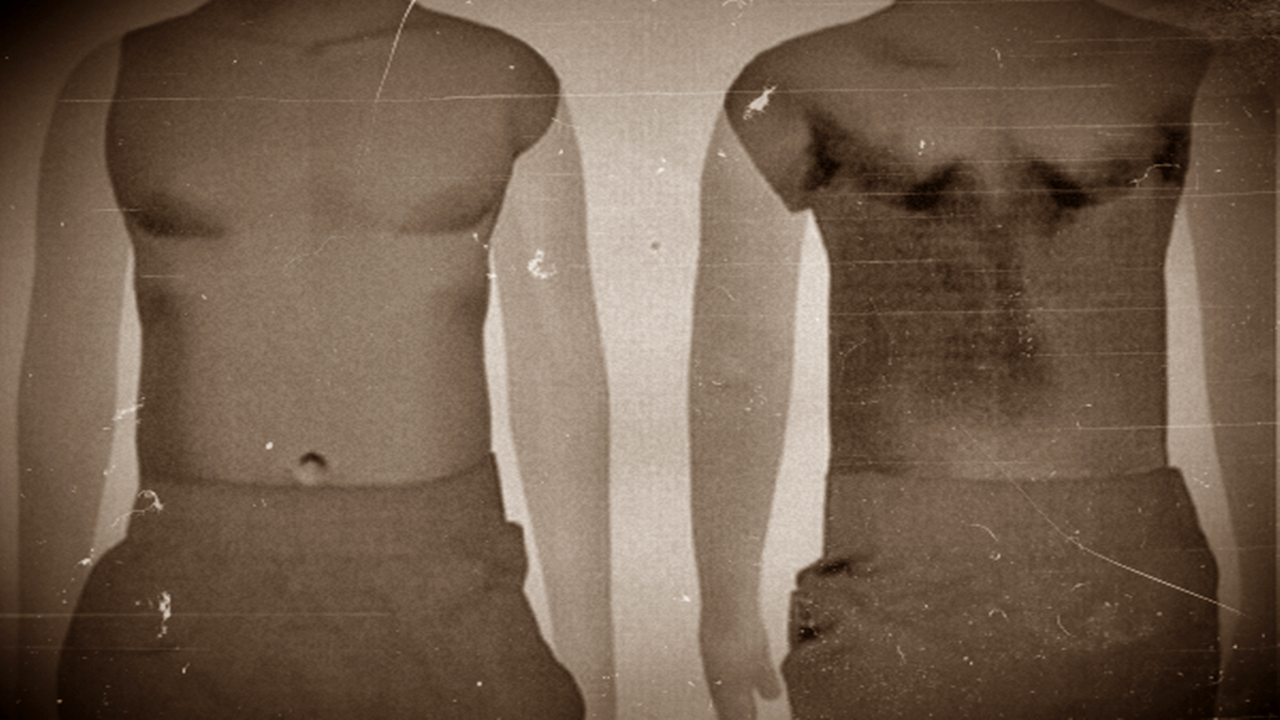
On September 21st, 2001, in the United Kingdom, a heartbreaking and gruesome crime was discovered that would reveal a troubling undercurrent of black magic and human trafficking taking place in the nation’s capital.
A passerby strolling near Tower Bridge in London, England on that Friday afternoon noticed a flash of something bright orange, floating in the waters of the Thames. Upon closer examination, the colorful object turned out to be a pair of shorts worn on the dismembered torso of a young boy.
The child was a black male, believed to be between four and seven years old, whose head, arms, and legs had all been removed with grisly precision. Further, a forensic examination determined that all of the boy’s blood had been drained from his body following his murder. The ritualistic nature of the slaying, as well as the wrapped white candles found in the Thames shortly after the child’s remains were retrieved, suggested to authorities that the boy had been a victim of human sacrifice. Because the child’s identity was unknown, investigators dubbed him Adam.
By analyzing the child’s stomach contents, mitochondrial DNA, and isotope levels in the bones, scientists were able to conclude that the victim hailed from West Africa, most likely from Benin City in Nigeria, and had only been in the United Kingdom for a few days before he was murdered. This theory was reinforced by the discovery of specific types of plant matter native to Nigeria in the boy’s stomach; among the findings were Datura seeds, which would have had a sedative and/or hallucinogenic effect, and Calabar beans, which would have paralyzed the boy. These substances further dovetailed with the sacrifice hypothesis, as they would indicate that the child had been drugged, though analysts were quick to point out that it was likely the victim would have still been aware of what was happening to him, and still been able to feel pain.
In an even more bizarre touch, there were also flecks of gold found in the child’s intestines; experts believed that the boy was made to swallow the gold so that his blood would appear more “pleasing” to the deity to which he was being offered.
At this stage, investigators traveled to West Africa in an attempt to link the child’s DNA to that of any known missing children or their families, but were unsuccessful in this regard. They also visited South Africa and consulted with Nelson Mandela, who helped them to publicize the case throughout the continent.
Although authorities initially believed that Adam had been the victim of a muti killing—that is, a type of black magic in which people are murdered to obtain various body parts which are then utilized in medicines or magical rituals—the fact that the boy’s genitals remained intact largely negated this hypothesis, as genitals are considered one of the most powerful body parts in that belief system. Additionally, muti killings are far more common in South Africa, and not particularly prevalent in West Africa.
According to several experts in West African voodoo, it was deemed extremely probable that Adam had been trafficked into the United Kingdom by wealthy West Africans for the express purpose of being a sacrifice; and because of the orange shorts, it was further speculated that he had specifically been a sacrifice to the Yoruba river goddess Oshun, who is often associated with the color orange and is usually entreated by people seeking money, power, or good luck. Experts were adamant, however, that this type of human sacrifice is not common in that part of the world, and was presumably carried out by a priest of an offshoot sect. Moreover, it was surmised that the child’s limbs and head were retained by the sect as powerful magical totems.
The orange shorts provided a further clue in the case as well, since they had been manufactured in China, but were only sold at Woolworth stores in Germany. According to investigators, human traffickers have often been known to smuggle people from parts of Africa into the UK via Germany, so this bolstered the human trafficking angle significantly.
In 2002, a seeming break in the case occurred when a Nigerian woman named Joyce Osiagede was taken into custody in Glasgow, Scotland, while attempting to claim asylum for herself and her two daughters. She seemed mentally unstable at the time of her arrest, and when police searched the residence in Glasgow where she had been staying, they found an orange pair of shorts very similar to the ones Adam had been wearing. Though the possible link was intriguing, authorities could find no further evidence linking her to the murder, and she was subsequently deported back to Nigeria.
Ten years passed with no progress on the case, but then, in 2011, a group of investigative journalists tracked down Joyce Osiagede again and asked her what she knew about Adam. At that time, she confessed that she had known the boy, and that he was actually a six-year-old named Ikpomwosa. She explained that she had looked after the child for a time when she was living in Germany, but that she had eventually given him to a man she called Bawa, who said he was taking the child to London. Investigators delved into this new lead, but again, no notable developments resulted.
Two more years went by. In 2013, Joyce Osiagede contacted the BBC and stated that she was now ready to tell the world the truth about Adam. The child’s real name, she said, was actually Patrick Erhabor, and the man she had given him to—the individual she called Bawa—was in reality Kingsley Ojo, a known human trafficker who had been arrested in England in 2002 and deported back to Nigeria. Ojo later claimed he had nothing to do with the murder of the boy found in the Thames, and authorities have thus far found no evidence directly linking him to the crime.
Though detectives were hopeful that this new information would bear fruit, they remained skeptical of Joyce Osiagede’s claims, for several reasons. Firstly, she had changed her story numerous times, making her appear unreliable. Secondly, she suffered from mental illness and was taking several medications, which resulted in erratic behavior and statements. And thirdly, she had mistakenly identified a photograph of a boy who she told authorities was Ikpomwosa/Patrick Erhabor, when the child in the picture was actually the son of a friend of hers named Danny who was later found alive and well.
While it seems firmly established that Adam was the tragic victim of human trafficking and ritual sacrifice, it is less clear what his actual identity was and what exact circumstances led to his butchered remains turning up in the Thames. The investigation into the monstrous crime continues.
 Crime Immemorial