
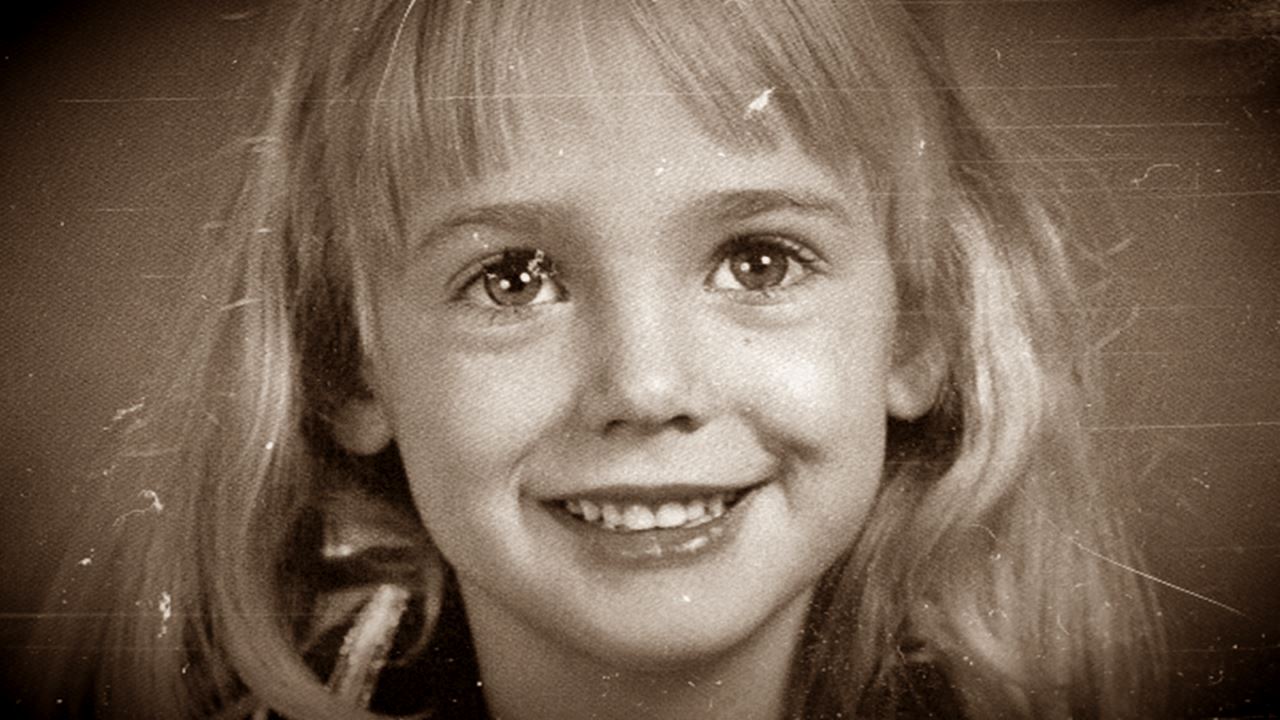
On the day after Christmas of 1996, a crime occurred that would go on to become one of the most iconic and hotly debated child murders in the history of American crime, a baffling case of a six-year-old beauty queen, her affluent parents, a bizarre ransom note, and a less-than-ideal police investigation. This is the infamous case of JonBenét Ramsey.
JonBenét Ramsey had been born in Atlanta, Georgia in 1990, but only a year later, moved with her parents John and Patsy and her older brother Burke to a wealthy suburb in Boulder, Colorado. John Ramsey was the CEO of a computer systems company called Access Graphics, a firm that would later be purchased by Lockheed Martin. Ramsey was a multi-millionaire, and the family lived accordingly.
Patsy Ramsey, formerly Miss West Virginia of 1977, enjoyed traveling around the country with JonBenét and entering her in numerous pageants, many of which she won. By the time she was six years old, JonBenét had several pageant titles to her name, including Little Miss Colorado, America’s Royale Miss, Colorado All-Star Kids Cover Girl, and National Tiny Miss Beauty.
Early on the morning of December 26th, 1996, Patsy Ramsey awoke to prepare for a trip the family would be taking later that day, but she noticed that JonBenét was not in her bed. She didn’t become particularly alarmed until she found a strange, two-and-a-half-page ransom letter lying on the staircase in the kitchen. It was addressed to “Mr. Ramsey,” and read:
“Listen carefully! We are a group of individuals that represent a small foreign faction. We respect your bussiness [sic] but not the country that it serves. At this time we have your daughter in our posession [sic]. She is safe and unharmed and if you want her to see 1997, you must follow our instructions to the letter.
“You will withdraw $118,000.00 from your account. $100,000 will be in $100 bills and the remaining $18,000 in $20 bills. Make sure that you bring an adequate size attaché to the bank. When you get home you will put the money in a brown paper bag. I will call you between 8 and 10 am tomorrow to instruct you on delivery. The delivery will be exhausting so I advise you to be rested. If we monitor you getting the money early, we might call you early to arrange an earlier delivery of the money and hence a [sic] earlier pick-up of your daughter.
“Any deviation of my instructions will result in the immediate execution of your daughter. You will also be denied her remains for proper burial. The two gentlemen watching over your daughter do not particularly like you so I advise you not to provoke them. Speaking to anyone about your situation, such as Police, F.B.I., etc., will result in your daughter being beheaded. If we catch you talking to a stray dog, she dies. If you alert bank authorities, she dies. If the money is in any way marked or tampered with, she dies. You will be scanned for electronic devices and if any are found, she dies. You can try to deceive us but be warned that we are familiar with law enforcement countermeasures and tactics. You stand a 99% chance of killing your daughter if you try to out smart [sic] us. Follow our instructions and you stand a 100% chance of getting her back. You and your family are under constant scrutiny as well as the authorities. Don’t try to grow a brain John. You are not the only fat cat around so don’t think that killing will be difficult. Don’t underestimate us John. Use that good southern common sense of yours. It is up to you now John!
Victory!
S.B.T.C.”
Despite the warnings in the ransom letter, Patsy phoned police at a little before six a.m., telling them her daughter had been abducted. She also phoned family members and friends, ostensibly for support and to get them to come help in the search. Police arrived only three minutes after the initial 911 call.
Because the case was first perceived as a kidnapping, officers did not take particular care to search the entire house or secure the area as a crime scene, though JonBenét’s bedroom was cordoned off, as it was assumed that this was where the child had been taken from. However, numerous individuals—including police officers, FBI agents, relatives, victim advocates, and the family’s minister—were essentially allowed to mill around the house looking for clues and trying to help in the investigation, thereby contaminating any physical evidence that might have been present. Most notably, authorities did not immediately search the basement.
As the morning wore on, John Ramsey began making arrangements to pay the ransom, although the phone call promised by the writer of the letter never materialized. At around one p.m. on December 26th, at something of a loss as to what else to do, the police advised John and a friend of the family to search the house again and see if they could see anything out of the ordinary that might suggest what had happened to little JonBenét. It was at this point that John Ramsey, opening a latched door to an unsearched basement room, discovered the body of his six-year-old daughter.
JonBenét was found partially covered with a white blanket, with a piece of duct tape over her mouth. Her wrists had been bound with nylon cord, and a length of this same cord, along with a segment of a broken paintbrush handle, and been used to make a crude garotte that had been used to strangle the child. Her skull was also fractured, an injury that likely would have eventually killed her even if the strangulation had not been brought into play. Though a later examination found no semen on the remains, it was believed that she had been sexually assaulted in some fashion, as there were signs that her vaginal area had been wiped clean. Some sources also reported wooden splinters from the paintbrush handle were recovered from the girl’s vagina.
John Ramsey removed the duct tape and carried the body of his daughter upstairs, again contaminating crucial evidence. In the basement, police officers found a partial boot print and a broken window, suggesting that perhaps an intruder had entered the home and murdered the child. It was also believed that whoever had killed her had likely subdued her with a stun gun prior to committing the crime.
Authorities, though, were not so sure that the Ramseys themselves weren’t in some way involved in the death of their daughter. The FBI made particular note of the fact that the ransom letter was very suspicious, as it was unusually long and verbose, had been written at the scene with paper and a pen taken from the Ramsey home, and most significantly, asked for the troublingly specific amount of one-hundred-eighteen-thousand dollars—which just happened to be the exact sum that John Ramsey had just received as a bonus at work.
John, Patsy, and nine-year-old Burke all gave handwriting samples to investigators, as well as blood and hair. Both John and Burke were definitively ruled out of having written the ransom letter, as their handwriting did not match, and though Patsy’s handwriting was similar enough that investigators could not rule her out, they were unable to prove she had penned it.
From the very early stages of the investigation, there were two distinct lines of inquiry. The first of these, which seemed to be the primary focus shortly after the crime occurred and for many years afterward, was that the Ramseys themselves had killed their daughter and attempted to stage the crime to look like a kidnapping gone wrong. Those who supported this hypothesis noted the peculiar ransom letter, the perceived lack of cooperation by John and Patsy Ramsey, and other clues found at the scene, including the fact that the broken paintbrush handle used to strangle JonBenét was found to correspond to the bristle end of a paintbrush found among Patsy’s art supplies.
Additionally, at autopsy, JonBenét was found to have eaten pineapple shortly before her death. Though neither John nor Patsy could recall feeding pineapple to the child, crime scene photographs demonstrate that there was actually a bowl of pineapple chunks left on the kitchen table with a spoon still in it. The bowl was found to have Burke’s fingerprints on it.
Detectives who believed the family was somehow involved speculated that John or Patsy was abusive and had killed their daughter accidentally, after which they staged an intruder murder to cover up the incident. Alternately, they proposed, nine-year-old Burke may have hit his younger sister in the head with something, inadvertently killing her.
In the wake of the tragedy, the media ran with the family involvement angle, playing up the sordid “pageant culture” aspect and implying that even if the family had not killed the girl outright, then their supposed “flaunting” of her on the pageant stage may have placed her in danger by exposing her to pedophiles. The Ramseys were repeatedly raked over the coals, with every nook and cranny of their private lives and parenting skills exposed and picked over. The Ramseys were involved in several libel lawsuits over the years, particularly after Burke became the target of the media’s attacks.
But although the family was the main target of the inquiry, authorities did also explore the possibility that JonBenét had been murdered by a random intruder, or by someone known to the family. To this end, they questioned more than sixteen-hundred people as persons of interest in the case, noting in particular that at the time of the murder, nearly forty sex offenders were living within a two-mile radius of the Ramsey home. There had also been a series of approximately one-hundred burglaries in the same area in just the few months before JonBenét was slain.
One of the individuals examined early on by police was a neighbor and family friend named Bill McReynolds, who had played Santa Claus at the Ramseys’ holiday party on December 23rd and had a particularly close friendship with JonBenét. Though his name emerged during the initial stages of the investigation, as the Ramseys were attempting to come up with anyone they knew who might have had a motive, however slim, for killing the child, McReynolds was in relatively poor health and would likely not have had the physical strength to have administered the blow to the head that had fractured JonBenét’s skull. In addition, he had a large beard, which would undoubtedly have left copious hair evidence at the scene had he been the culprit.
Likewise, the Ramseys’ former housekeeper Linda Hoffman-Pugh, as well as her husband, handyman Mervin Pugh, were briefly examined, as it was discovered that Linda had recently asked the Ramseys for a loan and was denied; she could also have known the amount of the holiday bonus that John Ramsey had received, and would have had keys to the house. The Ramseys themselves, though, did not believe that either of the Pughs would have harmed their daughter.
There was also a twenty-six-year-old electrician named Michael Helgoth, who worked in a nearby auto salvage yard and had previously been involved in a property dispute with the Ramseys. Helgoth died, apparently by suicide, on Valentine’s Day of 1997. Significantly, a stun gun was found near his body, as was a baseball cap bearing the initials SBTC, the same letters that the ransom letter writer had ended his missive with. Helgoth also owned a pair of boots similar to the ones that made the print in the Ramseys’ basement. Some sources also reported that a few dog hairs found at the scene of the murder matched two wolfdog puppies that Helgoth owned.
There has been further speculation that if Helgoth was the killer, he may have had an accomplice named John Steven Gigax, who had been convicted of sexually assaulting a young girl some time before. Receipts and other records, however, seem to demonstrate that Gigax was not in Colorado at the time of the murder, and even Helgoth’s involvement has been dismissed by a number of investigators, as many believe the boot print was not an exact match and Helgoth likely killed himself because of a recent breakup with a girlfriend, and not because he thought he was going to be arrested for killing JonBenét Ramsey.
A more promising suspect who came to light slightly later on was Gary Oliva, a paranoid schizophrenic who had been living as a transient and collected his mail from a church only a block from the Ramsey home. Oliva was reportedly obsessed with JonBenét, carrying around magazine photos of her in his backpack, as well as a poem to her that he had written. He was also photographed attending a memorial vigil for the child that took place in December of 1997.
What’s more, Oliva was a registered sex offender in Oregon, convicted of molesting a little girl. He also stood trial later on for possession of child pornography. Perhaps even more significantly, he carried a stun gun in his backpack, and was suspected of trying to strangle his own mother with a garotte similar to the one used to throttle JonBenét. Further, a friend of Oliva’s told police that Oliva had confessed tearfully to him that he had “hurt a little girl.”
As of December 2021, Oliva was in a Colorado prison, serving a 10-year sentence on child pornography charges, and though he supposedly confessed to killing JonBenét in a letter to a longtime friend, police apparently have no record of his confession, though he remains a person of interest.
Though the Boulder District Attorney’s office as well as several investigators involved with the case strongly suspected that the murder had been committed by an intruder, a grand jury was convened against John and Patsy Ramsey in September of 1998, prompting some detectives to quit the investigation in protest. In 1999, however, the District Attorney declined to prosecute, claiming that there was insufficient evidence to charge the Ramseys with any wrongdoing. Several other investigators, as well as a federal judge who presided over a later libel case involving the homicide, agreed that the evidence seemed more consistent with an intruder murder rather than one committed by any immediate member of the Ramsey family.
In 2006, an American teacher living in Thailand by the name of John Mark Karr confessed to the crime in an email, claiming he had drugged JonBenét, sexually assaulted her, then killed her accidentally. Notably, Karr had been accused of the 1997 murder of 12-year-old Georgia Lee Moses in California, and during the investigation into his involvement, child pornography was found on his computer. He fled to London shortly afterward.
Karr was taken into custody, but his confession was not consistent with specific details of the crime scene —for example, no drugs were found in JonBenét’s system—and a later DNA comparison failed to find a match to his profile. Karr was released. Later, Karr allegedly came out as transgender, and now lives as a woman under the name of Alexis Reich. In 2007, she was arrested for assaulting her father, and later that year, also came under scrutiny for purportedly being involved with a sex cult that targeted teenage girls. Authorities seem to largely believe that Reich’s confessions in regards to the JonBenét Ramsey case, however, were simply pleas for media attention.
Also in 2006, Patsy Ramsey, still lingering under a cloud of suspicion, died of cancer at the age of forty-nine.
In 2008, DNA evidence definitively absolved John, Patsy, and Burke Ramsey of the murder of JonBenét. The DNA profile recovered from the child’s remains belonged to one (or possibly two) unknown males. A match to this DNA profile has so far not been discovered.
In 2010, the investigation was reopened. Six years after that, Burke Ramsey filed several defamation lawsuits stemming from a CBS documentary that had accused him of killing his younger sister, in spite of his earlier DNA exoneration. The lawsuits were settled in early 2019.
As of this writing, the slaying of JonBenét Ramsey remains one of the most infamous murder cases in the history of American crime, and has been the subject of countless books, documentaries, news articles, and blog posts. Speculation is still rife as to who might have killed the little blonde beauty queen on the day after Christmas of 1996, but it appears that the answer to that question might still be a long way off.
 Crime Immemorial