
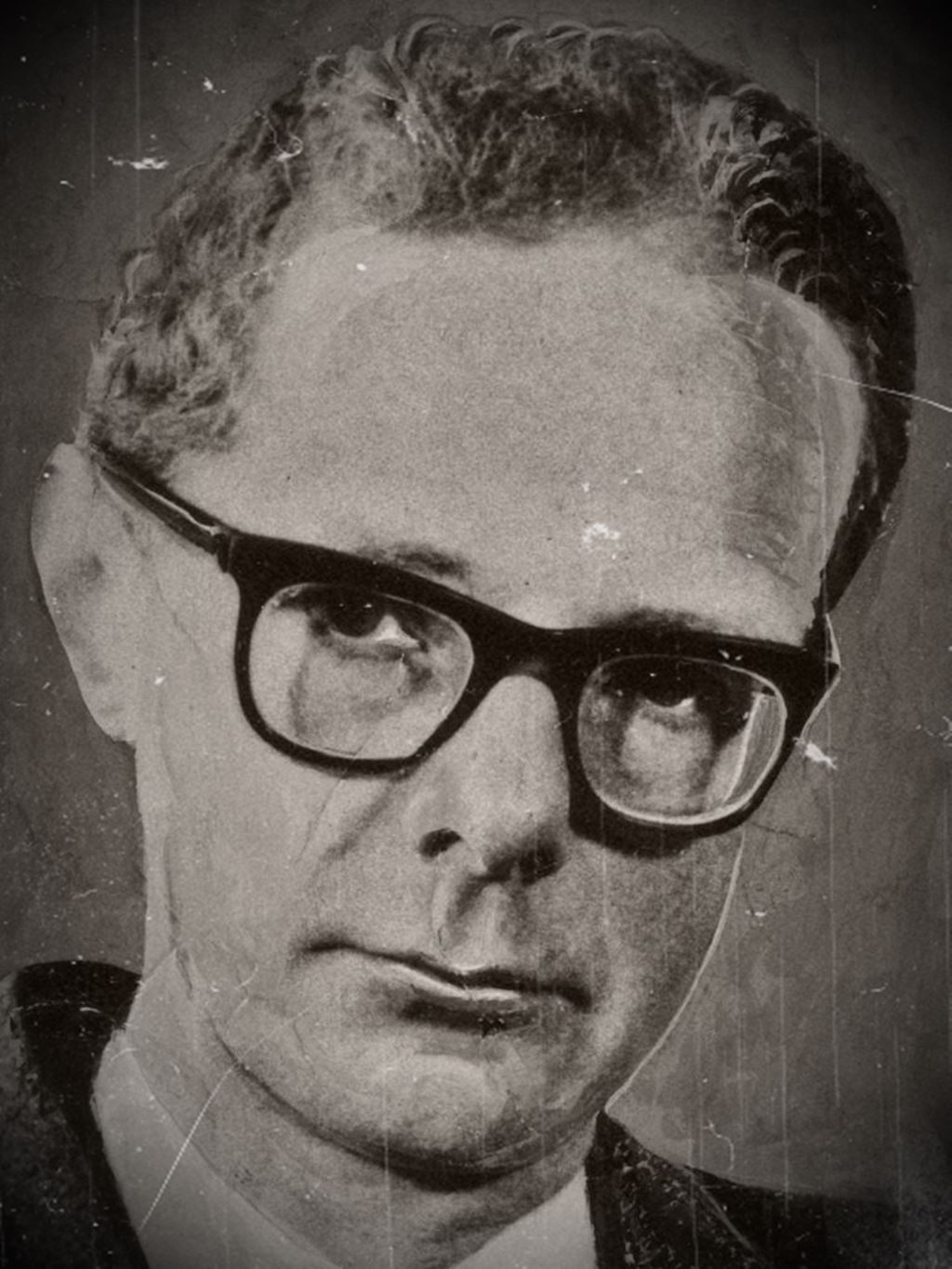
In the spring of 1972, in Australia, a man would be murdered by a gang of men suspected to have been police officers, and his death would spearhead a significant leap forward for LGBTQ+ rights in the country.
Forty-one-year-old Dr. George Duncan had moved to Adelaide, South Australia on March 25th, 1972. Prior to that, he had been furthering his academic career in his native England, earning several degrees, including a Bachelor of Laws and a PhD, after which he taught law at the University of Bristol for five years. He had returned to Australia in order to take up a teaching position at the University of Adelaide. Only six weeks after arriving in the country, however, he would be dead.
It was the evening of May 10th, 1972. George was spending some time along the secluded southern bank of the river Torrens, a popular meeting spot for gay men. As homosexuality was still illegal in Australia at the time, members of the community would often meet in secret along the pleasant paths, which were shielded from surrounding neighborhoods by steep riverbanks and copious foliage. On this particular night, George was accompanied by a friend named Roger James.
Unfortunately for the men who frequented the area, however, the vice squad was also cognizant of what went on down there, and rumors flew that police officers would sometimes assault gay men they found by the Torrens, just for their own twisted amusement. And on May 10th, both George and Roger would discover just how plausible those rumors were.
The pair was set upon by a gang of three or four men at around eleven p.m., who roughed them up and bundled them to a nearby footbridge that was quite high above the surface of the river. The assailants then threw both men into the Torrens.
Roger James broke his ankle in the fall, but managed to crawl to the riverbank and find his way to the road, where he was picked up by a passing motorist, who drove him to the hospital. Incidentally, this motorist infamously turned out to be Bevan Spencer von Einem, a child murderer and suspected serial killer who would be convicted in 1984 of one of Australia’s notoriously grisly Family murders, and was likely involved in many others.
Dr. George Duncan, sadly, could not swim, and never surfaced after being thrown into the water. Outrageously, because his body had already been dredged from the river when the press arrived, police officers obligingly put his body back into the river so that newspaper reporters could get shots of him being carried out.
From the beginning of the investigation, surviving witness Roger James refused to identify the assailants, even after Don Dunstan, then the Premier of South Australia, promised him protection. His refusal heightened suspicions that the killers had been cops, though most of the whispers around the case further alleged that the three vice squad officers had also been accompanied by one civilian.
Indeed, the police officers in question were summoned to the inquiry into Dr. George Duncan’s death, but they all declined to testify and were not charged, though they were thereafter suspended and later resigned their positions.
Amid the public outcry that followed in the wake of the horrifying incident, Dr. Duncan became something of a martyr figure for the gay rights movement, and his murder later resulted in South Australia becoming the first state in the country to decriminalize homosexuality, though the road to progress was a long and arduous one.
In the ensuing years, more allegations came to light that members of the vice squad in Adelaide at the time were quite well known for harassing, assaulting, and even shooting at gay men along the Torrens riverbanks. In 1985, the three police officers suspected in the attack—Brian Hudson, Francis Cawley, and Michael Clayton—were charged with manslaughter in the death of Dr. George Duncan, though all three would eventually be acquitted owing to insufficient evidence. The alleged fourth civilian attacker has never been identified.
On May 10th, 2002, the thirtieth anniversary of Dr. Duncan’s murder, a memorial plaque was dedicated on the banks of the Torrens, and in 2020, another sign was added to the memorial, featuring a photo and the words, “Dr Duncan: A life tragically lost but a state transformed.”
Then, in May of 2022, the fiftieth anniversary of his murder, a memorial service was held, and that same year saw a new book—The Death of Dr. Duncan by Tim Reeves—published about the case, as well as an oratorio called Watershed which celebrated his life. The University of Adelaide also began offering a memorial scholarship in Dr. Duncan’s honor.
 Crime Immemorial