
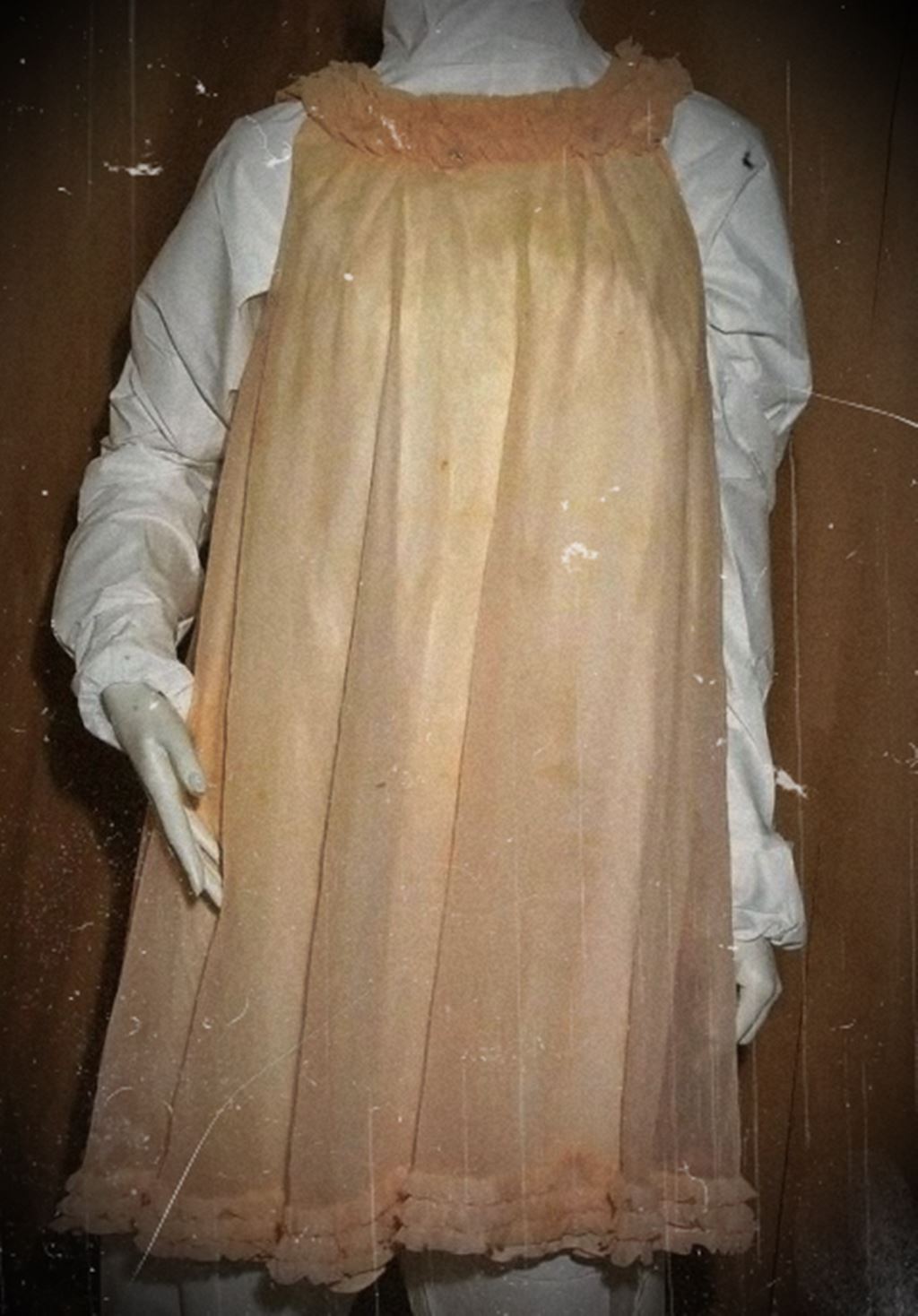
In a small parish called Cockley Cley in the English county of Norfolk, a nineteen-year-old farm worker named Andrew Head was crossing a field when he noticed something covered with a large sheet of white plastic, lying in the overgrown grass. It was August 27th, 1974.
Andrew lifted up the corner of the plastic to see what was underneath, and immediately regretted his decision. He ran from the field and contacted police.
The unfortunate farm worker had discovered the decomposed and headless body of a woman, whose arms and legs were bound with rope and who was clad only in a short pink nightgown. Despite a thorough search of the area, no further clues to the woman’s identity were found, and the victim’s head was never recovered. She subsequently became known as the Norfolk Headless Body.
The unidentified victim was thought to be between twenty-three and thirty-five years old, and stood around five- to five-foot-two-inches tall. She had given birth to at least one child at some undetermined earlier date. A post-mortem suggested that she had been murdered approximately one to two weeks prior to the discovery of her body.
The items found alongside the remains gave detectives several leads to follow up on. The nightgown the woman had been wearing, for example, was a particular style which had been available at the Marks & Spencer chain of department stores in 1969.
Further, the plastic covering the body was stamped with a green logo reading “NCR.” This stamp was traced to a company known as National Cash Registers, and the plastic sheet had been manufactured for NCR in a factory located in Dundee, Scotland, though it had since gone out of business. Likewise, the unusual rope binding the victim’s remains had also originated in Dundee.
Though little headway was made in the investigation at the time of the discovery of the headless corpse, later exhumations and DNA evidence produced several intriguing new lines of inquiry. It was eventually determined, for instance, that the victim had consumed water containing isotopes only found in Scotland. Further, the bulk of her diet had consisted of fish and shellfish, and her DNA profile suggested that she originally hailed from an area encompassing Denmark, Germany, Austria, or northern Italy.
Despite these new leads, no one has ever come forward to identify the woman, and her DNA matches no other profile in the U.K.’s database. Because of these particular facts, the most common theory about the woman’s identity is that she is actually a Danish sex worker called “The Duchess,” who was known to work the area of the Yarmouth Docks in 1973 and 1974.
The Duchess was reported to have occasionally taken long trips with her clients, many of whom were delivery drivers; and she was thought to have vanished from her residence on the docks in the summer of 1974 without taking any of her belongings with her. If the victim is indeed The Duchess, police speculate that her head was removed in order to hinder identification, as the woman was a rather recognizable fixture in Yarmouth.
Whether the Norfolk Headless Body is that of The Duchess or not, authorities are keen to solve this decades-old mystery, and periodically revisit the case as new evidence comes to light. They began investigating the possible involvement of Scottish serial killer Peter Tobin in 2009, but at this stage it still isn’t clear who the victim is or who might have killed her.
 Crime Immemorial