
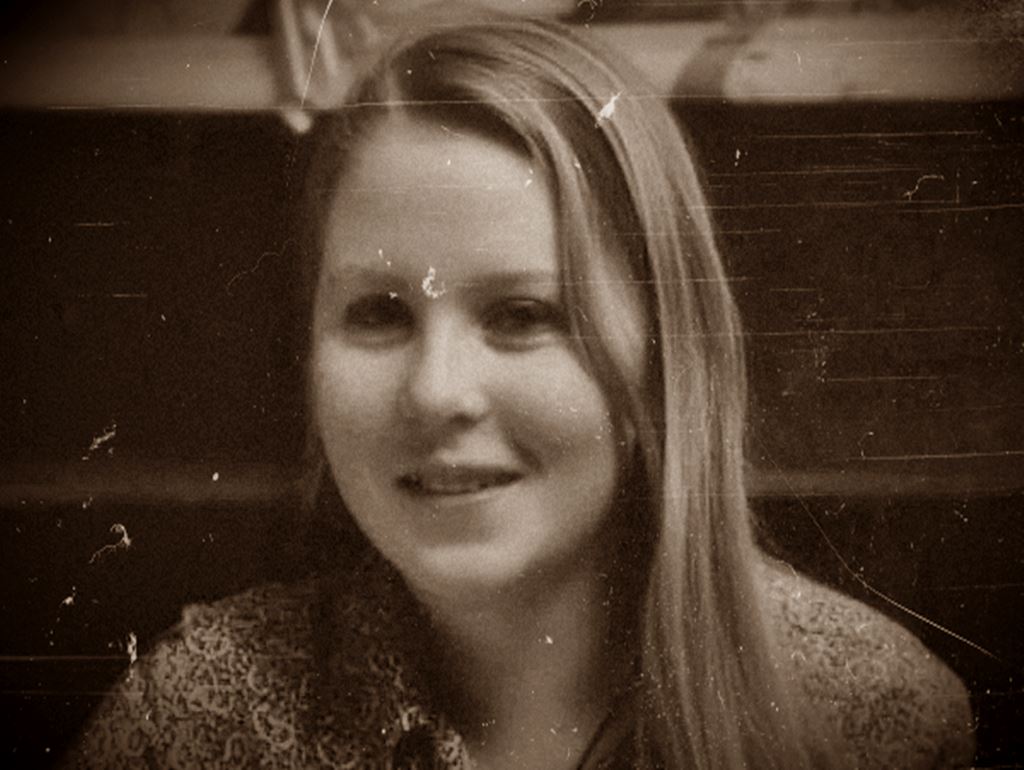
Seventeen-year-old Raonaid Murray lived in Glenageary, South Dublin, Ireland with her parents and two older siblings. She had done well in school, and was planning to go on to University College Dublin, possibly to become a writer. In the meantime, she was working part-time at a ladies’ fashion boutique in the coastal town of Dún Laoghaire.
On Friday, September 3rd, 1999, Raonaid left work at about nine p.m. and walked to Scotts pub across the street to socialize with friends, and perhaps to see her boyfriend, who worked there. She left the pub at a little before eleven-thirty and began walking back toward home, a distance of only about a mile.
Less than a half-hour later, witnesses heard a woman’s voice saying, “Leave me alone,” “go away,” and “fuck off;” the voice seemed to be coming from a back lane near Silchester Road. At approximately twelve-twenty a.m. on the morning of September 3rd, Raonaid’s sister, out walking with friends near the family home, spotted Raonaid lying dead in the road, only fifty yards from their front door.
Raonaid Murray had been stabbed more than thirty times in the side, chest, and shoulder with a small kitchen knife. It appeared that she had managed to walk about two-hundred yards from the site of the stabbing before she collapsed and succumbed to blood loss.
The area where Raonaid was murdered was a fairly affluent neighborhood in the region with the lowest homicide rate in Dublin, and residents were horrified by the random brutality of the crime. Over the course of the investigation, the Gardaí interviewed approximately three-thousand persons of interest and made at least twelve arrests, but were never able to come up with enough solid evidence to charge anyone with the slaying. Raonaid’s boyfriend was immediately dismissed as a suspect, as CCTV footage clearly showed him working at Scotts pub all that night.
The first significant suspect to draw the attention of authorities was a young man who had reportedly been seen arguing with Raonaid in Glenageary Road Upper shortly before she was killed. This individual was said to be in his mid-twenties, standing about five-foot-seven, with sandy blond hair cut in a shaggy style resembling that of Noel Gallagher of Oasis, and clad in a beige shirt and light-colored combat pants.
Another suspicious young man was allegedly picked up by a taxi driver in the center of Dún Laoghaire in the early hours of Saturday morning. The driver told police that his passenger appeared to have blood spattered on his pants, and asked to be taken to what the driver believed was a fake address. This young man apparently acted very strangely after exiting the cab, lurking around near a bush as though waiting for the driver to leave.
Police later identified this man as a cook who worked in an area restaurant. Though there was not enough evidence to charge him with the murder of Raonaid Murray, he was arrested in 2000 in Wicklow for assaulting another young woman.
Yet another man investigated for the slaying was Kenyan immigrant Farah Swaleh Noor, who would infamously be murdered himself in March of 2005 by so-called “Scissor Sisters” Linda and Charlotte Mulhall, who also dismembered his body. Noor’s name came up because he allegedly threatened to kill Linda and Charlotte’s mother Kathleen “just like I did with Raonaid Murray.” Noor, it should be noted, was reportedly drunk when he made the statement, and no further evidence was found that pointed toward his guilt.
Investigators could also not rule out the possibility that Raonaid was killed by a woman, as many of the stab wounds were very shallow. One unnamed woman with purported family ties to the IRA and a violent personality was interrogated, but subsequently dismissed. Notably, female DNA was found underneath Raonaid’s fingernails, though this DNA did not match the female suspect, and it is not certain whether the DNA even came from the killer, or was simply there due to Raonaid’s work at the ladies’ boutique.
Several other shady characters around Dún Laoghaire were also questioned, including a few others who made confessions—perhaps false ones—that they had killed Raonaid. And in later years, detectives looked into the hypothesis that Raonaid might have been murdered by Dublin architect Graham Dwyer, who in 2015 would be convicted of murdering thirty-six-year-old child care worker Elaine O’Hara, last seen alive in a public park in Dublin in August of 2012. DNA analysis, however, seemed to rule out Dwyer as a suspect in the slaying of Raonaid Murray.
The murder of the seventeen-year-old is one of the most iconic unsolved crimes in Ireland, and it remains uncertain whether Raonaid was killed by a random stranger or by someone she knew. The investigation is ongoing.
 Crime Immemorial