
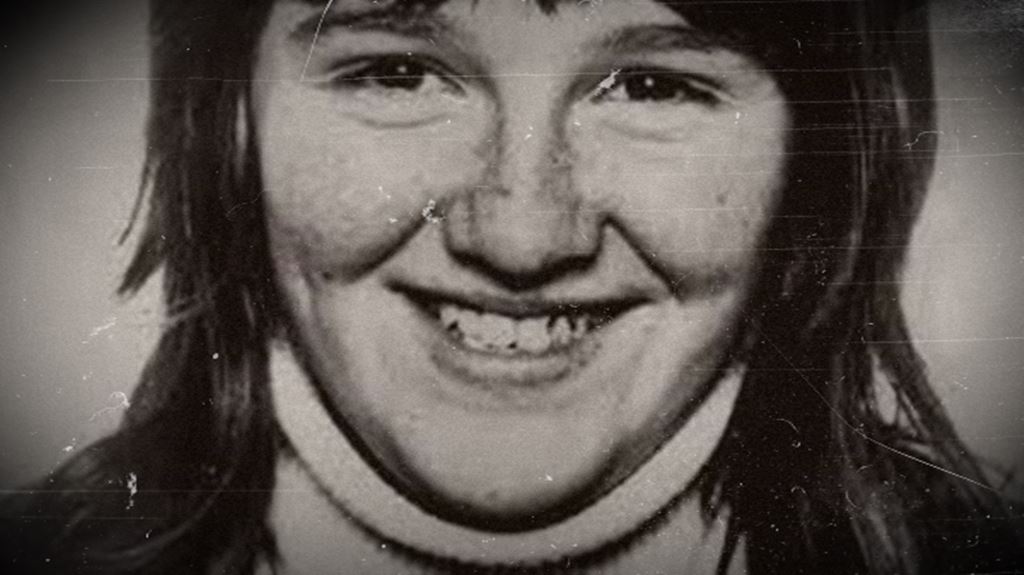
It was March 20th, 1978 and twelve-year-old Denise McGregor, along with her sister Sharon, were heading out from their home in Pascoe Vale, a suburb of Melbourne, Australia, to pick up some takeout for the family’s dinner. The girls’ mother Carmel was a nurse who often worked the night shift, so the siblings—including Denise, Sharon, Colleen, and Shane—were used to fending for themselves for their evening meal.
The two girls purchased Chinese food and were carrying it back home at a little past seven p.m. Not far from their residence, however, Denise told Sharon to go on ahead, because she was going to duck into a nearby convenience store and pick up some soda and an Easter egg to enjoy later on that night. Sharon obliged and kept on walking. Denise went into the shop, bought her items, and thereafter completely vanished.
When Denise had not returned by the time her mother got home from work, the police were contacted, and the family went out to scour the streets for the missing twelve-year-old. They searched frantically until the wee hours of the morning, but they found nothing.
The following day, however, would bring the tragic news: Denise’s body had been found on the side of a country road many miles away from her home in Pascoe Vale. She had been sexually assaulted, partially strangled with her own shoelaces, and finally bashed to death with what appeared to be a large rock or a crowbar. Her head injuries were so severe, in fact, that the coroner compared the wounds to those seen in plane crash victims.
Because there had been no witness reports of the girl being kidnapped from the corner store where she purchased her snacks, police theorized that she may have been acquainted with her killer, and that he was able to persuade her to get into his car. The soda and Easter egg she bought were never found, suggesting that perhaps the items had been left behind in the assailant’s vehicle.
Further, there was some speculation that the attack had perhaps been intended solely as a rape, and only escalated to murder after Denise fought back more stridently than expected. Supporting this hypothesis was the fact that Denise had been murdered by objects at hand—shoelaces and a rock—rather than with a weapon that the killer had brought along.
Shortly after the murder, the authorities put together a graphic, three-part reenactment of the crime to broadcast on television in order to get the public’s help in solving the case. The program caused some controversy due to its brutal violence, but police officials defended it, claiming that they wanted to make the reenactment as realistic as possible in the hopes that it would jog some memories. The fictionalized account, they further stated, was much less gruesome than the real crime had been. The program was the talk of the town after it aired, but unfortunately it did little in the way of finding the person responsible for killing Denise McGregor.
For a time, suspicion fell on the owner of the corner shop where Denise was last seen alive. The man, named Samuel Sinnott, apparently gave police conflicting answers in the early part of the investigation, first claiming that Denise had not come into the shop at all, then later changing his story to say that she had come in, and later adding that there had been a group of older boys in the shop as well, a detail he left out of initial accounts. Despite his evasions, however, there was no further evidence to indicate that Sinnott had anything to do with Denise’s murder.
Another later person of interest was Robert Arthur Selby Lowe, who was convicted of murdering six-year-old Sheree Joy Beasley in Red Hill in 1991. Lowe was also a suspect in the 1984 murder of six-year-old Kylie Maybury. However, in 2001, DNA evidence cleared Lowe of suspicion in the Denise McGregor case.
Beginning in 2013, there have been a few new leads in the investigation, and detectives have deemed the case “highly solvable,” though as of this writing, no arrests have been made.
 Crime Immemorial