
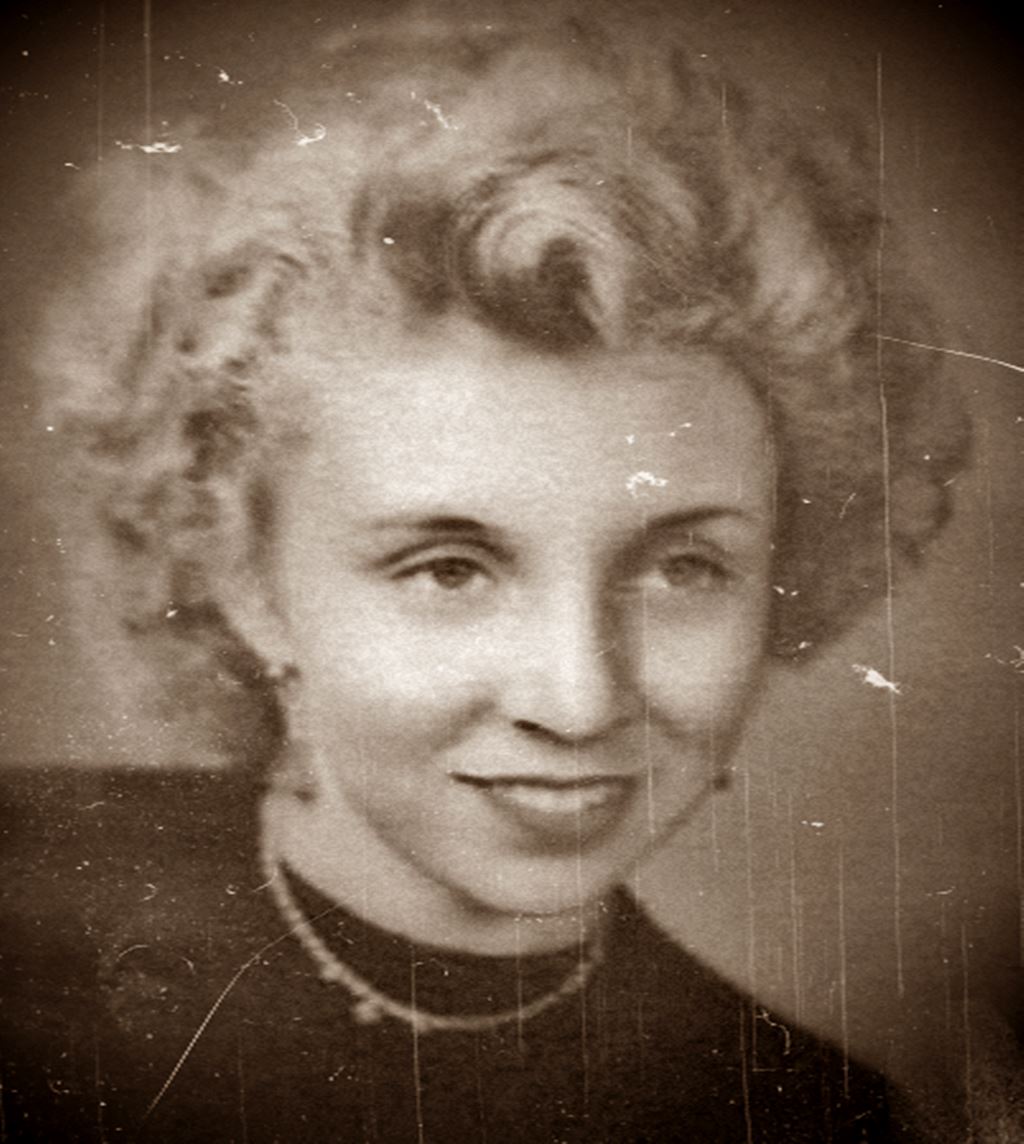
In the autumn of 1954, the murder of a teenage girl would rock the city of Baltimore, Maryland, and provide fodder for a judgmental media keen to cast aspersions on the vilified “greaser” subculture.
Carolyn Wasilewski was fourteen years old, though by all accounts she was mature beyond her years, hanging with an older crowd and answering to the nickname Peaches. She lived in a working-class neighborhood with her parents and six siblings, and attended nearby Southern High School.
At a little past six o’clock on the evening of November 8th, Carolyn told her parents that she was going to the residence of her friend, sixteen-year-old Peggy Lamana; the two girls were planning to register for an upcoming dance program held at Morrell Park Elementary School. Carolyn put on a pink sweater and a black skirt, tied a black scarf around her neck and a green scarf over the curlers in her hair, and set out to the trailer park where Peggy lived. She never made it.
Her frantic parents spent the entire night searching for her, but she was not found until the following morning at around seven a.m. The engineer of a train coming into Baltimore from Harrisburg spotted a body lying on the tracks, and stopped the locomotive to contact the authorities.
Carolyn Wasilewski was discovered with no skirt or shoes. Her skull had been fractured, though she had not been sexually assaulted. Forensic examination determined that she had likely been killed elsewhere and either thrown off the railway bridge or dragged down the embankment. The medical examiner placed the time of death at around eleven p.m., half an hour after the last train had passed under that particular bridge.
The eeriest clue found at the scene was the name “Paul” written on Carolyn’s right thigh with mercurochrome or red lipstick.
Investigators immediately undertook a massive manhunt, fanning out for miles in all directions. Near Carolyn’s family home, which was approximately eight miles from the murder site, police found blood stains and a few of Carolyn’s belongings, suggesting that she had been killed on a spot very near her home and then taken some distance before being dumped on the railroad tracks.
Over the next few days, more than three hundred people would be questioned in connection with the crime, many of them Carolyn’s friends, who the newspapers dismissively termed “drapes,” members of the working-class youth subculture now more commonly known as greasers. Some articles even spent several sentences describing the tight pants and duck-tailed hair of these teenaged miscreants.
Despite the “bad crowd” vibe of the media coverage, police did manage to shake out a few leads. It came to light, for example, that Carolyn had testified in a carnal knowledge case a week before her murder that had involved one of her close female friends. Though the man charged in this case was extensively interviewed by investigators, he was eventually dismissed as a suspect.
There was also a rather strange occurrence several days after the murder had taken place: a forty-five-year-old man named Ralph Garrett was found dead of an apparent suicide just opposite the vacant lot where Carolyn had been killed. Police looked into a connection between the two deaths, but found nothing of note, and eventually concluded that the location of the suicide had simply been a coincidence.
Carolyn’s funeral on November 12th drew hundreds of curious spectators, and though the crime was never solved, it retains a morbid fascination among Baltimore residents up to the present day. Famed transgressive film director and Baltimore native John Waters even used the case of Carolyn Wasilewski as the loose inspiration for his iconic 1990 film Cry-Baby, which details the conflict that occurs when a member of the “drape” subculture falls in love with a “square.”
 Crime Immemorial