
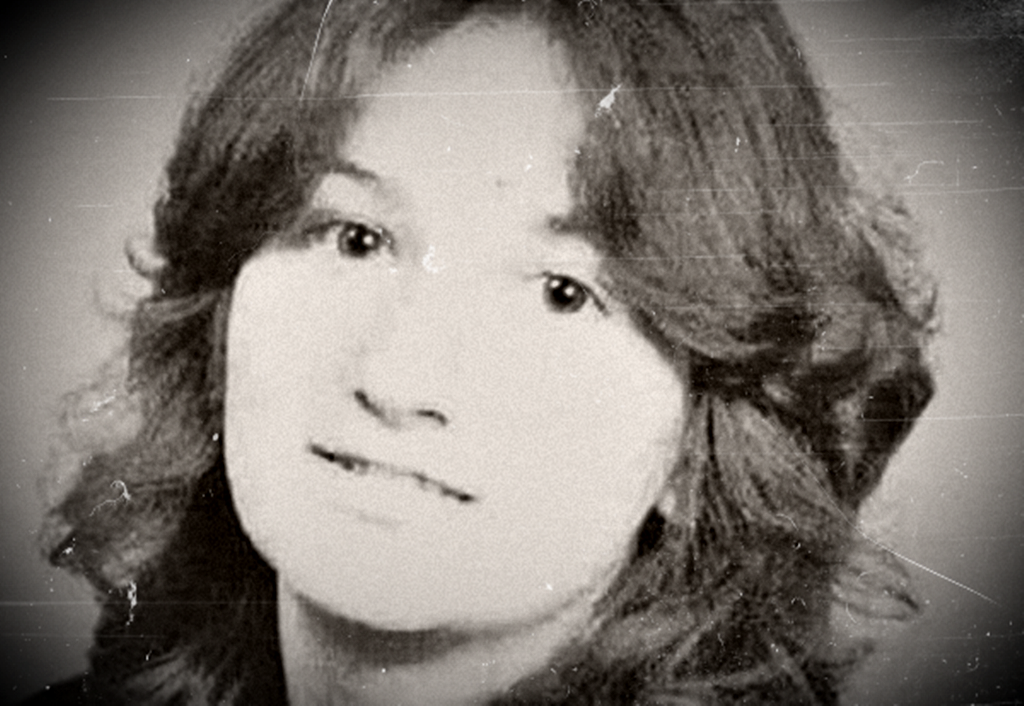
Twenty-six-year-old Deborah Linsley was originally from Bromley, southeast London, though she had since moved to Edinburgh, Scotland to work as a hotel manager at a Sheraton there. In late March of 1988, though, Deborah had taken three days off work to attend a hotel management course in London, and while there, she was spending some time with her family back in Bromley. Her brother Gordon was getting married in a couple of weeks, and Deborah was getting fitted for a bridesmaid’s dress and participating in some of the other wedding preparations.
On Wednesday, March 28th, Deborah decided to take a train to Victoria station in order to see about another potential hotel job on Baker Street in London. She made a sandwich to take along on the half-hour journey, and Gordon dropped her off at the Petts Wood station near his work at approximately two p.m. Deborah purchased a ticket and a pack of cigarettes less than five minutes later, then boarded the train when it arrived on the platform at two-eighteen.
Significantly, she sat in a so-called closed carriage, which only had doors on either side allowing access to the platform, but did not allow passage between carriages. Though these types of train cars were on their way out in the late 1980s and were sometimes colloquially referred to as “death traps” because passengers could not move to other carriages while the train was in motion, it is believed that Deborah selected this particular car because it was one of the few on the train that allowed smoking.
Though Deborah was a rather attractive young woman and was clad in a striking blue outfit topped with a black leather jacket on this particular day, there are no witness accounts of her movements after she boarded the train. From a later reconstruction of events, it is known that Deborah smoked at least one cigarette and ate part of her sandwich while she was seated in the car, but it is unclear when her murderer entered the carriage with her.
When the train arrived at Victoria at two-fifty p.m., a porter by the name of Ron Lacey was checking the carriages for lost luggage when he was confronted with the shocking sight of Deborah Linsley lying dead in a massive pool of blood. She had been savagely stabbed nearly a dozen times in the face, neck, chest and abdomen; at least one of these wounds had penetrated her heart.
Unbelievably, the seventy other people on the train had not seen or heard anything suspicious, save for a young French au pair named Helene Jousseline, who had been seated in the next carriage over from Deborah’s, and had heard screaming right after the train had departed from the Brixton station. Though the witness was apparently alarmed and considered pulling the communication cord to summon help, in the end she stated that she had been too frozen with fear and shock to do anything.
She did go on to say, however, that when she got off the train at Victoria, she spotted a muscular white man—aged around forty, with red hair and a mustache, and wearing gray pants and a light-colored jacket—getting out of the carriage where the screaming had emitted from. Helene allegedly followed this man, but lost sight of him in the teeming crowds.
After the details of the crime went public, other witnesses came forward and claimed to have seen persons of interest on the day of the slaying. One of these was a five-foot-five-inch white man in his late twenties with long-ash-blond hair and sporting a cut on his left cheek, who was seen on the concourse at Victoria approximately ten minutes after the fatal train had pulled into the platform. It’s possible this same individual was seen by another witness a few minutes later in the men’s bathroom, cleaning the wound. This could be a critical detail, as police were later able to establish that Deborah’s killer had been injured in the struggle with his victim, as his blood was also recovered from the train car. However, authorities were quick to add the caveat that on the day of Deborah’s murder, there had been a soccer (football) match between England and Holland at Wembley Stadium which had engendered a few punch-ups, and it’s plausible that the wounded man seen at the station had simply been involved in a sports-related scuffle.
More intriguingly, there had reportedly been a man seen changing carriages, possibly into the car Deborah was seated in, at Penge East station, two stops after Debbie had boarded. This individual was a scruffy-looking white male about thirty years old with dirty blond hair and a stocky build who was clad in a pale brown jacket.
Yet another suspicious man was allegedly seen at Orpington station, the originating station of the route and one stop before Petts Wood, where Deborah had got on the train. This individual, a description of which was not forthcoming, was said to have been leering at women who boarded the trains.
Though the murder weapon was never recovered, it was believed to be a good quality kitchen knife, measuring between five and seven inches long. The fact that the attacker was apparently carrying this knife with him suggested that he had planned to commit a murder, although it seems unlikely that he had targeted Deborah Linsley specifically, as she no longer lived in the area and did not regularly take this particular train. Detectives have theorized that the crime was perhaps a random sex attack which turned into a murder after Deborah viciously fought back against her assailant.
The killer’s blood, obtained at the scene, was used to construct a complete DNA profile in 2002, but unfortunately, it matches no offender currently in the U.K.’s database. Given the ferocity of the slaying, police are confident that the murder of Deborah Linsley was not this perpetrator’s first homicide, but they have been hamstrung by the lack of further leads. The investigation was again reopened in 2013, with a large reward on offer for information leading to the conviction of the killer.
 Crime Immemorial