
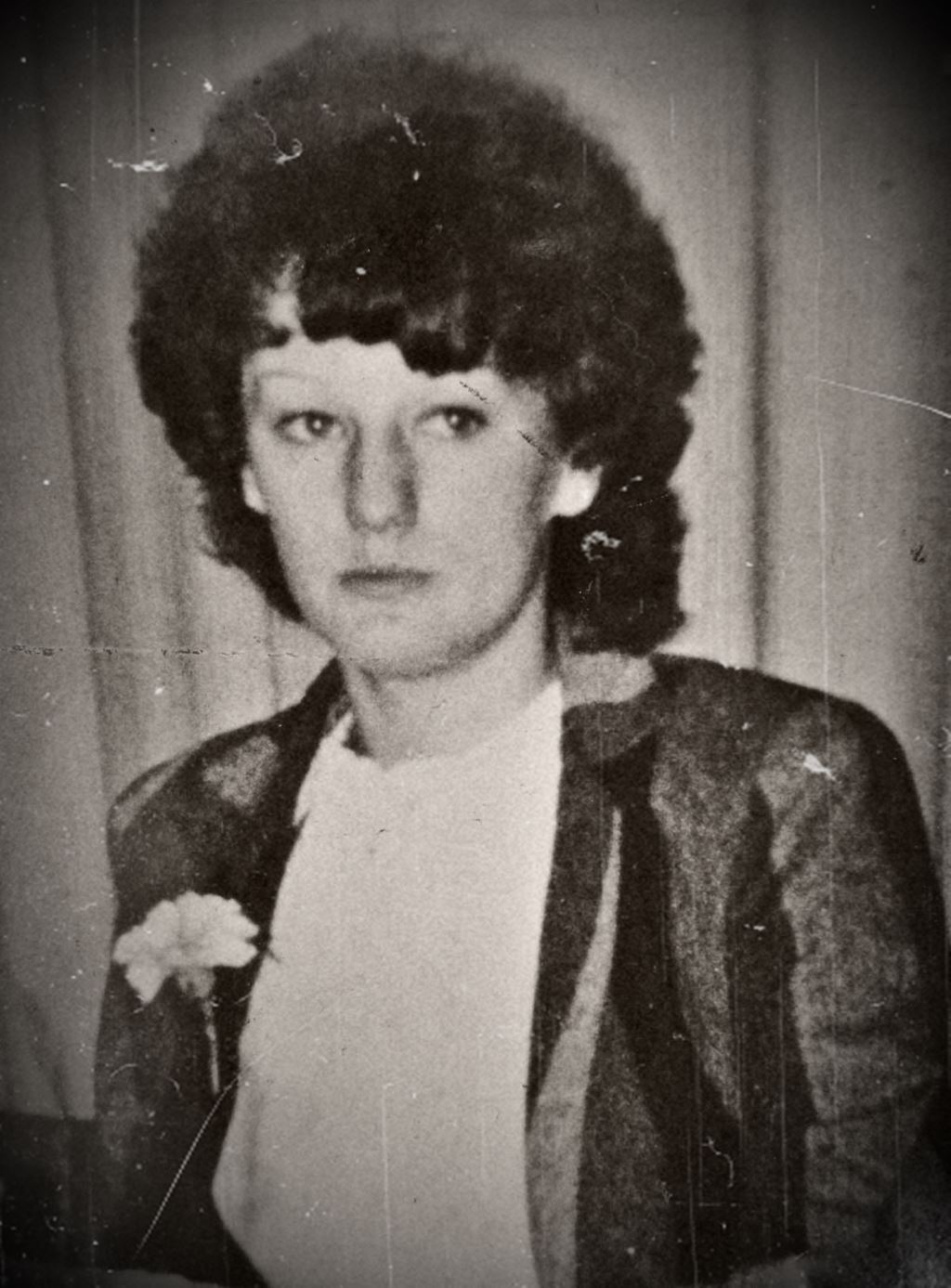
It was Saturday, June 18th, 1988, and twenty-two-year-old Marie Wilks, seven months pregnant with her second child, had been spending the day in the village of Symonds Yat with her husband Adrian, who was there on a training exercise for the Territorial Army. She was also accompanied by her eleven-year-old sister Georgina, and her and Adrian’s thirteen-month-old son Mark.
At approximately seven p.m., Marie bid her husband goodbye and got in her Morris Marina with the two children for the drive back to Worcester. She actually hadn’t planned on taking the motorway home—she had only received her driver’s license two months previously, and wasn’t a very confident driver at this stage—but somewhere along the back roads she became lost, and ultimately had to merge onto the M50.
But as bad luck would have it, her vehicle broke down shortly afterward. There was an emergency phone box only about seven-hundred yards from where the car gave out, so she left the kids in the car and walked over to it to phone for help. The police operator logged her call at seven-thirty-seven p.m.
At Marie’s request, the dispatcher attempted to call Marie’s father Terry so he could come pick her up, but neither of Marie’s parents was home. The operator came back on the line to inform Marie of this, but Marie was no longer there; despite repeated summons, all the operator could hear on the phone was the roar of passing traffic.
Twelve minutes after Marie’s initial phone call, an officer in a squad car driving past saw the eleven-year-old Georgina walking down the shoulder of the road, carrying baby Mark in her arms. More police descended on the scene after a radio bulletin was issued, but Marie Wilks had seemingly vanished into thin air. Ominously, the receiver of the emergency phone was still hanging at the end of its cord.
A widespread search involving helicopters and tracking dogs was undertaken, but for several hours, nothing at all was found. Shortly after sunrise on Sunday, detectives discovered traces of blood around the phone box, but there was still no sign of Marie.
Then, at six p.m. on the evening of Monday, June 20th, the body of Marie Wilks was found in a patch of thick undergrowth down an embankment, three miles along the motorway from where her vehicle had broken down. She had been severely beaten and kicked around the head and face, her jaw had been broken, and she had been stabbed in the throat, a wound that punctured her carotid artery.
A few days after Marie’s remains were recovered, a witness told police that they had seen a silver Renault pulled over on the side of the road near where Marie’s car had been on the night she was abducted. They also claimed to have seen a white male walking near the scene of the crime that same evening, and described this individual as being in his twenties, with thin features, a prominent chin, a sharp nose, and spiky blond hair with orange highlights. The witness further stated that the man was dressed for a night out in a blue and white striped dress shirt and dark-colored pants.
Police produced a composite sketch of the suspect, and on the following day, they picked up a thirty-two-year-old Welsh man named Eddie Browning after receiving a tip from an informant.
Authorities found it very suspicious that Browning not only owned a silver Renault and had a history of violence, but had also had an argument with his own pregnant wife on the evening that Marie Wilks was murdered. Further, Browning admitted that he had been driving from his home in Cwmparc, Wales north to Scotland, which detectives speculated could have put him on the same stretch of motorway as Marie Wilks at around the same time as her disappearance.
Eddie Browning actually insisted that he had not taken the M50 to Scotland that night, but had instead taken the M4 to the Severn Bridge, then got on the M5. But his past record of violent behavior and his close resemblance to the composite sketch was enough to secure a conviction, and Browning was eventually handed a life sentence for murder, despite there being no physical evidence tying him to the crime.
However, his conviction was later overturned after it came to light that police had withheld evidence that an off-duty officer, under hypnosis, had actually described the silver Renault he had spotted at the scene as having chrome bumpers and the license plate number C856 HFK. Eddie Browning’s Renault, though the same color and style, actually had plastic bumpers and bore the tag number C754 VAD. Browning was released in 1994 and was subsequently awarded a settlement of approximately six-hundred-thousand pounds. He died in 2018, at the age of sixty-three.
After Browning walked free, the case proceeded to go cold. Some researchers have speculated that Marie Wilks might have fallen victim to notorious serial killer couple Fred and Rosemary West, who were familiar with the area where the murder occurred and were not apprehended until 1994. However, detectives on the case are skeptical of this scenario, and while periodic updates on the investigation are still performed at regular intervals, the random slaying of the pregnant woman on the side of the motorway remains unsolved.
 Crime Immemorial