
As the autumn of 1987 descended, a strange and grimly classic English murder mystery would begin to unfold in a crumbling old manor house in rural Shropshire.
Simon Dale had spent much of his career as an architect, following in the footsteps of his father. He mainly focused on restoring country mansions that had fallen into ruin.
Back in 1957, when he was thirty-eight years old, he had married the twenty-three-year-old Susan Wilberforce, a haughty society woman who was descended from famed Victorian politician and philanthropist William Wilberforce, best known for his efforts to abolish slavery in Britain in the eighteenth century.
Two years following the wedding, Simon and Susan bought a dilapidated, fifty-room Queen Anne mansion called Heath House, and set about restoring it. The property had been mostly paid for with Susan’s family inheritance. For a short time, everything seemed idyllic, and the couple ended up having five children as they lived in and worked on the beautiful old property.
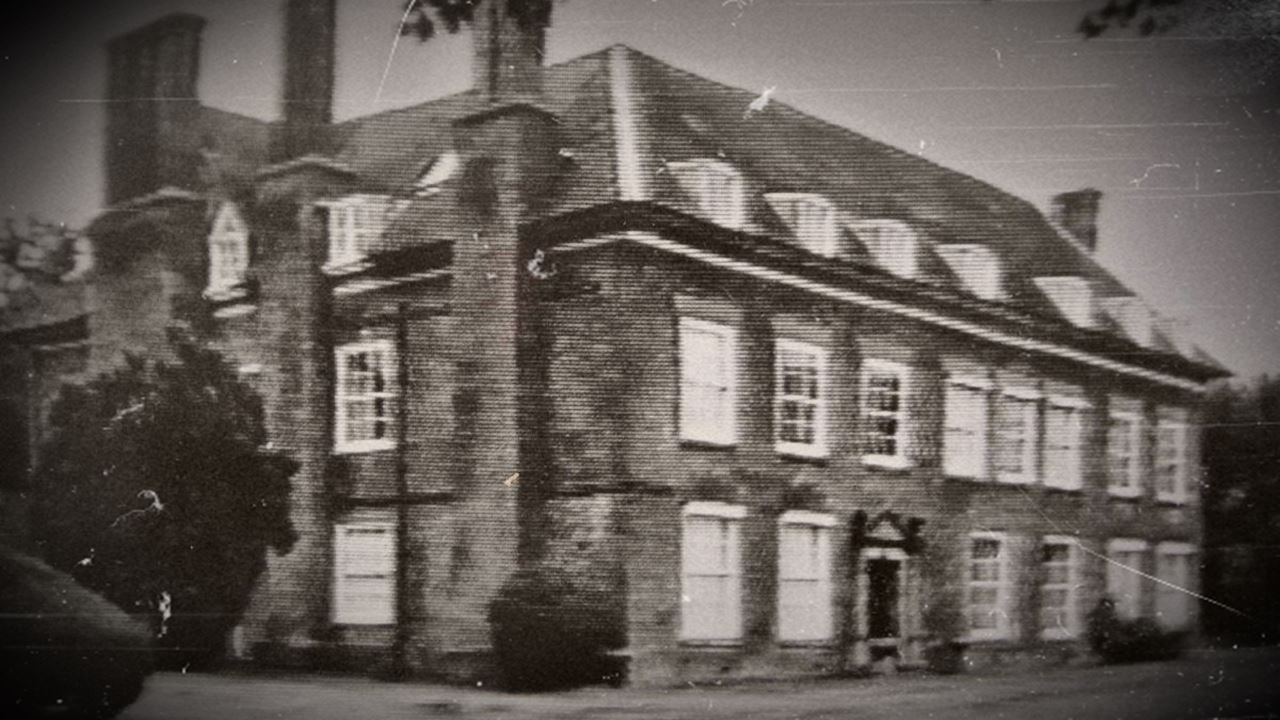
But soon enough, cracks began to appear in the relationship, and Simon and Susan took to living at opposite ends of the enormous home for a while before finally filing for divorce in 1972. By this time, the family’s finances were looking fairly dire, as Simon had been losing his eyesight, making it difficult for him to find architectural work; and Susan either could not or would not work at all. It was agreed that Heath House would be sold and the proceeds divided equally, but for more than fifteen years, the unstable housing market insured that there were no interested buyers in the lovely but somewhat remote mansion.
There was also the trifling little detail that Simon Dale seemed to have absolutely no intention of moving out of the house. As he had gotten older, he had developed an all-consuming interest in Arthurian legends, and was unshakably convinced that the grounds around Heath House contained the fabled Holy Grail. He had even written several scholarly papers arguing for his hypothesis, but archaeologists refused to take him seriously, and none of his work was ever published.
By 1987, Simon had become somewhat reclusive, living in two rooms of the mansion while the rest was allowed to slowly deteriorate. His ex-wife Susan had remarried in 1984, to the Russian émigré Baron Michael Victor Jossif de Stempel; the pair had divorced in 1985, but Susan retained the title of Baroness. She and two of her and Simon’s grown children—Marcus and Sophia—had been occasionally staying in a guest cottage on the property of Heath House, trying to keep the mansion from completely falling into decay; Susan was still hoping to get her fair share of the house or its sale price one day, after all.
However, at some point over the second weekend in September, someone entered Heath House while Simon Dale was in the kitchen cooking and beat the eccentric sixty-eight-year-old man to death with what was thought to be a crowbar. His body was discovered by his assistant, Giselle Wall, on the afternoon of Sunday, September 13th.
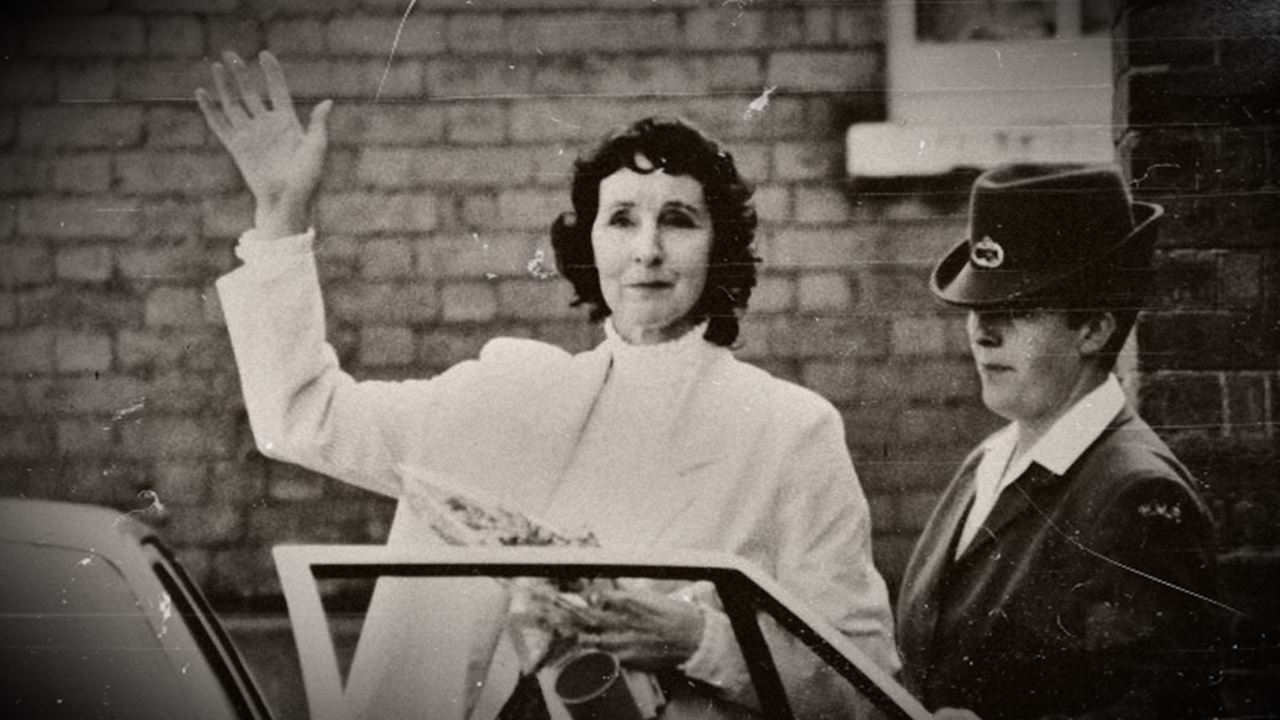
Almost immediately, authorities set their sights on Susan, now known as Baroness Susan de Stempel. After all, she had been staying on the property, and she admitted to having broken into Heath House on a few prior occasions in order to retrieve furniture which she felt still belonged to her. Not only that, but she told police that she had been using a crowbar on some of the outside renovation work that she and her children had been undergoing. There had also allegedly been some arguments between the former spouses about Simon’s reluctance to leave the home and pay Susan her half of its assessed value. Susan also later claimed that Simon had been abusive to her and the children.
Susan, Marcus, and Sophia were all arrested in the murder, but the grown children were cleared shortly afterward. Though investigators took Susan’s crowbar and fireplace poker into evidence, there was no trace of blood on them, and there was likewise no other forensic evidence tying her to the murder. During the entire ordeal, she remained completely calm and aloof, even addressing police officers, lawyers, and judges with a snooty contempt. After only four hours of deliberation at her trial, the jury found her not guilty of the murder of her former husband.
The Baroness didn’t get off entirely scot-free, however, although her prison term was mostly unrelated to the murder charge. It so happened that during a series of financial investigations undertaken by police as the trial was going on, it came to light that Susan’s wealthy aunt, Lady Margaret Illingworth, was missing a substantial chunk of her considerable fortune. The elderly widow had suffered from dementia, and in 1984 had gone to live with Susan and the Baron at their home in Docklow. During this period, Lady Margaret’s valuable paintings and large collection of gold bars disappeared, and shortly after that, many of her antiques were sold at auction. Authorities determined that Susan, Marcus, Sophia, and possibly Baron de Stempel had conspired to forge Lady Margaret’s signature on various documents, allowing them to cash out her shares and have money disbursed to them from her accounts. They also apparently forged a new will that left all of Lady Margaret’s remaining assets to Susan. In sum, the fraud is thought to have netted the Baroness close to a million pounds.
At the trial in 1990, Susan pled guilty to defrauding her aunt, though Marcus and Sophia insisted they were innocent, on the grounds that they had been unwittingly used by their mother. Despite this, all four defendants were found guilty; Susan received seven years, and the Baron four; but Marcus and Sophia were given much lighter sentences, eighteen months and thirty months, respectively.
The murder of Simon Dale, then, remains officially unsolved, though authorities stress that there has only ever been a single suspect in the crime.
Interestingly, Heath House had been the site of another appalling murder back in 1968. Village physician Dr. Alan Beach had half his head blown off with a shotgun as he sat in a car in the driveway of the residence. The man convicted of the murder—fifty-one-year-old hair salon owner Arthur Frederick Prime—evidently blamed the doctor for the death of his wife from a pulmonary embolism in September of 1967. Alan Beach had been the woman’s attending physician.
As of 2019, Heath House has been beautifully restored, and many of the cottages on the property have been rented out to tenants, though the structure’s grim history remains a source of fascination.
 Crime Immemorial