
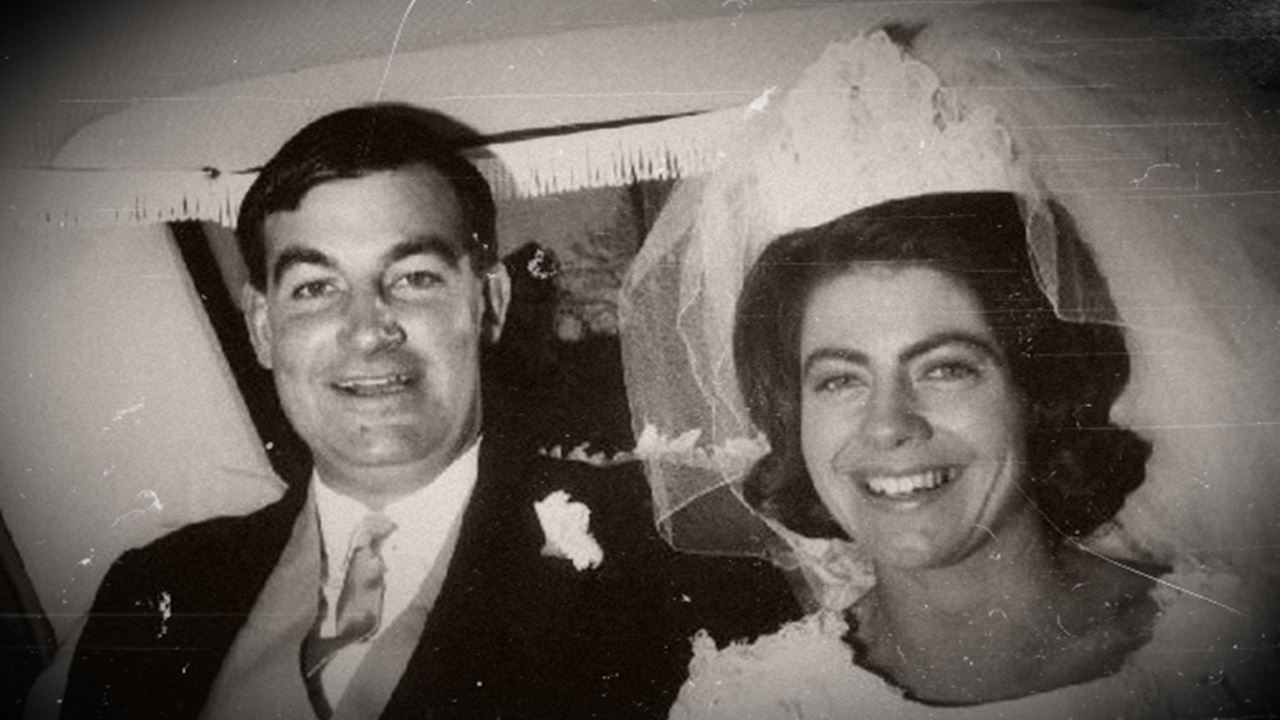
It was the early summer of 1970. Harvey and Jeanette Crewe lived on a modest farm in Pukekawa, a town about forty miles south of Auckland, New Zealand. Harvey, who was twenty-eight, and Jeannette, who was thirty, had an eighteen-month-old daughter named Rochelle.
The previous few months had apparently been difficult for the Crewes, as there had been a great deal of conflict concerning Jeannette’s parents and their plans for portioning out inheritances in their wills. Jeannette’s mother, who was quite wealthy, had separated from Jeanette’s father, Lenard Demler, who by June of 1970 was living alone on the farm next door to the Crewes’ property.
In apparent retaliation for the marital separation, Jeanette’s mother had written Jeanette’s sister out of her will. Lenard Demler had then struck back by writing Jeannette out of his. Jeanette’s mother then made a stipulation in her will that upon her death, Jeannette would receive half of the farm on which Demler was living. By the time mid-June had rolled around, Jeannette’s mother had passed away, and Jeannette was soon to become half-owner of the property on which her father resided.
Aside from all the parental squabbling, there had also been at least one incident of alleged arson occurring at the Crewes’ home, in which some unknown individual had broken into the house and set fire to a pile of clothes in a bedroom closet. Jeannette was becoming increasingly nervous about being in the home with baby Rochelle while her husband Harvey was away at work all day.
It was within this framework of discord that the final tragedy ultimately occurred. On June 22nd, a friend of the Crewes who was worried that he hadn’t heard from them for several days asked Jeannette’s father to look in on the family. Lenard Demler assented, and went next door to see what the problem was.
Upon entering the farmhouse, Demler discovered a scene of unimaginable gruesomeness. Neither Harvey nor Jeannette was anywhere to be found, but the walls of the home were liberally splattered with blood. Baby Rochelle was found still alive in her cot, though she was suffering from severe malnutrition and dehydration.
Because the Crewes had been seen leaving a store on the afternoon of June 17th, and because the mail and newspaper delivery from the morning of the 18th still lay on the floor of the farmhouse unopened, police surmised that whatever had happened to the couple had likely taken place on the late afternoon or evening of June 17th. This meant that baby Rochelle had been lying in her crib in the empty, blood-soaked house, with neither food nor water, for approximately five days.
Oddly, though, when the child was examined, it was believed that she couldn’t have gone without water for more than about forty-eight hours, suggesting that perhaps the killer or someone who knew about the murder had returned to the scene to give the baby something to drink. And indeed, one neighbor told police that he had seen a woman he didn’t recognize hanging around the property on June 19th.
Despite this mysterious clue, however, investigators immediately suspected that Jeanette’s father Lenard Demler was responsible for whatever had happened to the Crewes, whose bodies had yet to be found. Demler obviously had a motive stemming from the dispute over the property he lived on, and authorities thought that he was behaving strangely when they first arrived to scrutinize the scene.
Additionally, Lenard Demler was found to have a scratch on his neck for which he had no explanation, and a trace of his daughter’s blood was recovered from his vehicle. Nonetheless, Demler insisted that he had nothing to do with the murders and had no idea why anyone would want Harvey and Jeannette dead.
The case would remain in relative stasis until the remains of the couple were discovered in two separate locations, almost exactly two months to the day after they disappeared from their farmhouse. Jeannette’s body was recovered from the Waikato River on August 16th. She had been shot with a .22 caliber firearm, and battered in the face with a blunt instrument. Her remains were found wrapped in a duvet which had been bound with lengths of copper wire.
Though her father Lenard Demler was still the main person of interest in the crime, the fact that forensic evidence suggested that Jeannette had been raped led investigators to consider that perhaps the murders had been committed by a sexually-motivated perpetrator who was previously unknown to the couple.
On September 16th, 1970, the body of Harvey Crewe was found, also in the Waikato River, though a short distance upstream from where his wife’s remains were discovered one month earlier. Like Jeannette, Harvey had been shot with a .22 caliber rifle. His body had been weighed down with a car axle.
Since police theorized that the killer might have used a weapon that had been legitimately registered by someone in the area, investigators confiscated as many .22 caliber rifles from the locals as they could, and test fired all sixty-four of the ones they obtained (which was only a very small percentage of the number of rifles owned by town residents). Apparently, all but one of the firearms could safely be eliminated from the inquiry. The single remaining rifle belonged to another Pukekawa farmer named Arthur Allan Thomas.
Though the firearm could not be written off as the murder weapon, police returned the rifle to Thomas pending further investigation. Months later, however, Thomas would become the prime suspect in the double homicide. On October 27th, authorities were performing another search of the Crewes’ farm in Pukekawa, and happened to come across a spent shell casing in the garden that had evidently been missed on previous searches. This shell casing apparently bore markings which plainly suggested that it had been fired from the rifle belonging to Arthur Allan Thomas. He was arrested only a few days later, and was put on trial shortly afterward.
Thomas had a solid alibi for June 17th, the day on which the Crewes were murdered, but the proceedings continued regardless. According to the prosecution, Thomas had been lustfully obsessed with Jeanette Crewe, a claim that was really only substantiated by Jeanette’s father, Lenard Demler, who had since been dismissed as a suspect.
The state also tried to argue that the mysterious woman that a witness had seen on the property on June 19th—who was supposedly giving water to the Crewes’ baby—was Thomas’s wife Vivien, despite the fact that the witness told the court in no uncertain terms that the woman he had seen was not Mrs. Thomas.
Arthur Allan Thomas was ultimately found guilty of murder, though his conviction was later overturned. However, he was tried again in 1973, and again convicted. This time, the charges seemed to stick, but there was a large and vocal contingent of individuals who did not believe that Thomas had committed the crime, and set about trying to prove his innocence.
Astonishingly, in 1979, Thomas was exonerated after it was found that the shell casing that had been instrumental in convicting him had in fact been planted by police, who had faked the evidence using Thomas’ rifle during the time they had briefly had it in their possession.
Thomas was later paid nearly one-million New Zealand dollars, and pardoned by the Governor-General after spending nearly nine years in prison. The officers implicated in the cover-up, however, were never charged with any wrongdoing. The outrage surrounding his false conviction was turned into a book and film titled Beyond a Reasonable Doubt, released in 1980.
In 2019, however, an eighty-one-year-old Arthur Allan Thomas was charged with one count of rape and four counts of indecent assault against two women. He pleaded not guilty and opted for a jury trial, which commenced in June of 2021, but only two weeks into the proceedings, the jury was discharged after failing to reach a verdict. Though the Crown Prosecutor wished to continue with the prosecution, a stay was ordered i September of 2022, after it was determined that Thomas was no longer mentally competent to stand trial.
Prior suspect Lenard Demler was also cleared of suspicion, and his surviving granddaughter Rochelle Crewe went on record stating that she is certain Demler was not the killer. As both main persons of interest have apparently been eliminated, the identity of the person who murdered Harvey and Jeanette Crewe in cold blood remains a complete mystery. Though the investigation was subject to a police review in 2014, authorities determined that there was insufficient evidence for any new prosecution. It was also determined at this review that the Crewes’ baby had indeed likely gone without fluids for five days back in 1970, and that the witness who reported seeing a woman enter the Crewes’ home—presumably to give the infant something to drink—was probably mistaken. The case, then, remains unresolved, more than half a century later.
 Crime Immemorial