
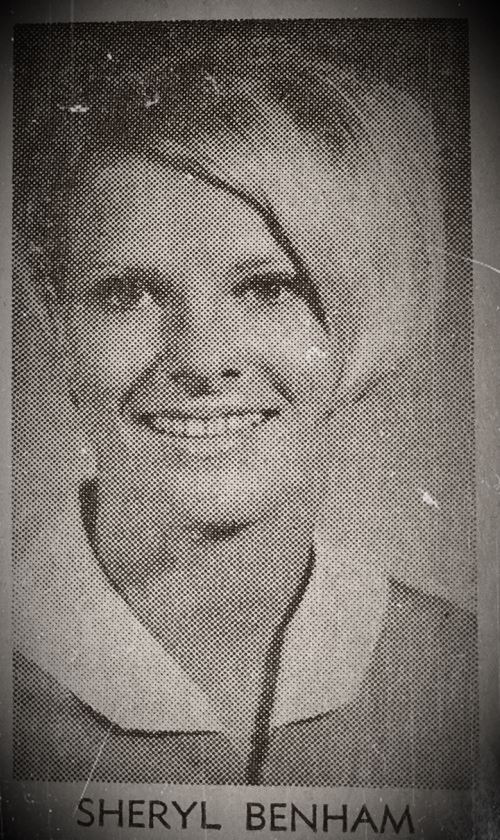
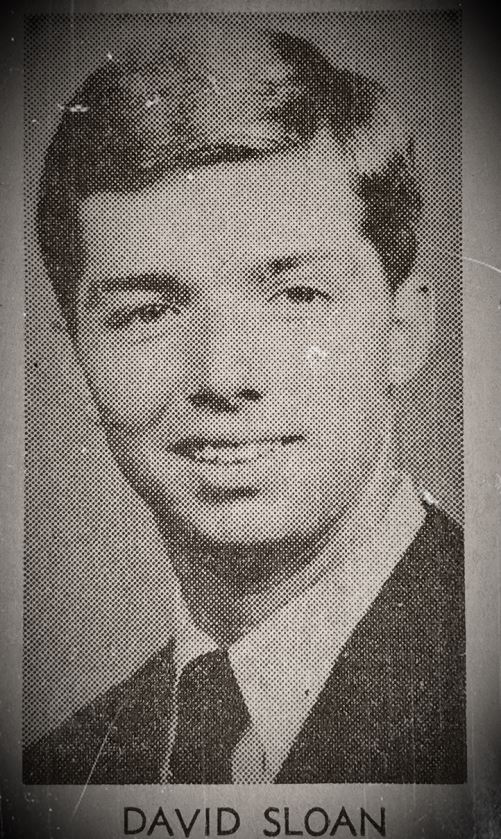
In the late spring of 1970, in Norman, Oklahoma, a double homicide with decidedly Zodiac-like characteristics would take place on a remote lover’s lane.
It was the evening of Saturday, May 9th, 1970, and twenty-one-year-old David Sloan had taken his nineteen-year-old girlfriend Sheryl Lynn Benham to a party at the Sigma Alpha Epsilon fraternity house on the campus of the University of Oklahoma. They were seen late that night leaving the party and climbing into David’s 1966 Pontiac GTO, after which they seemingly vanished into the countryside.
Friends, family, and police spent the next two days searching for the couple, and on May 11th, David’s car was found abandoned near a ravine in a rural lover’s lane area known by the locals as Ten Mile Flat. When authorities searched the vehicle, they discovered the bodies of both David and Sheryl in the trunk; they had both been shot at least ten times apiece with a .22 caliber rifle.
David was found fully clothed, save for his shoes, which were missing. He did not appear to have been robbed. Sheryl was found nude, though there was no obvious sign of sexual assault. From an examination of the scene, investigators hypothesized that David and Sheryl had been forced into the trunk and left alive in there for several hours, before the killer had later come back and shot them repeatedly in the chest and face.
It also appeared that whoever had committed the murders had taken great pains to cover his tracks, using branches to clear away footprints and tire marks. Detectives did manage to recover a partial palm print from the vehicle’s trunk lid, but it matched no other on file.
Initially, the inquiry focused on the several parties that had been going on around the campus to celebrate the impending end of the school year; police also extensively questioned workers at a carnival that had been passing through the area. But shortly after the two victims’ bodies were discovered, a much more sinister suspect began to come to the fore.
Police officer Frank Edward Gilley abruptly quit his job and left town only four days after the remains were found, and his fellow officers began looking at him askance after a handful of other University of Oklahoma students came forward and accused Gilley of harassing them while they were parked out on the lover’s lane.
Gilley was given a polygraph test, which he passed, and thereafter he was cleared of suspicion. Many investigators still considered him their prime suspect, however, even though there was apparently insufficient evidence to get a conviction against him.
But detectives kept in dogged pursuit of justice over the ensuing decades, and in 1991, not long after the case was reopened due to the surfacing of new evidence, Gilley was extradited from his home in DeSoto, Texas to stand trial in Norman, Oklahoma for the double murder of David Sloan and Sheryl Benham.
On the stand, Gilley laid the blame for the homicides at the feet of another police officer, Bryan “Butch” Green, who had himself been murdered in February of 1971 by James Ernest Roberson, who supposedly discovered Green in bed with his wife Ronna, who was also shot to death. Roberson was later acquitted of the crime.
Because Frank Edward Gilley and Bryan Green had been friends, Green’s family members speculated that Green had been murdered because he knew that Gilley had committed the Ten Mile Flat killings. According to witness testimony at Gilley’s trial, Green had once loaned Gilley a white station wagon which matched the description of the car some witnesses had seen lurking around the lover’s lane area where David Sloan and Sheryl Benham were killed.
In addition, Gilley supposedly owned at least one .22 caliber rifle and had allegedly told Bryan Green to lie about this fact if questioned. Authorities also found it suspicious that Gilley had reportedly not accused Green of the Ten Mile Flat murders until after he was conveniently dead.
Despite circumstantial evidence pointing to his guilt, Frank Gilley was acquitted of the double murder in November of 1991. After his release, the investigation stagnated with no new leads and no new suspects. Gilley died in 2002, and the case remains open and unsolved.
 Crime Immemorial