
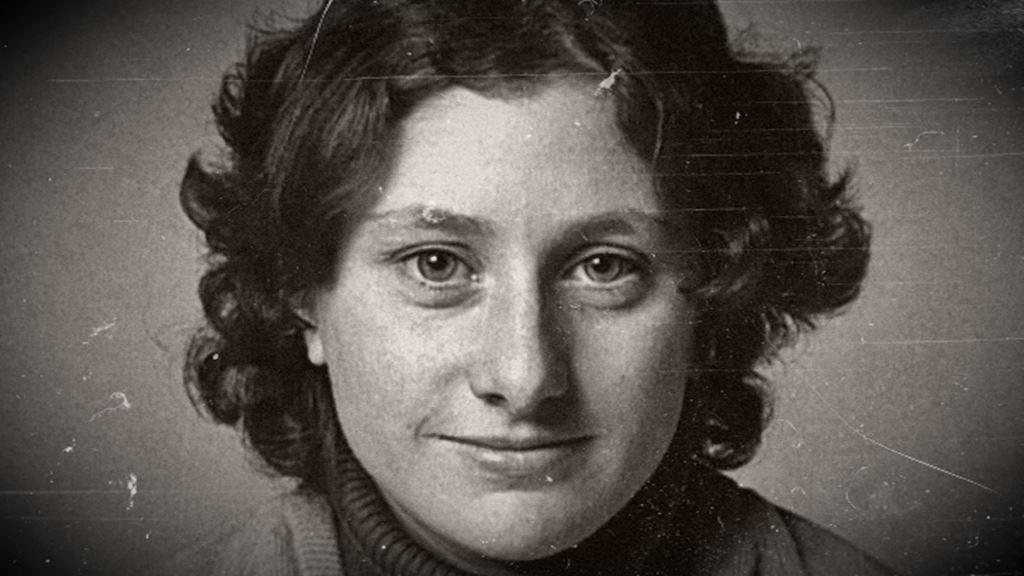
In the spring of 1980, twenty-two-year-old university student Jessie Earl was elated to have finished her exams, and was looking forward to taking a little break. A second-year graphics student at Eastbourne College of Art and Design in Sussex, England, Jessie lived alone in a small bedsit, but on Wednesday, May 14th, she called her parents from a seaside phone booth and told them she’d be coming to London on Friday to visit them, and to stay over the weekend.
Friday evening passed with no word from Jessie, though at first her parents simply thought she had missed the last train and would turn up the next morning. But when Saturday afternoon came and went with no sign of their daughter, John and Valerie Earl became extremely concerned. That evening, Valerie decided to take a train down to Eastbourne herself, to see what might have gone wrong.
When she arrived, Jessie’s landlady let Valerie into the flat, and upon entering, Valerie noted that the place looked eerily as though Jessie had simply stepped out for a moment. A partly eaten dish of chicken and rice was left out on the bedside table, the windows and curtains were open, and Jessie’s purse lay untouched in the middle of the neatly-made bed. Of Jessie herself, however, there was absolutely no sign.
A survey of friends and neighbors confirmed that Jessie had been seen at various points on Thursday, presumably going about her normal business. In fact, another tenant in the building, Ivy Selby, stated that she had spoken to Jessie that day, and that Jessie had been headed out to her doctor’s office to drop off a note to refill her asthma prescription. This note was discovered at the doctor’s office, but the prescription had never been picked up. It was believed that Jessie had returned to her home after this errand, for the clothes Ivy had said Jessie was wearing were later found in her flat. But no sightings of Jessie Earl were reported after Thursday afternoon. It seemed as though she had simply walked out the front door of her apartment and dropped off the face of the Earth.
Her parents would exist in a sort of agonizing limbo for the ensuing nine years before they discovered what had ultimately become of her.
In March of 1989 on Beachy Head, East Sussex, a local man was in the area flying a kite with his daughter and enjoying the sunshine. At some stage, the kite blew off into a thicket of brambles, and the man went to retrieve it. While attempting to free the kite from the tangled bushes, he spotted a smattering of human bones in the underbrush.
Upon examining the skull, the remains were soon identified through dental records as belonging to twenty-two-year-old Jessie Earl, who had vanished from her Eastbourne bedsit back in May of 1980 after making plans to visit her parents in London for the weekend. The only other piece of evidence recovered from the site was a knotted brown bra, which a post-mortem suggested might have been used to bind the young woman’s wrists, perhaps even to tie her to the tree near where her body was found. It was almost certain that she had died at that same spot, perhaps by strangulation.
Despite the suspicious circumstances surrounding Jessie’s death, however, the coroner officially left the verdict open as to whether the victim had been murdered. Jessie Earl’s parents campaigned for years to get the case recognized as a homicide, and were finally successful when the case was reopened in 2000.
It would be 2007, though, before a possible suspect in the crime emerged. This was infamous Scottish serial killer Peter Tobin, who was convicted in that year of raping and murdering a twenty-three-year-old Polish woman by the name of Angelika Kluk, and was subsequently found to have killed at least two more victims: eighteen-year-old Dinah McNichol, and fifteen-year-old Vicky Hamilton. Tobin’s modus operandi—targeting petite women at random and using articles of their own clothing to restrain and kill them—was compellingly similar to the details of Jessie’s death.
Police launched Operation Anagram in 2007 in order to try to link Tobin with other unsolved homicides in the area, and though they investigated him in connection with the Jessie Earl murder, no solid evidence of his involvement could be unearthed, and in 2018, authorities confessed that they had “no evidence implicating Tobin or any other named or known individual.”
In 2022, DNA recovered from the crime scene was compared to that of English murderer and necrophile David Fuller, who killed two women in Tunbridge Wells in 1987, but there was no match.
As of this writing, there are no other known suspects, though Sussex police have stated their intention to keep revisiting the case every two years.
 Crime Immemorial