
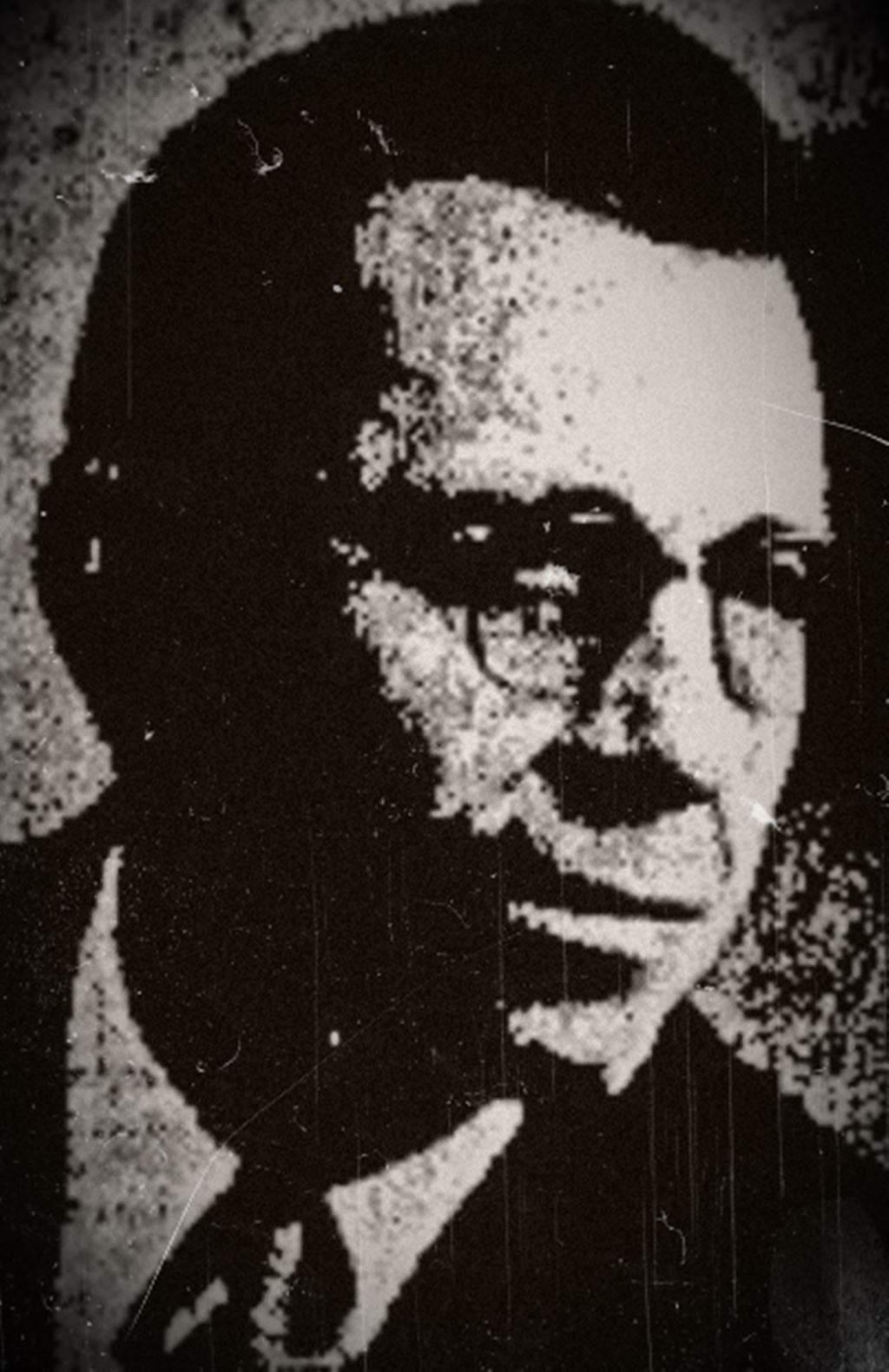
Before 1965 came to a close, a businessman would disappear without trace on a freezing cold night in Iowa, and his case would bleed over into the following year.
Fifty-two-year-old Donald Amos Nervig was the co-owner of a speedometer and electrical services company in Des Moines. On Tuesday, December 14th, he reportedly told a coworker that he was looking forward to going home that evening and relaxing in a hot bath, which he did often, as he suffered from rheumatoid arthritis.
However, Donald didn’t go home after work as he had stated. Instead, carrying more than three-hundred dollars in cash and checks in a bank bag from that day’s business receipts, he headed to a nearby bar called the Executive Lounge. While there, he met a twenty-six-year-old loan officer named Ronald Leroy Kyger, and though the men were strangers to each other, they shared a few drinks, and when Ronald later wanted to leave and go get a pizza, Donald allegedly invited himself along.
Both Ronald Kyger and Donald Nervig were seen by multiple witnesses at Chuck’s Pizza House in Des Moines, and according to the other customers, the men were clearly very intoxicated. Ronald would later inform police that Donald had told him that he didn’t have any money to help pay for the food.
The men left the restaurant at a little past nine p.m., got into Ronald’s car, and began driving north. At some stage, there was an altercation, after Donald complained about Ronald’s driving and attempted to snatch the keys out of the ignition. Ronald slapped his hand away, then pulled the car over near the Firestone Tire and Rubber plant on Second Avenue and told Donald to get out. Ronald said that the last time he saw Donald Nervig, the man was on his hands and knees on the shoulder of the road. Ronald Kyger later willingly submitted to a polygraph test, which indicated that he was being truthful in relating this series of events.
Donald Nervig’s wife Stella became concerned when Donald never came home on that Tuesday night, particularly because the temperature had fallen to well below freezing, and Donald’s medical condition made him very susceptible to the cold. Though she initially reported his disappearance to police on the 15th, authorities told her to wait a few days to see if he turned up.
In the meantime, Stella called around to several of Donald’s friends and coworkers to see if any of them knew his whereabouts. Donald Nervig had some problems with alcoholism in the past, even to the point of attending some AA meetings, and Stella wondered if perhaps he had fallen off the wagon and was holed up with an acquaintance somewhere.
At last, though, she had to admit that her husband had vanished, and Stella filed a formal missing persons report on Friday, December 18th. But 1965 would come to an end with no word on his fate.
Weeks later, on January 9th, 1966, search parties fanned out from the last known location of fifty-two-year-old missing person Donald Nervig, who had disappeared sometime after nine-fifteen p.m. on the night of December 14th, 1965. Despite the intensive hunt, however, no trace of the man was discovered.
But then, on Wednesday, January 26th, two boys who were pulling their sleds up a wooded gully tripped over what proved to be a frozen corpse. The body was immediately identified as that of Donald Nervig, as he was still clad in the personalized work shirt he had been wearing on the night of his disappearance. He was missing one shoe, and his tweed sport coat was found about fifty feet away, lying along a fence.
A post-mortem examination determined that Donald Nervig had been killed by a blow to the back of the head from a weapon that had likely been swung, such as a ball peen hammer or possibly an axe. It was believed that he was already unconscious when the fatal blow was struck. As there was no trace of alcohol or food found in his system, it was assumed that he had been alive for at least ten to twelve hours after Ronald Kyger had left him drunk by the side of Second Avenue.
Because the body was found approximately five miles away from where Donald was last seen, and because Donald was unable to walk long distances due to his rheumatoid arthritis, investigators theorized that the killer had driven him to the spot before hitting him over the head, dragging him through a barbed wire fence, and throwing him the twenty feet to the bottom of the gully.
Authorities initially believed that robbery had been the motive, since the three-hundred-forty dollars he had been carrying in the bank bag when he left work on December 14th was missing. His glasses were also nowhere to be found. However, his wallet was still in his pocket and contained seven dollars. A check payable to him in the amount of thirty-one dollars was also found on his person.
But only a few days later, after a partial thaw in the area, detectives recovered the bank bag containing the money, and also Donald’s glasses, not far away from the gully where his body had been dumped. A partially smoked cigar that likely belonged to Donald was also found nearby.
Once robbery was ruled out as a motive, police were left with very little to go on. Their only suspect, Ronald Kyger, had easily passed a polygraph test, and was reportedly seen by witnesses later on the night that Donald vanished, making it highly unlikely that he was the killer.
Investigators subsequently reached out to the public, asking if anyone had seen Donald Nervig in the ten to twelve hours following the last sighting of him at nine-fifteen p.m. on December 14th, but no one came forward with any pertinent information.
The case went cold thereafter, and the Nervig family has still received no closure as of this writing.
 Crime Immemorial