



















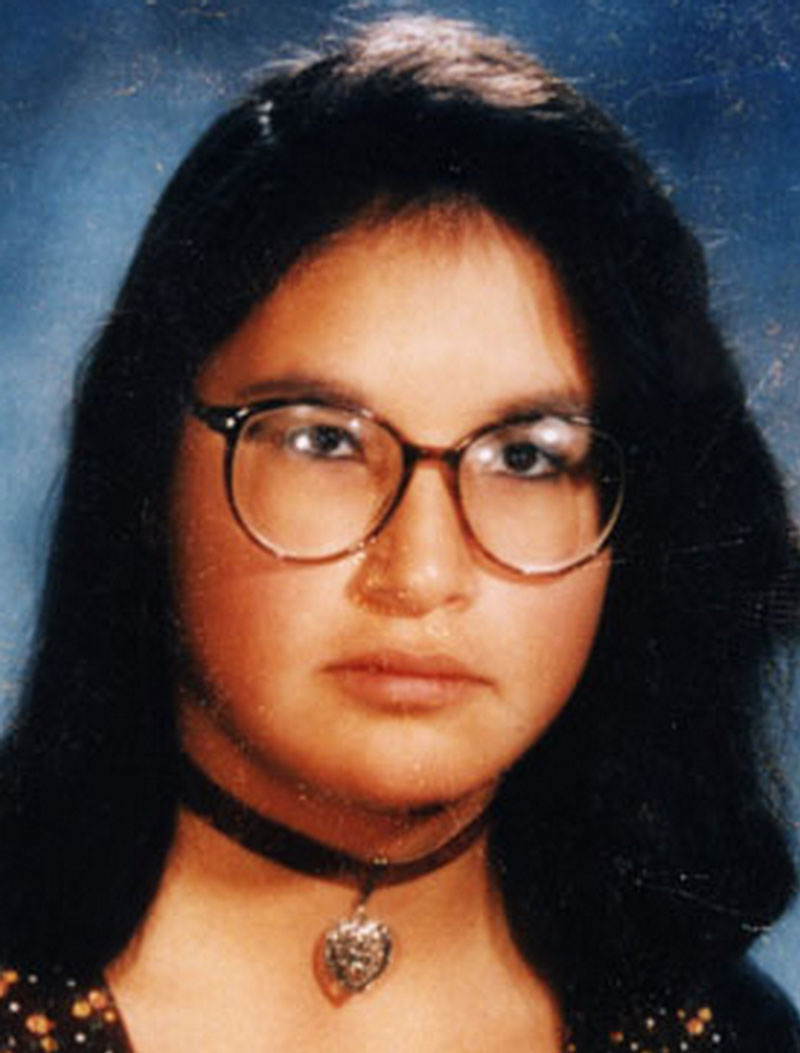





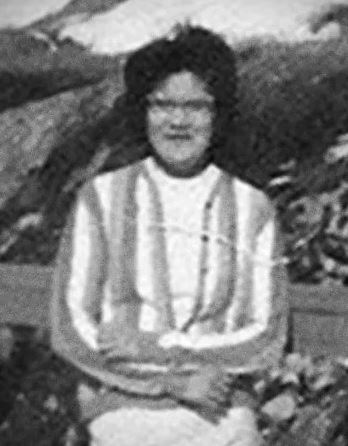

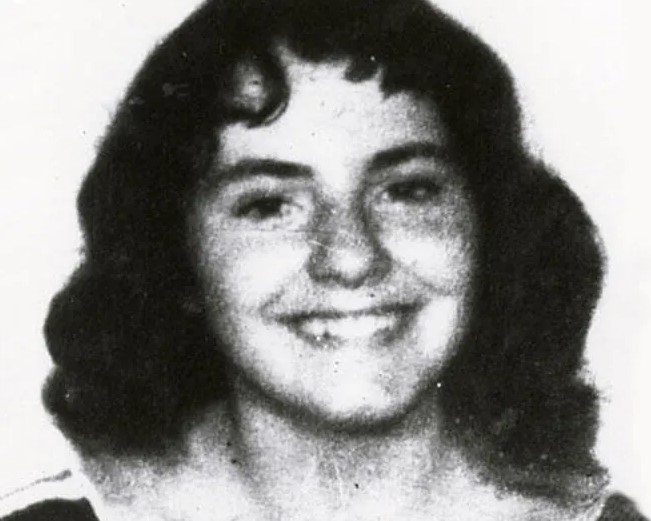






In the autumn of 1969, British Columbia, Canada would see the first occurrence in a more than fifty-year series of murders and disappearances of largely Aboriginal women from particular stretches of Highways 16, 97, and 5, an area which over the ensuing decades would come to be known by the eerily evocative name of the Highway of Tears.
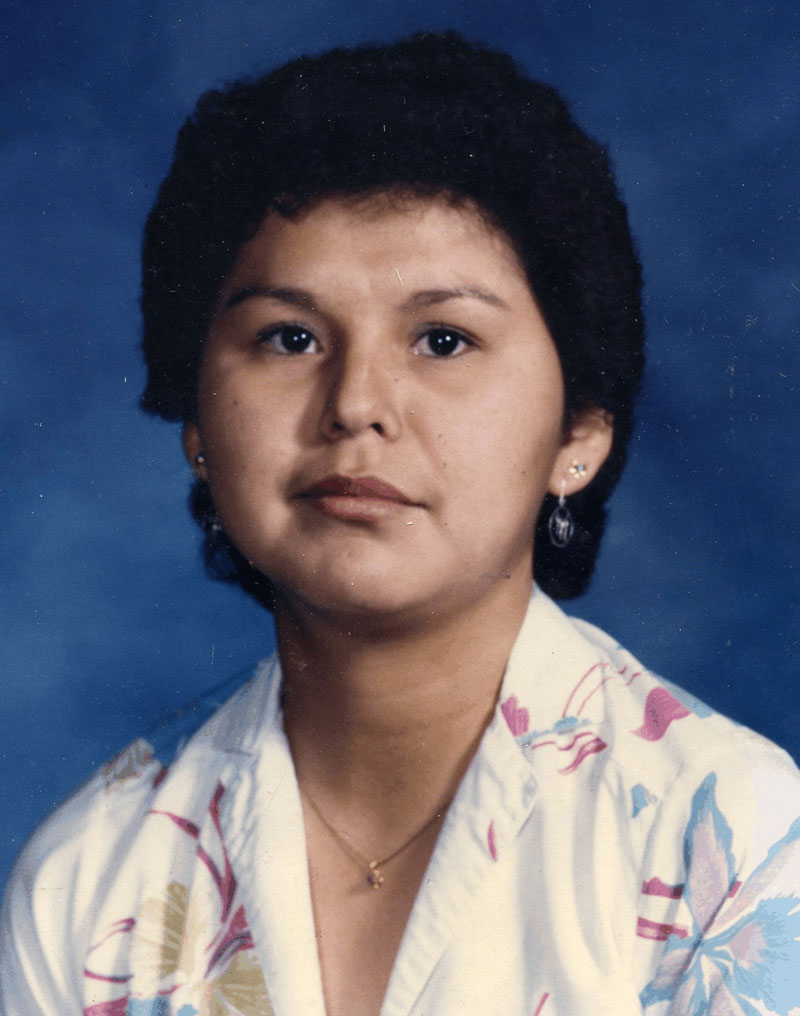
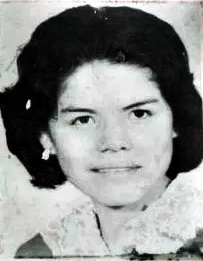
Twenty-six-year-old mother of two Gloria Levina Moody, called Levina by friends and relatives, had been enjoying a road trip with her family on a weekend in late October of 1969. On the evening of Saturday, October 25th, in fact, she and her brother Dave had been bar-hopping in Williams Lake, hitting up at least three establishments over the course of the night.
After leaving a bar at the Ranch Hotel, Dave Moody began heading back to the family’s hotel room, thinking that his sister Levina was right behind him. But upon arriving at the door, he turned to find that she was nowhere to be seen. A retrace of his steps produced no sign of her, and Dave was baffled as to where she could have gone.
The following morning would bring the terrible answer. The body of Gloria Levina Moody was discovered by hunters on a cattle trail off Highway 97, more than six miles away from Williams Lake. She was naked, and had been raped and severely beaten. Her clothing was found scattered near her remains, and it appeared that she had bled to death.
Though there were apparently rumors circulating in the immediate area about who had committed the crime, with implications that there could be as many as three assailants, police were unable to pinpoint a suspect or suspects, and the case languished for decades. In 1998, the Moody family was informed that the three persons of interest in Levina’s murder were all deceased, and in 2007, Gloria Levina Moody was officially named as the first victim in the Highway of Tears slayings.
The presumed serial killer or killers responsible for the attacks would strike again numerous times over the subsequent years, mainly targeting young women of native ancestry. Gloria, then, hailing from the Bella Coola Indian Reserve of the Nuxalk Nation in British Columbia, served as a tragic bellwether to a nightmare that would eventually go on to claim more than eighty lives.
Sometime in 1970, a teenage girl named Tracey Clifton vanished after leaving her home in Prince Rupert, following an argument with her mother. The exact time of her disappearance is unknown, and her whereabouts have never been discovered.
One young woman whose fate would sadly be much less ambiguous apparently fell victim to the killer or killers haunting the blighted stretch of road in July of that same year. Eighteen-year-old Micheline Pare, originally from Quebec, had been hitchhiking on Highway 29, and had been picked up by two women, who dropped her off in front of Tompkins Ranch, located between Fort St. John and Hudson’s Hope.
On August 8th, Micheline’s body was found in Hudson’s Hope by a group of people picking berries along the roadside. She had been killed by a blow to the head with a blunt object. Because of the state of decomposition of the body, it was unclear if she had been raped, though investigators thought it likely.
Authorities attempted to generate leads by releasing a photo and description of Micheline to the public, but no compelling leads were forthcoming, and the case was soon sidelined. Micheline Pare was not added to the official tally of the Highway of Tears murders until 2007.
On October 13th of 1970, seventeen-year-old Helen Claire Frost left the Prince George apartment she shared with her sister Sandy, and vanished shortly thereafter. Helen’s sister, at first believing that the teenager had simply stayed with a friend, did not report Helen missing until two days later. The fate of Helen Claire Frost remains unknown.
Almost exactly a year later, an eighteen-year-old woman named Ginny Sampare also disappeared. On October 14th, 1971, she was traveling across a bridge on Highway 16 near Gitsegluka in the company of her cousin Alvin. At some point, Alvin turned back in order to ride his bike home to retrieve a jacket, but when he returned to the spot on the bridge, Ginny was nowhere to be found. He later told authorities that he thought he had heard the door of a pickup truck slamming, but when he arrived at the place where he had left his cousin, there was no vehicle present.
While it’s entirely possible that Ginny Sampare fell victim to one or more of the human predators lurking along the Highway of Tears, there has been some speculation that Ginny may have committed suicide by jumping off the bridge; it seems notable that her boyfriend had gone missing not long before she did, and was later discovered drowned in the Skeena river. Ginny’s remains, however, have never been found.
In the autumn of 1973, there would be two more women murdered along Highway 16. On October 19th, nineteen-year-old Gale Weys was last seen attempting to hitch a ride from Clearwater to Kamloops. Her body wasn’t discovered until early April of 1974. And on November 6th, another nineteen-year-old named Pamela Darlington, who was also seen trying to thumb a ride to a Kamloops bar, also turned up dead alongside the road.
In both cases, American rapist and alleged serial killer Bobby Jack Fowler was the prime suspect, as not only was he provably in the area at the time, but his DNA was also later found on the body of a third Highway of Tears victim, sixteen-year-old Colleen MacMillen, who was last seen in August of 1974, hitchhiking to a friend’s house from her own home in Lac La Hache. In early September, her body was found in the vicinity of the Highway of Tears, beside a logging road near 100 Mile House.
Though her death remained unsolved for many years afterward, DNA evidence obtained in 2012 definitively linked suspected serial killer Bobby Jack Fowler to the murder of Colleen MacMillen. Fowler, who had been in prison since 1996 on kidnapping, rape, and assault charges, was also believed to be responsible for at least two other Highway of Tears killings, those of the previously mentioned Gale Weys and Pamela Darlington from 1973.
Though DNA exonerated Fowler from some of the other Highway crimes, and though some of the murders were committed after he was incarcerated, authorities speculate that he may have been guilty of perhaps between ten and twenty of the other murders taking place around the Highway of Tears, though his DNA has thus far only been matched to evidence in the case of Colleen MacMillen. Fowler died of lung cancer in 2006.
On Friday, December 13th, 1974, fourteen-year-old Monica Ignas was walking home from school in Thornhill when she fell victim to the unknown killer stalking the region. Her strangled body was found four months later, on April 6th, 1975. Two witnesses later reported seeing a man and a girl in a car alongside the road on the day that Monica disappeared, but the individuals in question have never been conclusively identified as Monica and her killer.
In the summer of 1976, an unusual case occurred that is often tied in with the Highway of Tears murders despite having a different modus operandi. Twenty-one-year-old Coreen Thomas, who was only days away from giving birth, was struck and killed by a pickup truck as she hitchhiked to her home in Vanderhoof on July 3rd. Several witnesses claimed that the driver of the truck—a white man named Richard Redekop—swerved to hit the indigenous woman on purpose, and there was also later speculation that police had coerced some teenage witnesses into stating that Coreen had been playing “chicken” with the truck, in order to make the event seem more like an accident. The coroner, a man named Eric Turner, signed off on the death as such, but subsequently retracted his opinion when it came to light that he too had hit and killed an indigenous person while drunk driving a decade previously. It also seemed notable that Eric Turner had given a similar verdict of accident at an inquest pertaining to the death of a man named Larry Thomas, who was struck and killed on the same road two years before, by a vehicle driven by Richard Redekop’s younger brother Stanley. In a move that bitterly outraged the family of Coreen Thomas, the Crown did not proceed with charges against Richard Redekop in Coreen’s death, and criminal negligence charges brought against the perpetrator by Coreen’s father likewise were dismissed due to insufficient evidence.
On March 26th, 1978, the nude body of thirty-one-year-old mother of three Mary Jane Hill was discovered along the highway, approximately twenty miles from Prince Rupert. Bizarrely, her cause of death was found to be from bronchitis and bronchopneumonia, though because she was found naked, it was presumed that someone had left her there to die, and police stated that her death was a result of manslaughter.
In May of the same year, the Highway of Tears would claim its youngest victim, though her final resting place would not be discovered until nearly twenty years later. It was Saturday, May 6th, 1978, and twelve-year-old Monica Jack was helping her mother bake a birthday cake for her sister Liz, who had just turned eleven. After that task was completed, Monica and her fourteen-year-old cousin Debbie decided to set out on their bikes to go shopping in the nearby town of Merritt. Monica wanted to buy some new shoes, and she was also planning to get a birthday present for her little sister.
The girls rode off into the afternoon without a care in the world. Back home, their families were preparing for their annual trout fishing trip; all the adults would camp out at Stoney Lake once a year, while the children stayed home, watched over by the older teenagers.
Monica’s mother Madeline, in fact, was on her way out to Stoney Lake when she spotted her daughter on her bike coming back from the shopping center. Madeline offered Monica a ride back home, but Monica declined, stating that she wanted to take the rest of the short journey on her own. It would be a decision that would spell her doom.
The following morning, the adults returned from their fishing trip and discovered the children and teenagers in a dreadful state: Monica had never arrived home. The family immediately contacted the police, who marshaled all their resources into searching for the girl. Ominously, the only sign of Monica Jack was her bicycle, abandoned down an embankment not far away from the family’s residence.
As the inquiry proceeded, a few witnesses came forward and stated that they had seen a man standing near the embankment earlier that day, and also described a green truck with a camper, though it was unclear if the vehicle belonged to the man in question. This clue, unfortunately, was far too vague to produce any significant leads.
The family of Monica Jack was left in a heartbreaking limbo for nearly two decades concerning the fate of the vanished twelve-year-old. Then, in June of 1995, forestry workers discovered a set of human remains off a logging road on Swakum Mountain. Eight months later, the remains were positively identified as those of Monica Jack. Her body was found approximately twelve and a half miles from where her bicycle had been dumped in 1978.
Years later, in 2014, a man named Garry Taylor Handlen was finally charged in Monica Jack’s murder, as well as the 1975 homicide of eleven-year-old Kathryn-Mary Herbert. Investigators confirmed that Handlen had been a prime suspect even at the time of Monica’s disappearance, but that they had only recently been able to construct a solid case against him. Handlen was convicted and sentenced to life in prison in 2019, rendering the case of Monica Jack officially solved.
The Highway of Tears murders would continue unabated into the 1980s. On May 8th, 1981, a thirty-three-year-old woman named Maureen Mosie vanished while hitchhiking to Kamloops, and turned up murdered along Highway 97.
And on October 10th of the same year, at approximately one-thirty a.m., thirty-six-year-old Jean Mary Kovacs was seen gathering firewood near Purden Lake, at the intersection of Highway 16 and Old Cariboo Highway. She thereafter disappeared, and her body was discovered the following day in a ditch about twenty-five miles east of Prince George. She had been shot four times in the head with a .22 caliber firearm.
Just over a month later, thirteen-year-old Roswitha Fuchsbichler was visiting a friend, but vanished some time after two a.m. on the morning of November 14th, 1981 while attempting to hitchhike home. A week later, her remains were discovered in the woods north of Prince George. She had been stripped nude, beaten, and stabbed to death.
In these latter two particular cases, a single culprit was ultimately found to be responsible: serial killer Edward Dennis Isaac, who confessed to both crimes, among others. In May of 1987, Isaac was convicted of manslaughter in the death of Roswitha Fuchsbichler, and sentenced to life in prison. He was subsequently charged with the murder of Jean Mary Kovacs in February of 1988.
Though two casualties of the Highway of Tears had obtained some rough kind of justice, many of the victims yet to come would get no such comfort, and the cursed stretch of road would continue to swallow up women and girls for many years to come.
On August 16th, 1982, the body of fifteen-year-old Nina Marie Joseph was discovered in Freeman Park in Prince George. She had been stripped naked and stabbed multiple times before being strangled with a length of cord from her own jacket.
As in the earlier homicides of Jean Mary Kovacs and Roswitha Fuchsbichler from the autumn of 1981, serial killer Edward Dennis Isaac would eventually be convicted of manslaughter in connection with the murder of Nina Joseph; his sentence was handed out in June of 1986. Key to his capture in Nina’s specific case was the fact that Issac’s ex-girlfriend testified against him, claiming that she had helped him dispose of Nina’s body.
Though Isaac was thought to be responsible for only these three murders, many other serial killers were still out there prowling the Highway of Tears. One of them may have been responsible for the disappearance of sixteen-year-old Shelley-Anne Bacsu, who vanished while hitchhiking on May 3rd of 1983 and hasn’t been seen since.
After Shelley-Anne went missing, though, the area seemed to grow quiet for a number of years, but before the decade was out, the Highway of Tears seemingly swallowed up an entire family of four.
It was early August of 1989, and the Jack family—twenty-six-year-old Ronald, his twenty-six-year-old wife Doreen, and the couple’s two children, nine-year-old Russell and four-year-old Ryan—were at their home on Strathcona Road in Prince George. On the evening of the 1st, Ronald was spotted in the First Litre Pub not far from the Jack home, and it was later determined that an unidentified man there had offered Ronald work, a ten-to-fourteen-day stint at a logging camp near Cluculz Lake. The pay was good, the man said, and there would also be work there for Doreen and a daycare on site for the children. Ronald, who had been looking for employment for some time, was excited about the prospect, and shortly after one-thirty a.m. on the morning of August 2nd, phoned his mother and told her about the job. It was the last time anyone would hear from the family.
After the Jacks disappeared, witnesses who had been in the pub came forward and described the man who had ostensibly offered Ronald the logging gig. This individual was a tall white male in his late thirties with a hefty build, reddish-brown hair, and a mustache and short beard. He had been wearing a red checkered shirt, jeans, a blue nylon jacket, and work boots with leather fringe.
The vanishing of the Jacks is usually linked to the other Highway of Tears murders by virtue of the location of the disappearance as well as the fact that the victims were of aboriginal descent. The only possible clue as to their whereabouts came in 2002, when investigators fielded an anonymous phone call from a man claiming that the family was buried “at the south end of Gordie’s ranch.”
Though this call was traced to a home in Stoney Creek, no solid evidence could be found linking the residents to the Jacks’ disappearance. The location of the purported bodies was also thoroughly searched, but nothing of note was discovered. No sign of any member of the family has ever turned up.
And less than a month after the Jacks vanished, another victim of the Highway of Tears would go missing, though in her case her remains would be found fairly quickly.
Twenty-four-year-old Alberta Gail Williams had been living with her sister in Vancouver, but both young women were spending the summer working in northern British Columbia. Alberta was last seen on August 25th, 1989. Exactly one month later, on September 25th, Alberta’s body was found near the Tyee Overpass, approximately twenty-three miles east of Prince Rupert. She had been raped and strangled.
And on October 1st, another young woman would vanish along the Highway of Tears: this time it was eighteen-year-old Cecilia Anne Nikal, who had also been living in Vancouver but was reportedly last seen near Highway 16 in Smithers, British Columbia. Cecilia has never been found.
The year of 1989 would be only weeks from ending when the Highway of Tears claimed yet another victim, though in this particular case, her killer was eventually caught and convicted. Eighteen-year-old Marnie Blanchard was last spotted at the Rock Pit Cabaret in Prince George at approximately two a.m. on the morning of November 22nd, 1989. Witnesses later confirmed that Marnie had gotten into a gray Toyota pickup truck with a white canopy, driven by a man with long, black hair. The vehicle pulled out of the bar’s parking lot and headed west, and Marnie would subsequently never be seen alive again.
On December 11th, a pair of cross-country skiiers stumbled across Marnie’s remains west of Foothills Boulevard. Only months later, serial killer Brian Peter Arp was arrested for her murder, and though he was initially released due to lack of evidence, improved DNA technology later assured that he was convicted of killing Marnie Blanchard, as well as another later Highway of Tears victim.
In the opening months of 1990, a sinister house fire would occur in British Columbia and claim four lives. The case is generally regarded as falling under the Highway of Tears umbrella, though the specifics of the case are obviously drastically different.
Very early on the morning of February 5th, 1990, firefighters responded to a blaze at the Brooks Bank Building in Prince Rupert. Upon extinguishing the flames, they discovered four dead bodies among the ruins: forty-five-year-old Helga Rochon, her twenty-six-year-old daughter Sherri, nineteen-year-old daughter Pauline, and seven-month-old granddaughter Kimberly Dumais. Helga had lived in a third-floor apartment in the building, and her daughters and baby granddaughter had been enjoying an overnight visit.
The fire was later determined by investigators to be arson, and many years after the incident, the remainder of the Rochon family received an anonymous letter taking credit for the quadruple homicide, though no reason for the attack was given. Significantly, the building had also been deliberately set on fire a few months previously, back in October of 1989, leading detectives to theorize that one or more of the women who died in the fire had been a specific target of the arsonist. The case was renewed in 2009, but as of this writing, there have been no further developments.
As spring of 1990 faded into summer, yet another young woman would vanish along the infamous Highway of Tears. Fifteen-year-old Delphine Nikal phoned her uncle at about ten p.m. on the night of June 13th, 1990 and told him that she was making her way from Smithers back to her home in Telkwa. She was last seen hitchhiking along Highway 16, and thereafter disappeared. Her body has never been found.
Delphine Nikal, incidentally, was the cousin of fifteen-year-old Cecilia Anne Nikal, who disappeared back in October of 1989, either from the area around Highway 16, or perhaps from Vancouver. Sadly, there would be one more member of the Nikal family who would also fall victim to the seeming curse surrounding the Highway of Tears: one Roberta Nikal, another of Delphine’s cousins, who was found murdered a few years after Delphine’s disappearance.
On Valentine’s Day of 1993, the Highway of Tears would serve up yet another victim, though in her case, the killer would eventually be caught. Theresa Umphrey, who was thirty-nine years old, was last spotted in front of a convenience store in Prince George on the morning of February 14th; witnesses reported that she appeared intoxicated. Two unnamed men would later inform police that they had attempted to give the woman a ride, but that when they asked her where they should drop her off, she couldn’t remember her home address. They claimed they subsequently drove her back to the same convenience store and left her there.
Only hours later, her nude and frozen body was discovered about thirty miles away from where she was last seen. A post-mortem determined that she had been killed by manual strangulation, followed by ligature strangulation, perhaps by a shoelace.
Later in 1993, serial killer Brian Peter Arp was arrested and charged with the murder of Theresa Umphrey, as well as that of Marnie Blanchard, who was killed in November of 1989 and whose case was discussed earlier.
The Highway of Tears would subsequently go quiet, but not for long, as another young woman would meet her end there in the early summer of 1994. On the first day of June, sixteen-year-old Ramona Wilson was hitchhiking from her home in Smithers to the town of Hazelton, a journey of a little less than forty miles. She had been planning to visit friends and go out to a dance. But Ramona never arrived at her friends’ place, and her remains would not turn up until nearly a year later, in April of 1995. Her body was found near the Smithers Airport north of Yellich Road. Discovered neatly arranged in a pile near her body were three nylon ties, a small length of rope, and a pink water pistol with a handle shaped like brass knuckles. Her killer has never been found.
Not long after Ramona’s initial disappearance, another teenage girl would vanish along the Highway of Tears. This time the victim was fifteen-year-old sometime prostitute Roxanne Thiara, who went missing over a long weekend in July after walking off with a client in Prince George. Her remains were found later on that summer, on August 17th of 1994, along Highway 16 less than four miles from Burns Lake.
A friend of hers, another fifteen-year-old named Alishia “Leah” Germaine, would subsequently be murdered not far away, in December of the same year. Her body was discovered on the 9th, behind Haldi Road Elementary School in Prince George. She had been stabbed to death. The haunted highway would claim many more souls as the nineties wore on.
October of 1995 would see another young woman vanish in the area; this time it was nineteen-year-old Lana Derrick, last seen in Thornhill at a gas station. A later witness claimed that she had gotten into a vehicle with two unidentified men, but this has not been substantiated. Lana Derrick has never been found.
Nearly four years went by, and though it seemed as though the Highway of Tears had perhaps been purged of its evil, two cases in 1999 brought the broad region into sharp focus once again.
The first of these took place in September of 1999, when Deena Braem vanished on the eve of her seventeenth birthday. She had been celebrating with friends near Quesnel, British Columbia, and it’s believed that she may have attempted to hitchhike to a friend’s house later on in the evening. On December 10th, her body was found by a hunter, buried in a shallow grave near Pinnacles Park. Although the location where she was discovered lay approximately seventy-five miles away from the Highway of Tears and she is not usually linked with the other victims, the similarity of her disappearance to many others in the series have caused some researchers to speculate that her murder may be connected.
And only hours before 1999 came to a close, the Highway of Tears saw fit to devour one more innocent victim. Eighteen-year-old Monica McKay was hanging out with friends on New Year’s Eve in Prince Rupert, British Columbia, but apparently left them before midnight struck. Two days later, her family reported her missing after she failed to return home. A little over a week into the year 2000, on January 8th, the girl’s dead body was discovered lying next to a dumpster. Detectives are unsure whether Monica’s death is linked to the other Highway of Tears murders, but in any event, no suspects have ever been identified, and her slaying remains unsolved.
After the turn of the millennium, the deaths and disappearances continued at a steady pace, as if they would never stop. On June 21st of 2002, twenty-four-year-old Nicole Hoar disappeared while hitchhiking to Smithers. She was last seen at a gas station in Prince George, walking toward an orange car driven by a white male, though it isn’t known if she actually got into the vehicle. Although authorities investigated the property of convicted murderer Leland Vincent Switzer in connection with the case, nothing was found and no charges were laid. Nicole Hoar remains missing.
On April 15th of 2004, the body of thirteen-year-old Kayla Rose McKay was discovered near the harbor in Prince George. While police seem confident that Kayla did not commit suicide and was not murdered, they have not ruled out the possibility that there was some criminal involvement in her mysterious death.
More than a year later, a young woman named Mary Madeline George disappeared while walking to a Prince George clinic on July 24th of 2005. She has never been found.
And only two months after that, twenty-two-year-old Tamara Lynn Chipman also disappeared while hitchhiking along Highway 16 from Prince Rupert back to her home in Thornhill on September 21st. Tamara was due to appear in court on an assault charge on the day she vanished, suggesting the possibility that she may have disappeared voluntarily, but it seems ominous that her bank account was not used after she went missing. Though extensive searches were conducted, no sign of her has ever materialized.
On February 2nd, 2006, fourteen-year-old Aielah Saric-Auger went to the mall with her brother and sister, and thereafter apparently went to a friend’s house to sleep over. She was last seen overnight, walking north toward her home; a security camera captured her walking past the Save-On-Foods gas station at about one in the morning. Witnesses also claimed they saw her getting into a black van shortly afterwards. Her body was discovered in a ditch about twelve miles east of Prince George on February 10th.
Also in Prince George, a woman named Beverly Warbrick vanished in June of 2007. Her whereabouts are still unknown.
A few months later, thirty-two-year-old mother of five Bonnie Marie Joseph likewise disappeared while hitchhiking, this time from Vanderhoof to Prince George. Bonnie was traveling to Prince George for a court date on September 9th; she was nearing the end of the process of having her children returned to her from state custody. According to her family, she had not missed any of her previous court dates. Bonnie has never been found, though her wallet and ID were discovered near a lake along her route; the wallet still contained an uncashed check.
In the latter years of the 2000s, several connected murders occurred in the area that were all eventually laid at the feet of one man. In October of 2009, thirty-five-year-old mother of five Jill Stacey Stuchenko was found murdered in a gravel pit just outside of Prince George, having been killed by several blows to the head. And less than a year later, twenty-three-year-old Natasha Lynn Montgomery, a known sex worker, vanished on August 26th of 2010 after calling her parents on the phone to check in. Her body was never found. Two more victims would turn up over the next couple of months: thirty-five-year-old Cynthia Frances Maas was found dead from blunt force trauma and penetrating chest wounds on October 9th near Prince George; and fifteen-year-old Loren Donn Leslie’s body was found on an isolated logging road off Highway 27 in late November of 2010.
All four of these victims were subsequently linked via DNA evidence to Canadian serial killer Cody Legebokoff, who was pulled over by police shortly after Loren Leslie’s body was discovered, and arrested after officers found some of Loren’s blood and belongings inside his vehicle. Legebokoff was convicted of all four slayings in September of 2011.
Twenty-year-old Madison “Maddy” Scott was the next young woman to fall victim to the Highway of Tears, vanishing after attending a party at Hogsback Lake, sixteen miles from Vanderhoof, on May 28th of 2011. Maddy and her friend Jordi Bolduc had been camping at the site with other friends, but Maddy disappeared from her tent at some time after four in the morning. Although Jordi was not initially alarmed at Maddy being a no-show, as she had been quite drunk the night before and there were no obvious signs of a struggle in the tent, late in the following day Maddy’s parents reported the woman missing after discovering her vehicle abandoned at the lake. Maddy’s whereabouts are unknown, and authorities suspect foul play.
Two years later, another young woman would also go missing following a party: twenty-six-year-old mother of one Immaculate Basil, known as Mackie, was at a gathering on June 13th of 2013 at a residence that was a twenty-minute walk from her own home in Tachie. At some point around midnight, Mackie, her cousin Keith, and a friend named Victor all headed out to a nearby cabin; all had been drinking, and Victor’s white truck became stuck in the mud following a minor accident. Mackie set off toward the cabin alone while the two men stayed by the truck, and Mackie subsequently vanished. Although witnesses claimed to have seen Victor on the day of Mackie’s disappearance walking down the road with his clothes wet up to his chest, police were satisfied that neither of the two men had anything to do with Mackie going missing.
On the morning of November 19th, 2014, forty-nine-year-old Anita Florence Thorne was spotted at a gas station and then at a Tim Horton’s coffee shop in Prince George. The following day, authorities found her abandoned car, unlocked, at the Willow River turnoff, approximately eighteen-and-a-half miles from where she was last seen. Her purse was visible and untouched inside the vehicle, and nothing appeared to have been stolen. It was believed that Anita still had her cell phone on her person, but calls to it went unanswered. Her whereabouts are still unknown.
Nearly three years later, fifty-five-year-old Roberta Marie Sims went missing from near her home on May 6th of 2017. Various witnesses reported spotting her at a pub and a bank in the area, but her movements after that time are unclear. Authorities suspect she was murdered, and that her vehicle was used in the commission of the crime.
Another older woman, fifty-three-year-old Frances Brown, disappeared later that year, as she was out picking mushrooms north of Smithers on October 14th. Though search parties found evidence of a campfire, and Frances was known to be an extremely able outdoorswoman who always went into the woods prepared, she has also yet to be found.
On July 4th of 2018, thirty-four-year-old Chantelle Catherine Simpson was seen alive in Telkwa, but her abandoned car was discovered by authorities on the following day, and two days after that, her remains were recovered from the Skeena River. Her cause of death has not been released to the public.
In September of the same year, eighteen-year-old Jessica Patrick Balczer turned up dead at the bottom of an embankment on Hudson Bay Mountain Road in Smithers. She had last been seen alive at a Smithers McDonald’s and at the nearby Mountainview Motel on August 31st of 2018.
Months later, only a couple of days before Christmas of 2018, fifty-year-old Cynthia Martin likewise went missing. Her locked car was found near the Hagwilget Bridge near Hazelton, and though there was nothing at the scene to immediately suggest foul play, her body was found years later, in May of 2022. Her cause of death is also unknown.
In late October of 2019, sixty-nine-year-old Laureen Campbell Fabian vanished sometime in the afternoon after taking a walk around the area south of her home in Houston. Foul play is not necessarily suspected, but police are not disclosing many details about the disappearance.
One of the most recent cases linked to the Highway of Tears series is that of thirty-four-year-old Crystal Haynes Chambers, whose body was found on August 1st of 2020 near Highway 16 in Prince George. In her case, a possible suspect was apprehended: a man named Jason Troy Getty was arrested in December of 2021 and charged with second-degree murder and “indignity to human remains.” The case is still pending as of this writing.
Although this list of victims is by no means exhaustive, it does include not only the eighteen “official” Highway of Tears murders—classified under the Project E-Pana unit, which was established in 2005—but also dozens of other crimes that may or may not be linked to one another, but are generally placed under the same umbrella because of their proximity and some overlapping details. Obviously, though, because of the length of time involved and the apprehension of at least three killers known to be responsible for some of the murders, it’s clear that the area surrounding the Highway of Tears is the hunting ground for a number of other murderers who have yet to be caught.
Much like in the case of the similar Texas Killing Fields series, discussed elsewhere, the Highway of Tears murders are likely connected partly because the area where most of the women and girls were dumped is remote and isolated, giving killers confidence that they can operate without being observed. Also contributing significantly to the alarming number of murders in this area can also likely be attributed to high rates of poverty among the indigenous population; many of the victims, for example, were too poor to afford cars, and therefore had to rely on hitchhiking in order to get around, leaving them vulnerable to predators.
Although controversy exists over how many of the deaths and disappearances in the region can be linked to one another, there’s no mistaking the tragic and horrific human toll that has been taken by the Highway of Tears over the past half-century, and sadly, it looks as though its curse seems set to continue into the indefinite future.
 Crime Immemorial