
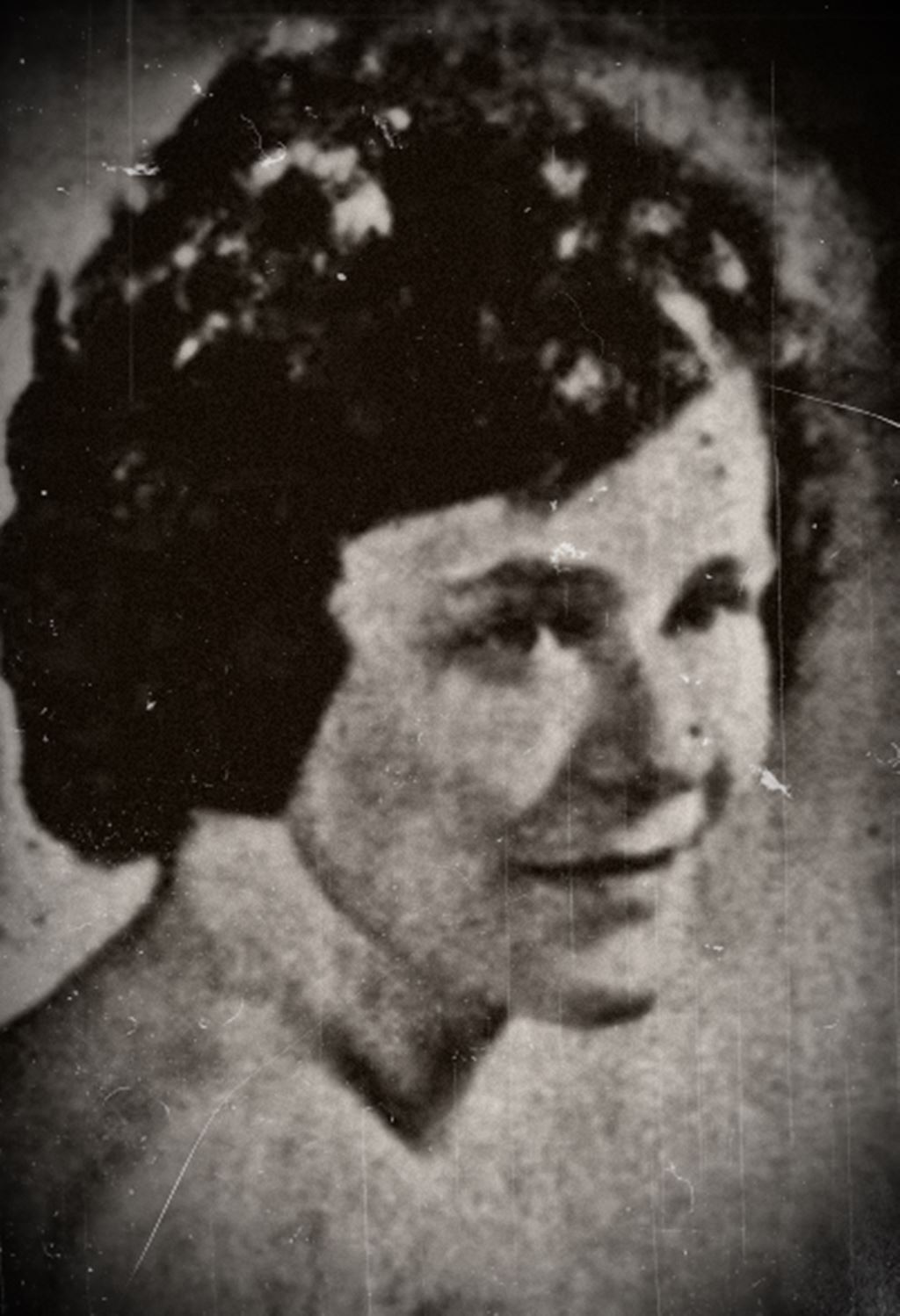
Mary Margaret Andrews, known as Peggy to her friends and family, was nineteen years old. Originally from a small town in Ohio called Winterville, she had moved to the capital city of Columbus after graduating high school in order to attend Columbus Business University.
By the time 1962 rolled around, she had taken a full-time job as a secretary for an accountant, while also keeping up with her studies by taking night classes several times a week. A devout Catholic, she also made sure to set aside time every morning to attend Mass.
On Thursday, September 20th, 1962, Peggy got off work at around five p.m., and then went to class. She had been fighting a cold for the past few days, and wasn’t feeling particularly well. After class was over, she met up with her two roommates, Carol Eick and Carol Maxwell. The three young women usually took the bus home together after classes were over, but Peggy evidently wasn’t relishing the idea of a cramped bus ride in her indisposed condition, so her friend Ron Negutt, who was in the night class with her, told her he’d give her a ride.
Shortly afterward, Ron dropped Peggy off in front of the boarding house where she lived with her roommates, though he later admitted he had driven away before seeing her go inside the building. He then proceeded to a nearby bar to meet another friend, and he reportedly arrived there at half-past nine.
At approximately the same time, Carol Eick and Carol Maxwell got off their bus in front of their boarding house, expecting Peggy to already be home. She wasn’t, but at first they were not alarmed, and settled in to relax for the evening and wait for her.
An hour later, Peggy was still not home. The two Carols informed the house mothers what was going on, and the house mothers agreed to stay up until the midnight curfew to make sure that Peggy arrived home safely. Carol and Carol then went up to bed.
Midnight passed, and then another half hour, and there was still no sign of Peggy Andrews. The house mothers were concerned, as Peggy was known to be quite a conscientious young woman who was not prone to breaking rules. But what neither the house mothers nor Peggy’s roommates knew was that by twelve-thirty that night, Peggy’s fate had already been long sealed.
At about eleven-thirty p.m., in fact, a man named Gary Ontko had been walking through a nearby alley. He was also a student at the college, and he and his two roommates had just moved into an apartment near Peggy’s boarding house. One of Gary’s roommates had left his car windows rolled down, and Gary had offered to go down to the alley where the car was parked and roll them up for him.
But as Gary approached the vehicle, something inside an open garage caught his eye. He and his roommates had been back and forth through the alley all day, and they hadn’t noticed this item in the garage at any point during the afternoon. Gary cautiously drew closer to the unfamiliar object, and soon realized he was looking at a pair of legs. Stunned, Gary rounded up his roommates, and the three young men drove to a nearby diner to phone police.
Investigators were quickly able to determine that the remains were those of Mary Margaret Andrews, and that the cause of death was three gunshots to the face.
Peggy was found with her clothing still on, but disordered. Her underclothes had been torn, and semen was found on her skirt, but she had not been raped. Additionally, her outer coat was dusty, as were the palms of her hands and the soles of her feet, although one of her shoes remained in place. She was still in possession of the jewelry she had been wearing, and though the contents of her purse had been scattered around the body, it was unclear if anything had been stolen.
Back at the boarding house, Peggy’s roommates and the house mothers had awakened early Friday morning to find Peggy still missing, at which point they phoned the police and learned the horrible truth. Detectives arrived at the boarding house and quickly came across Peggy’s school books and a shopping bag she had been carrying when she was last seen. The items had been stacked neatly in the house’s backyard, leading investigators to theorize that Peggy had been on her way up to the back entrance of the house when her killer had confronted her, told her to put down her things, then forced her at gunpoint to the garage where she was murdered.
The first three suspects to come to the attention of authorities were Gary Ontko and his roommate—the two men who had discovered the body—and Ron Negutt, ostensibly the last person to see Peggy alive. All three individuals were thoroughly vetted, undergoing polygraph tests, vehicle searches, and intensive questioning. All were promptly eliminated from the pool of possible culprits.
Likewise, a probe into Peggy’s other acquaintances, friends, and family members produced no compelling suspects, and the young woman had no boyfriends or ex-lovers to speak of. Though a family who lived near the alley where Peggy’s body was discovered reported hearing what sounded like firecrackers shortly after nine p.m., none of them had seen anything that would aid police in their investigation.
A more promising avenue of inquiry stemmed from a similar crime which had taken place the night before Peggy’s murder. A woman who lived about a mile away from Peggy’s boarding house reported that she had been approached by an armed man, who ordered her into her house and proceeded to force her to perform oral sex on him. Luckily for the woman, her roommate heard the commotion and came out of his room, at which point the assailant fired his pistol wildly into the air and fled the scene.
The victim described her attacker as a white man with a slight build, and was able to provide enough detail for police to produce a composite sketch of the suspect. Ballistics tests on the bullets recovered from the Peggy Andrews crime scene were compared to a pair of bullets found at the scene of the previous sexual assault, and though the results were inconclusive, it was believed that the bullets had similar enough attributes that they had likely been fired from the same weapon.
This weapon, however, would not be found until more than a year later, and would ultimately only lead to more unanswered questions. In October of 1963, investigators discovered the crucial clue, a .22 caliber pistol, found in a nearby drain spout. Comparing the firearm to the bullets recovered from the scene of Peggy’s murder, as well as the site of the possibly related sexual assault that had occurred the night before, police were confident that all the bullets could have been fired from this particular gun.
The weapon was traced back to its owner, a student at Ohio State University named Frederick Vlaskamp, who coincidentally only lived a few blocks from Peggy Andrews’ boarding house. Under questioning, Vlaskamp denied having anything to do with either the murder or the sexual assault, claiming that his pistol had been lost or stolen some time before. Investigators were skeptical, but Vlaskamp easily passed a polygraph, and was dismissed as a suspect.
Many years later, in 2000, detective David Morris discovered Peggy’s semen-stained skirt in the cold case evidence files, and sent it to the lab to obtain a DNA profile of her killer. He then contacted Frederick Vlaskamp, who still lived in Ohio and was willing to give a sample of his own DNA. Morris compared the two profiles, but the 1963 polygraph had been correct; Vlaskamp’s DNA was not a match.
Since that time, no further progress has been made on the case, and the slaying of Peggy Andrews remains unsolved.
 Crime Immemorial