
On February 28th in St. Louis, Missouri, two individuals broke into an abandoned Victorian house on Clemens Avenue, ostensibly to look for scrap metal. While they were in the basement of the dwelling, one of them decided to light a cigarette, and the glow from its tip suddenly illuminated a grisly scene.
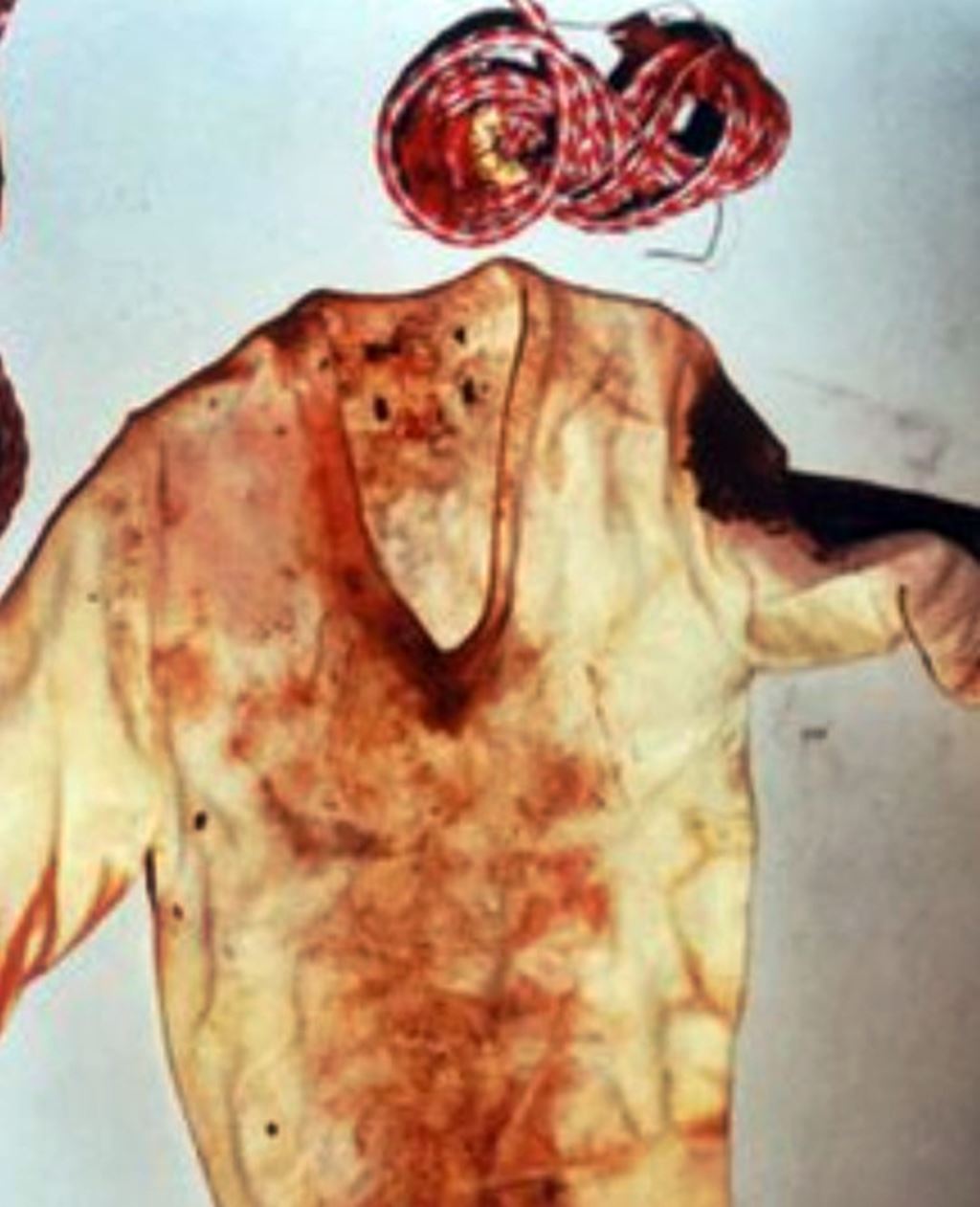
Lying on the floor of the basement was the half-nude body of a young woman, situated on her stomach. She wore a bloody yellow sweater with long sleeves, though her pants and underwear were missing. Her hands were tied behind her back with red nylon cord.
Worst of all, the victim had been cleanly decapitated. Her head was nowhere to be seen.
When authorities arrived, they carefully turned the victim over and realized that she was much younger than they had initially estimated: perhaps only between eight and eleven years old. She was an African-American child, probably between four-foot-ten and five-foot-six. She had no unusual marks or scars, save for evidence that she might have suffered from a mild form of spina bifida. Her fingernails bore two coats of red polish.
During the autopsy, it was confirmed that she had been raped, and probably killed by strangulation before being beheaded with an extremely sharp carving knife. Because the basement was nearly free of blood, it was assumed that the girl had been murdered elsewhere and later left in the abandoned house, presumably around five days before she was discovered.
The investigation was stymied, of course, by the failure to find the girl’s head; neither facial reconstruction nor dental records could be utilized to help identify the victim. To add insult to injury, police desperately sent the girl’s sweater and the red cord that had bound her wrists to a psychic several years after the murder, but the evidence was subsequently lost in the mail and has never been recovered.
Unfortunately, the St. Louis Jane Doe—sometimes also referred to as Hope or Little Jane Doe—matched no area missing persons cases, and remains unknown to this day. Her body was exhumed in 2013 to obtain a DNA profile, and at that time an isotopic analysis of her bones was also performed. The results of that analysis seemed to suggest that the girl was probably a native of one of the states of the American southeast, though her origins could not be narrowed down any further.
While the child remains unidentified, a person of interest in the murder was eventually singled out: a man by the name of Vernon Brown, who had spent four years in prison after a 1973 conviction for molesting a twelve-year-old girl. He was later suspected of the murder of a nine-year-old named Kimberly Andrews, and in 1986 admitted to two more killings, those of nine-year-old Janet Perkins and nineteen-year-old Synetta Ford. Janet was bound and strangled with a rope, while Synetta was strangled with electrical cord and stabbed multiple times.
Though Vernon Brown never confessed to killing St. Louis Jane Doe, he was convicted of the other crimes, and was executed by lethal injection in 2005. The gruesome death of the little girl found beheaded in the basement of the Clemens Avenue Victorian has yet to be resolved.
 Crime Immemorial
You should watch the documentary on this case.