

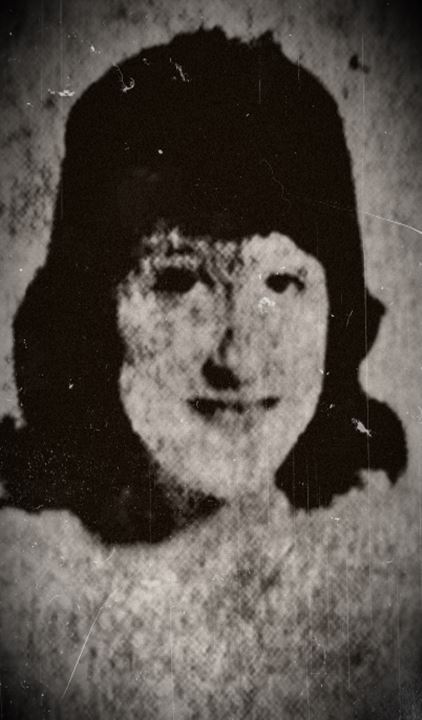

In the summer of 1965, within the seemingly all-American confines of Nashville, Tennessee, a disturbing homicide would occur that would be something of a bellwether of a grisly string of crimes that would plague one area of the city up until late 1969. Though it remains possible that the chilling murders of three local girls, as well as several other assaults and rapes, were unconnected, some researchers have speculated that a serial killer and rapist might have been operating in the mid-1960s in the neighborhood of Nashville then known as Music Row.
It was Thursday, July 15th, 1965, and eleven-year-old Wanda June Anderson was at the home of her sister and brother-in-law. They had left her in charge of their six small children while they went out shopping and then to a tavern for a drink. They had left around ten p.m. and didn’t expect to be gone all that long.
Two and a half hours later, the couple returned to their basement apartment and found the back door wide open, and one of their twin babies crying from inside. Frantically, they rushed in and searched the small home.
Wanda June was nowhere to be seen, though alarmingly, one of the beds had a bloodstain on the sheets. The pair ran out into the yard, calling for Wanda, but they received no answer. It didn’t take long, though, before they discovered the battered little girl, lying unconscious less than fifty feet from the rear of the building. She had clearly been raped and beaten severely in the head at least four times, the weapon an eighteen-inch iron pipe found nearby, spattered with blood. She had also been partially strangled with her own pajamas.
Wanda June was immediately taken to the nearest hospital, where she languished in a semi-conscious daze until Saturday, July 17th, when she sadly succumbed to her injuries.
Police questioned the other children who had been in the home when Wanda June was attacked and who were old enough to be of some help as witnesses. But all of them had slept through the ordeal, and investigators believed that the assailant had likely sneaked into the apartment, knocked Wanda June unconscious, then dragged her outside to rape her, all without any of the other children being the wiser.
A few neighbors claimed they had heard some noise at around midnight, but nothing unusual enough that they would have reported it to authorities.
Two days after the murder, detectives found a bloody shirt and a pair of underwear in Natchez Trace, which they thought might have been related to the crime, though lab analysis produced no compelling leads. On the same day, they questioned a twenty-two-year-old nightclub bouncer named Hughdon Edward Mathis for the murder.
Mathis had been charged with rape and assault in a March attack on fifty-one-year-old Edith Martha Wood, in which he had also slashed her throat. Edith Wood had survived the encounter and had picked Mathis out of a lineup, and significantly, the murder of Wanda June Anderson had taken place less than two blocks from where the Edith Wood crime had occurred.
Mathis was never charged with Wanda June’s slaying, though he would be arrested several times for assault, robbery, and various drug offenses over the ensuing two decades, until he was himself found murdered by gunshot in 1985.
Another key suspect in the crime was seventeen-year-old Edward Joseph McGee, a mentally challenged young man who only lived a few blocks from Wanda June Anderson and would later confess to sexually molesting and killing his neighbor, nine-year-old Deborah Ray, and her cousin, Phyllis Seibers, by beating them to death with a rock and discarding their bodies in the Shelby City Dump.

There would be two more eerily similar rapes and murders of young girls in Nashville’s Music Row over the next few years, though it is still unknown whether the crimes were perpetrated by the same offender.
A little less than six months after the murder of eleven-year-old Wanda June Anderson, in fact, another young girl would be slain in the same area, and in just as audacious a fashion.
Fourteen-year-old Reba Kay Green, usually just called Kay, lived in a four-room house on Nassau Street in North Nashville with her parents and six siblings. In the early morning hours of January 9th, 1966, the whole family was fast asleep. Kay shared a bed with her twin sister, Rita Shay, though the girls had switched their usual sleeping positions that night, for whatever reason.
At about four a.m., Kay’s nineteen-year-old brother Edgar Neal suddenly awoke with an uneasy feeling, unsure as to whether he had heard something strange in the house. He got out of bed and crept down the hall, peering into the darkened bedroom of his younger sisters.
In the shadows, Edgar was astonished to see the silhouette of a person crossing in front of the window, and was even further disturbed to note that the individual appeared to be laughing. He was later unable to tell police whether the figure he had seen was male or female, black or white. Edgar screamed for his parents, at which point the assailant fled from the home.
In the general chaos following the attack, it was discovered that Kay had been stabbed once, directly through the heart. Her twin sister, sleeping right beside her, had not awakened during the stabbing. Reba Kay Green was pronounced dead on arrival at General Hospital at four-thirty a.m.
Police took statements from all the other family members in the home. Besides Edgar, the only other resident who claimed to have caught a glimpse of the killer was nine-year-old Diana, who said she had seen a dark figure hunching over her sister’s bed when she got up to use the bathroom, but had been too terrified to raise the alarm.
Investigators determined that the murderer had likely entered through the back door, the glass pane of which had been broken in an unrelated incident several days before.
Reba Kay’s mother Myrtle speculated that perhaps the killer had actually been targeting Rita Shay, but had erroneously stabbed Reba Kay because the twins were not in their normal sleeping positions. However, neither the Green family nor the authorities could think of any particular reason why anyone would want to kill either one of the teenaged girls.
Initially, some suspicion was cast on Edgar Green, who had discovered the murder of his sister. He was given a lie detector test, the results of which were inconclusive, but it does not appear that he was ever investigated any further.
The homicide was especially baffling because there had been no attempted sexual assault and no robbery, and it seemed extremely unusual that a perpetrator would enter a house full of people, stab a young girl once in the heart, and then leave.
Because of the similarities to the previous murder of Wanda June Anderson, however, some investigators have speculated that there might have been a serial offender roaming the neighborhood in the mid-to-late sixties. Supporting this hypothesis is the fact that not only had there been a handful of reports of peeping toms in the area at the time, but even more alarmingly, in August of 1965, it was reported that another young girl, fourteen-year-old Wanda Kay Martin, was actually dragged out of her bedroom window by an unknown assailant, who let her go and fled when she began to scream. Wanda Kay, significantly, lived across the street from the Green family.
The third Nashville murder in this possible sequence, though, would not occur until nearly four years later. On November 29th, 1969, a twelve-year-old girl would stroll to a nearby skating rink and never be seen alive again.
Kathy Jones had just received a nearly new pair of roller skates from her cousin and was itching to try them out. At around seven-forty-five p.m., Kathy’s mother handed the girl a dollar so that she could pick up a box of doughnuts from Krispy Kreme while she was out. Kathy then kissed her mother goodbye and set out into the autumn evening for the twenty-minute walk to the Roller Drome.
When Kathy failed to return home, her frantic mother contacted the police, but the fate of the child would not be known for nearly three days.
On December 2nd, the naked, beaten body of Kathy Jones was discovered in a vacant lot behind the Krispy Kreme, which was only a block or two from the roller rink.
The extent of Kathy’s injuries was truly appalling. The twelve-year-old girl had been savagely raped and sodomized, and her small form bore numerous black contusions, as well as a puncture wound in her chest and a series of cuts on her neck. The cause of death was found to be suffocation, resulting from the attacker stuffing one of her socks down her throat.
The killer had used articles of Kathy’s clothing to bind her hands behind her back, while the remainder of her clothes were left crumpled around her body. The rest of her possessions—which included a deck of playing cards, a purse, and the roller skates she had been so proud of—were also found strewn around her remains. It was unclear whether she had actually arrived at the skating rink, or had been waylaid before she got there.
Though investigators worked tirelessly for months, questioning more than seventy-five suspects, the case soon languished, and a promising lead did not emerge until nearly nine years later.
In 1977, a man named Warner Edward Adcox, who had been the bus driver for the skating rink at the time Kathy Jones was killed, and also later went to prison in Nashville for sexually assaulting an eight-year-old boy, came to the attention of authorities after it was revealed that Adcox had also previously served time in North Carolina for sexually assaulting a little girl.
Two detectives working on the Kathy Jones case, Charles Mills and Claude Chamberlain, persuaded a known felon and informant to be placed in the same cell as Adcox, to see if the suspect would confess. Adcox did allegedly tell the informant how he had murdered Kathy, and the two detectives had him arrested for the crime.
However, when the case came before a grand jury, the district attorney felt that the evidence against Adcox was not strong enough to warrant any charges being brought, and the case was subsequently dismissed.
In later years, other detectives have periodically revisited the case, and in light of the 2009 conviction of Jerome Sydney Barrett for the 1975 rape and murder of nine-year-old Girl Scout Marcia Trimble, connections between other Nashville-area child murders were looked into. Some detectives have speculated that the murder of Kathy Jones might have been perpetrated by the same offender responsible for the 1965 killings of eleven-year-old Wanda June Anderson and fourteen-year-old Reba Kay Green.
Notably, a few months after Kathy Jones was murdered, in March of 1970, another twelve-year-old girl was abducted in the same area; she was later found bound and gagged, but thankfully alive. She told police that a man had entered her home, hit her in the head, and dragged her out to a nearby field. This incident taken in tandem with the others does seem to suggest a serial offender.
In the early 2000s, Nashville law enforcement informed the media that Warner Edward Adcox had been definitively ruled out as a suspect in the Kathy Jones murder, and that there was compelling evidence to suggest a different killer, though they did not name the individual and only stated that investigators were working on building a case against the man, who purportedly still lives and works in Nashville. They hope that DNA evidence will eventually reveal the man or men responsible for the horrific crimes.
But as of this writing, in January of 2023, the slayings of Wanda June Anderson, Reba Kay Green, and Kathy Jones remain unsolved.
 Crime Immemorial