
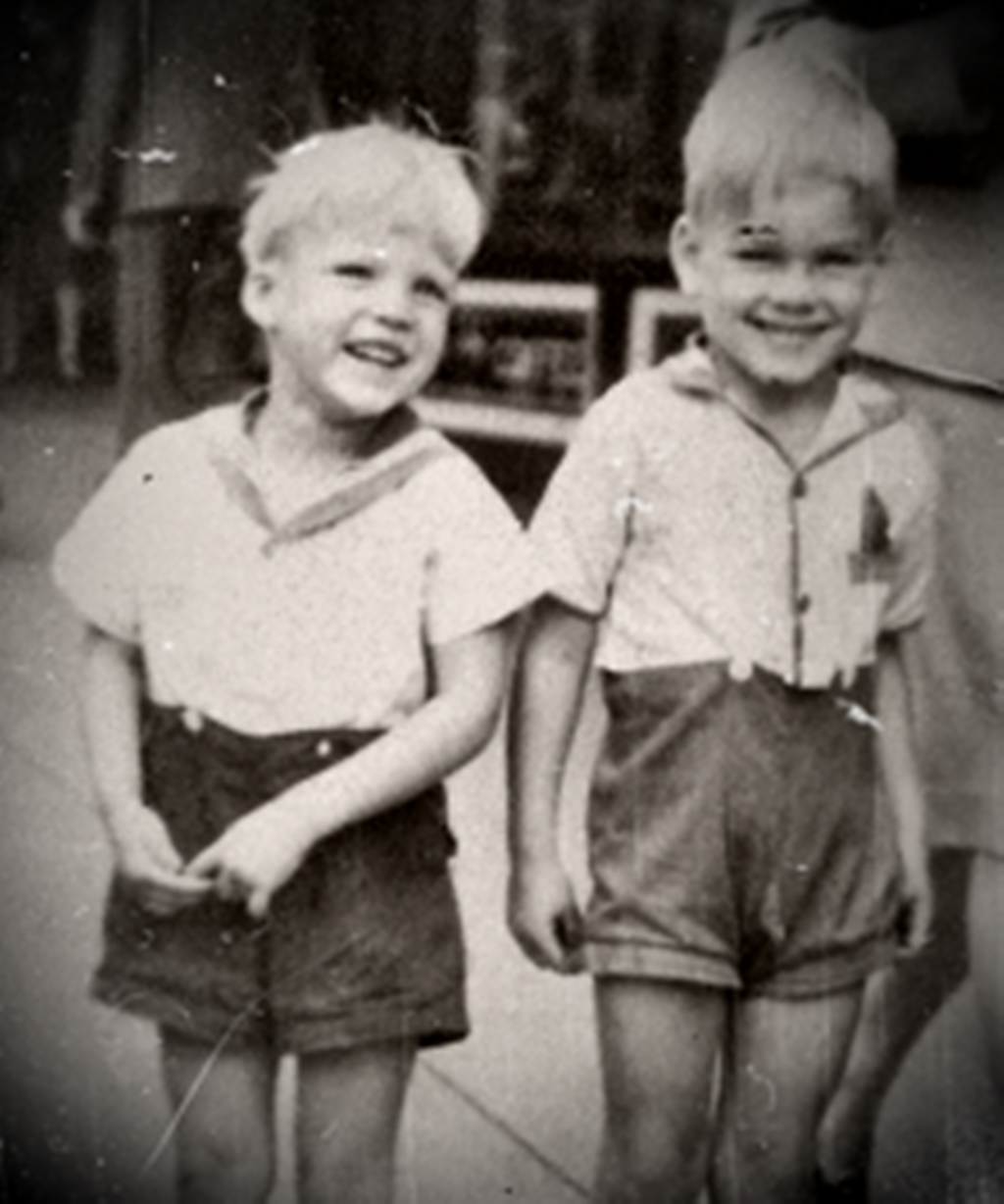
It was January 14th, 1953, in Stanley Park, Vancouver, British Columbia. A park employee, Albert Tong, was walking near Beaver Lake when he stepped on a patch of ground that didn’t feel quite right. He knelt down in the underbrush and dug around a bit, almost immediately discovering a woman’s rain coat buried beneath the leaves. Beneath the coat were two small skeletons, lying side by side.
After investigators were summoned to the scene, more clues were uncovered. Along with the skeletons, the hasty burial site also contained a few pieces of children’s clothing, including two small leather aviator caps; a woman’s size 7½ shoe; a rusted tin lunch box; and most ominously of all, a hatchet with a broken handle, which was subsequently determined to be the murder weapon. The hatchet was of a type usually used by shinglers or lathers, One skull bore a wound from the hatchet’s blade, while the other had been hit with the blunt end of the instrument.
Forensic examination of the bones at first mistakenly asserted that the skeletons belonged to a boy and a girl, though later and more thorough methods determined that both skeletons were male. The boys were thought to have been somewhere in the range of seven to ten years old. Because the shoes the children had been wearing were not thought to have been imported into Canada until after World War II, and because of the aged appearance of the bones, the pathologist at the time estimated that the boys had been murdered sometime in 1947.
A forensic artist produced plaster casts of the boys’ faces based on the skulls, and photographs of the children’s clothing were distributed far and wide in the media. In spite of the massive coverage, though, very little information was forthcoming about who the boys were, and who could have killed them.
The only significant lead at the time came from two loggers in the area, who claimed that they had given a ride to a red-headed woman and two boys sometime around 1949 or 1950. The loggers informed police that the woman had not given her name, but had told them that she was from Mission, British Columbia and was in trouble with the police, possibly for vagrancy or prostitution. The witnesses further noted that at least one of the boys had been wearing a leather aviator cap, and both appeared around seven years old.
Investigators followed up on this line of inquiry, eventually coming up with a possible surname of Grant, but as they delved further into family connections, the trail that had initially seemed so promising hit a dead end.
Much later, after it was determined that the shoes the boys had been wearing had actually been available in Canada much earlier than 1947, the range of possibilities of when the boys had been killed was expanded. Once earlier dates were taken into account, it was subsequently discovered that in May of 1944, a sailor and his girlfriend reported to police that they had been walking near Beaver Lake when they claimed they saw a woman bolting out of the bushes wearing only one shoe.
The case would eventually become known as the “Babes in the Wood” murders, and remained unresolved for decades until DNA analysis finally identified the children in spring of 2022: they were Derek and David D’Alton (also known as Derek and David Bousquet), who were about seven and six years old, respectively, when they were killed. Their mother Eileen Bousquet had died in 1996.
Now that the victims have had their identities restored, investigators are hoping to be able to discover who murdered them, and the case remains active as of this writing.
 Crime Immemorial