
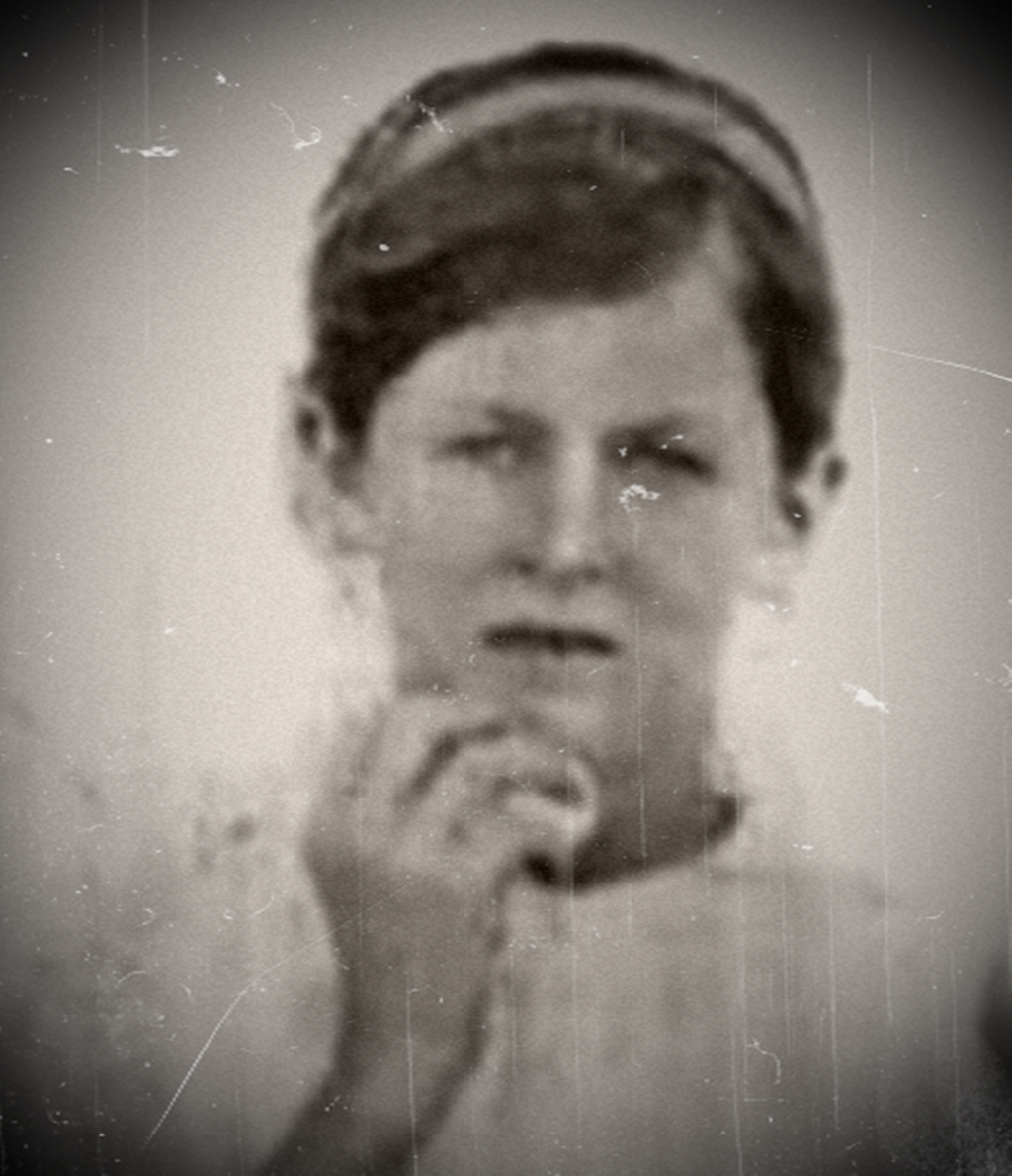
It was late afternoon on Saturday, February 26th, 1921, among the numerous farms that occupied the land outside the village of North Motton in Tasmania, Australia. Ena May Dawes gave her daughter Chrissie Venn a basket and some money, and asked the fourteen-year-old if she would walk the three miles into town to buy some groceries and make a stop at the post office. Chrissie, who had made the same journey countless times before, set off along Allison Road.
A neighboring farmer named Charles Purton was plowing a field nearby, and saw Chrissie pass his farm shortly after five o’clock. Not long after that, another young farmer named John Hearps thought he heard a scream, but as the sound was not repeated, he didn’t feel the need to investigate, and went back to his work.
At around seven in the evening, two hours after Chrissie had left, Ena May walked a little way down Allison Road, thinking that her daughter should have been on her way back by now. As night closed in, the child’s mother became distraught, and she raised the alarm. Over the course of the next few days, investigators and townsfolk alike would scour the area searching for the missing child.
But on March 1st, Ena May’s worst fears were realized: the mutilated body of Chrissie Venn was found crammed inside a large tree stump not far off the road that the girl had been taking into town. Chrissie’s clothing was torn, with part of her muslin dress stuffed into her mouth. She looked as though she had put up a violent struggle. She had also been raped, and the cause of death was believed to be asphyxiation, due to the fabric stuffed into her throat. There was a wire found wrapped around her neck, though it was believed that this had been placed there post-mortem, as the murderer seemed to have used it to help haul the body into its hiding place inside the tree stump.
Over the course of the following days, the bulk of the suspicion fell on another local farmer, a man named George William King. He had actually been a member of one of the search parties that had been deployed to find Chrissie Venn, but townsfolk became suspicious because of the odd cuts on his hands, which they believed might have occurred as he struggled to subdue his victim. King, for his part, claimed that he had either received the cuts during the search itself, or as an accidental side effect of a playful tussle with his wife.
Residents of the village weren’t so sure, however. It was whispered around town that Chrissie Venn hadn’t liked King, and that she had once told someone she was afraid of him. There was also some confusion about the various times he had been seen around his farm on the Saturday when Chrissie first went missing. King stated that on that evening, he had been crossing the road to his neighbor’s house with some fresh milk when he saw that one of his sows had escaped, so he went to fetch it and bring it back. He said that he then went into his house and had tea with his wife, and didn‘t leave the house for the remainder of the evening.
He further claimed that he had not even seen Chrissie on the day in question, though he often saw her carrying groceries along Allison Road, and occasionally spoke to her. He also stated that he had not seen anyone else lurking around in the heavy shrubbery that afternoon that might have been lying in wait for the girl.
On March 3rd, investigators discovered a bloodstained stick near the Hearps’ gate, very close to the stump where the body had been found. They also discovered a safety pin, a broken piece of wire, and hair that likely belonged to Chrissie, right around the same area.
Three days later, on March 6th, George King received an anonymous letter in the mail accusing him of the murder. He brought it to police, still adamant that he was not the killer. But the uncertainty about how and when he had obtained the cuts on his hands still made investigators suspicious, and they arrested King on March 8th.
But months later, on August 11th, George King was acquitted of the murder of Chrissie Venn. While many townsfolk were still convinced of his guilt, there was insufficient evidence to definitively pin the crime on him. After he went free, the case went cold, and whoever raped and murdered the fourteen-year-old Tasmanian girl went to his grave unpunished.
 Crime Immemorial