
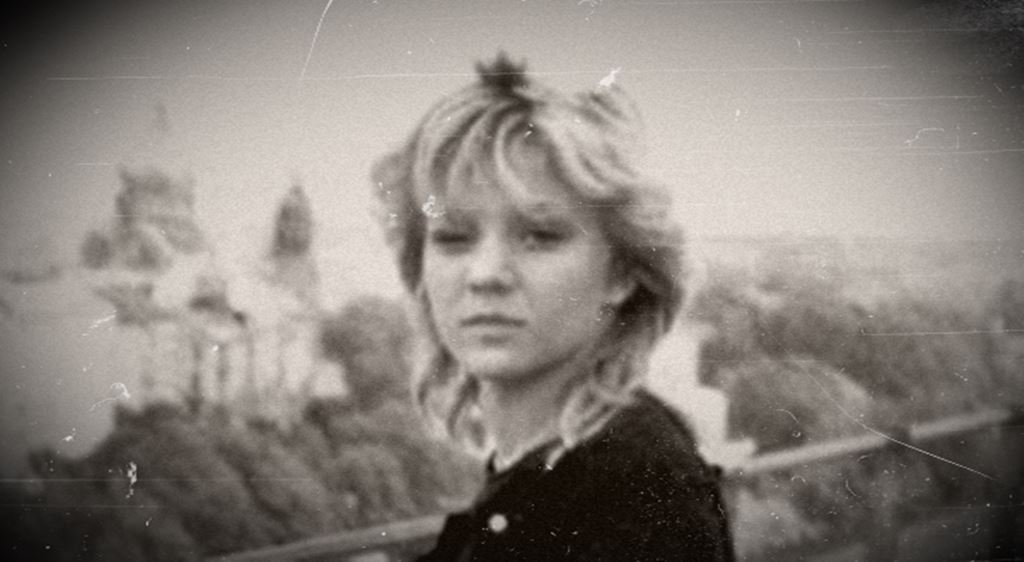
Eighteen-year-old Inga Maria Hauser was originally from Munich, Germany, a free-spirited, artistic young woman with a passion for travel. Toward the end of March 1988, her family had dropped her off at the train station, and she had journeyed through Holland before taking a ferry to Harwich, England and then on to London. She had been calling her parents daily and sending postcards along the way to keep them apprised of her movements, but she had no scheduled itinerary at all, enjoying the luxury of being able to wake up every day and go wherever she pleased.
By the time April 6th had rolled around, she was in Scotland, having made her way north from Glasgow to Inverness, and then back down south to Ayr and then Stranraer, where she boarded a ferry bound for Larne, in Northern Ireland. Two later witnesses would remember seeing her aboard the boat: a pretty girl carrying a green backpack that had a pair of white running shoes hanging from it by the laces. It was the last time anyone would see her alive.
Two weeks later, on April 20th, a farmer discovered her beaten body lying face down in an isolated part of Ballypatrick Forest in County Antrim. She had been sexually assaulted and had died of a broken neck.
Authorities assumed that Inga’s ultimate destination on this leg of her trip was Belfast, which was approximately fifty-five miles in the opposite direction to the spot where her remains had been dumped. This suggested that whoever had killed her had likely either persuaded or forced her into a vehicle, perhaps on the ferry, and then drove her to this remote location, where she was subsequently murdered.
According to Inga’s family, the girl was very worldly and would definitely not have gotten into a car with a man she didn’t know, especially considering that she was traveling through a country she had never set foot in before, which tended to support the idea that another passenger or passengers on the ferry with her had strong-armed her into their car and abducted her.
The area where Inga was ultimately found, moreover, was far-flung enough that the assailant must have been very familiar with the lay of the land, and considering the rough terrain, probably drove there in a jeep or a van.
Northern Ireland in 1988 was still in the thick of The Troubles; in fact, that year was one of the most violent of the entire conflict. For this reason, the investigation into Inga’s murder was stymied by stretched-thin resources and overworked police officers. That said, some sources reveal that the IRA had looked into the matter themselves shortly after it occurred, and were planning to share the information they had garnered with the Royal Ulster Constabulary, but later decided against it.
The case was reopened in 2018, on the thirtieth anniversary of the murder, and a few new leads did emerge. In May of that year, in fact, two men were arrested in conjunction with the homicide, though after questioning, one of them was released on bond pending further investigation. Authorities had been able to extract a DNA profile of one of the killers, but as of this writing, they have been unable to match it with any known offender in the nationwide database. No updates have been forthcoming since that time.
 Crime Immemorial