
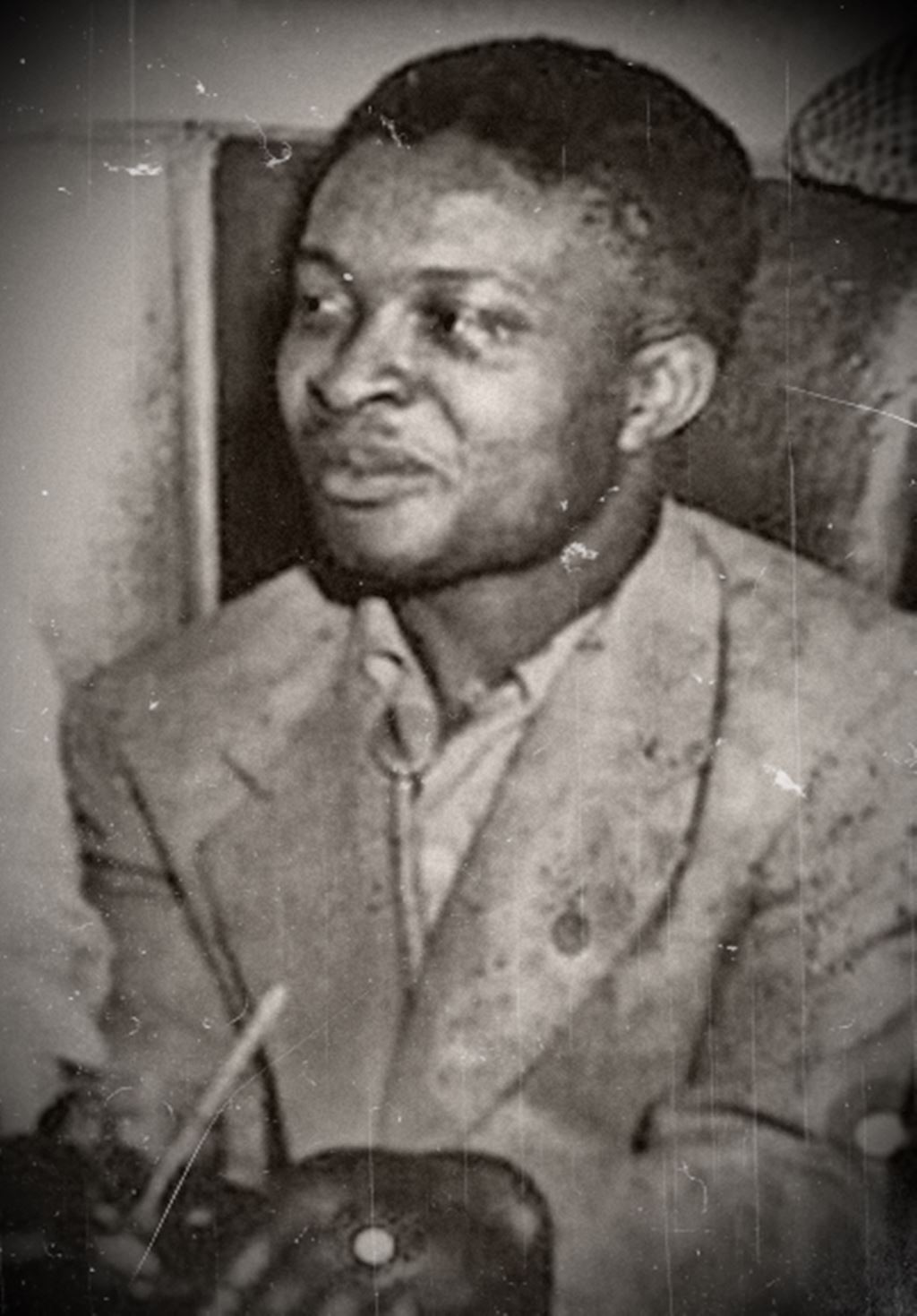
Thirty-six-year-old Wharlest Jackson, Jr. was a veteran of the Korean War and a Florida native. He had moved to Natchez, Mississippi more than a decade earlier to marry his sweetheart Exerlena, who had been born there. The couple had five children.
In the early part of 1967, Wharlest had been offered a promotion at the Armstrong Tire and Rubber plant, where he had worked for twelve years. The advancement came with a generous raise to seventeen cents an hour; a tempting proposition, as the extra money would mean that Exerlena, who suffered from lupus, would be able to quit her job as a school cook and stay home to rest and look after the children.
But there was a rather significant downside to the promotion as well. As was the case at many factories and workplaces throughout Mississippi and Louisiana, a sizable number of the employees were involved with the KKK. The job that Wharlest Jackson had been offered had previously only been held by white men, and perhaps inevitably, Wharlest began receiving death threats from the moment the news about the promotion spread through the company.
And the KKK wasn’t bluffing. Back in August of 1965, Wharlest’s friend and fellow Armstrong employee George Metcalfe had been seriously wounded in the factory’s parking lot by a car bomb that had been planted in his 1955 Chevy. George Metcalfe had also been given a promotion at the company shortly before the bomb exploded, and significantly, had also taken up the position of president of the local chapter of the NAACP. Wharlest Jackson, it should be noted, was the treasurer of the organization.
Exerlena begged Wharlest to turn down the promotion. She not only reminded him of the horrible wounds inflicted on George Metcalfe, but also pointed out that twenty-five-year-old Joe Edwards had disappeared in 1964 in Ferriday, Louisiana, and was rumored to have been skinned alive by the Klan. She also brought up the 1964 arson in Ferriday that had killed Frank Morris.
Wharlest understood her concerns, but the money was too good to pass up. He wanted to be able to provide for their large family without Exerlena having to be on her feet all day, and besides, he didn’t like to have to live in fear of the Klan. After talking the decision over with NAACP field secretary Charles Evers, whose brother Medgar had been murdered by a white supremacist in 1963, Wharlest Jackson accepted the new position at Armstrong.
A month later, on February 27th, 1967, Wharlest worked a twelve-hour shift at the plant, and left at a little past eight p.m. He drove his pickup truck out of the parking lot and through the cold winter drizzle, heading toward the family’s residence in College Hill.
About seven blocks from home, Wharlest flipped on his turn signal, and the pickup truck exploded. Exerlena Jackson heard the blast from the house, and immediately knew what it must be.
Police responded within ten minutes, and were faced with a scene of unbelievable carnage. Wharlest’s 1958 Chevy had been completely blown apart by a large explosive device located just beneath the driver’s seat. The top, doors, and hood of the vehicle had all been blasted out, as had the front and rear windshields. Pieces of the pickup truck were discovered as far as one-hundred-fifty feet away, and two nearby houses had holes punched into them by flying shrapnel.
Wharlest Jackson was rushed to the nearest hospital, but there was no saving him; his injuries were far too dire.
The NAACP was outraged by the murder, and it seemed that they weren’t alone in Natchez. A protest shortly after the bombing drew more than two-thousand people to the Armstrong plant, and even Natchez Governor Paul Johnson, sworn enemy of the NAACP, publicly condemned the savagery of the crime in no uncertain terms.
The FBI began an investigation, and soon announced that Wharlest had in all probability been the victim of a particularly violent offshoot of the Klan known as the Silver Dollar Group, a small but extremely militant faction of perhaps twenty individuals who identified one another by carrying a silver dollar that had been minted in the year of their birth. This same cell, which included at least two law enforcement officers, was also believed to be responsible for the 1964 killing of Frank Morris, the 1964 disappearance and suspected murder of Joe Edwards, and the 1965 car bombing that wounded George Metcalfe.
The prime suspect in the bombing that killed Wharlest Jackson was Silver Dollar Group founder Raleigh Jackson “Red” Glover, who was known to be something of an expert in regards to explosives. Despite this identification, however, the FBI were either unwilling or unable to make an arrest in the case, and just like many other racially-motivated murders from the era, the investigation was largely abandoned as the years went on.
Though the Wharlest Jackson slaying was reopened in 2005, and remains open as of this writing, the FBI appear to have hit a wall, claiming that all the main suspects in the crime are now dead.
The surviving members of Wharlest Jackson’s family were able to raise enough money in 2010 for a memorial marker, which was placed on the site where he died.
 Crime Immemorial