
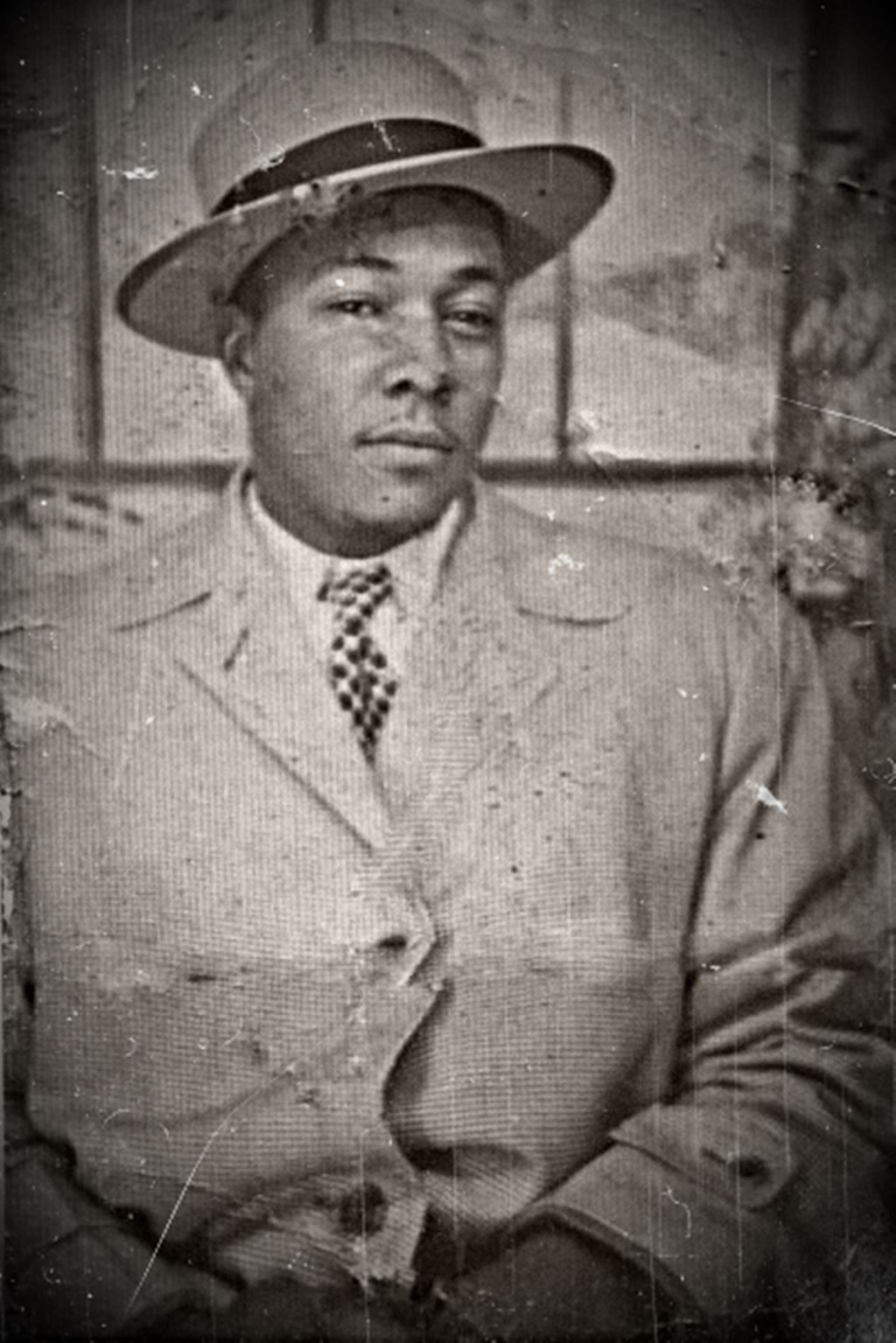
Thirty-seven-year-old Clifton Walker, affectionately nicknamed “Man” by his family, was a veteran of the Korean War, though he had been honorably discharged from the Army after a leg injury. He and his wife Ruby had five children, and lived on their own land in Woodville, Mississippi.
In 1964, Clifton was working as a laborer at the International Paper plant in Natchez, Mississippi, about thirty miles away from his home. He was a member of the black union, and made a good salary for the time, which allowed him to provide a fairly comfortable life for his large and adoring family.
However, all was not so rosy at the paper plant. Though Clifton had some white friends among his coworkers, racial tensions at the factory were high, as black union members—though reportedly not Clifton Walker specifically—were agitating to equalize blacks’ and whites’ pay and phase out the use of separate bathrooms and water fountains at the company. Because of the animosity, the plant was a known recruitment hub for the Ku Klux Klan, and it has been speculated that at least forty workers there were members.
On February 28th, 1964, Clifton had worked his usual three-to-eleven p.m. shift at the paper plant, and after the workday ended, he got into a vehicle with his regular carpool group, which included three white men and one black man. They stopped for a drink along the way, but eventually the driver dropped Clifton off on U.S. Highway 61, where he had parked his Chevy Impala earlier that day. He got into his own car alone and began the seven-mile drive back to his home in Woodville.
As he normally did, Clifton decided to take a short cut along the unpaved Poor House Road, since the interstate took him more than a mile out of his way. On this particular night, though, the convenient short cut would be his undoing.
Clifton had only progressed about three-hundred yards down the dirt road when it seems that several men emerged from the surrounding landscape and forced him to stop the car. With little preamble, the men then began firing at close range into Clifton Walker’s vehicle with shotguns.
The following day, a local man who lived nearby discovered the bullet-riddled Impala with Clifton Walker dead inside. Clifton had been shot multiple times in the face; in fact, half of his chin, jaw, and neck had been completely blown off, as had part of the car’s steering wheel. The interior of the car was painted with his blood.
Clifton was still in the driver’s seat, though he was found stretched across to the passenger side, and his keys were still dangling from the glove compartment lock. Inside the glove compartment was Clifton’s Smith & Wesson .38, which he had been desperately trying to access when he died.
All of the vehicle’s windows had been shot out, and by some accounts, the Impala sported more than two-hundred bullet holes.
The Mississippi Highway Patrol and the FBI soon began an inquiry, at which they gathered enough evidence to suggest that there had been at least three gunmen, and that the shooters had come from both sides of Poor House Road in a deliberate ambush.
The FBI also spoke with a few of Clifton Walker’s family members, including three of his brothers-in-law, but according to Clifton’s still-surviving children, investigators never interviewed them or their mother, Ruby Clifton, who understandably had an emotional breakdown after the death of her beloved husband, from which she never fully recovered.
Beyond the rather perfunctory investigation, though, it does not appear that authorities were keen to dig too deeply into the motive of the murder or pursue any possible suspects.
Significantly, less than two weeks prior to the slaying, the White Knights of the Ku Klux Klan had gathered in the nearby town of Brookhaven and established a “constitution” that explicitly called for the extermination of African-Americans in Mississippi. Later perusals of records naming law enforcement officials in the area at the time overlapped alarmingly with known members of the KKK, leading most researchers to the conclusion that one or more of the killers might have been police officers.
The FBI closed the case only a few months following the murder, and no further inquiries were made until 2009, during a renewed push by the FBI to solve cold cases from the civil rights era, spurred by the 2007 passage of the Emmett Till Unsolved Civil Rights Crime Act.
But even then, according to Clifton Walker’s daughter Christine, who was fourteen years old when her father was murdered, little of substance was done, and she later stated that she had received a formal letter from the FBI telling her that the case was again closed, and would likely never be resolved due to the time that had elapsed since the crime and the death of too many important witnesses.
In recent years, journalist and blogger Ben Greenberg has done a great deal of investigative work into the case, possibly linking it with the attempted murder of twenty-five-year-old Richard Joe Butler, a black man who was shot at by a group of hooded white men on March 11th, 1964, only two weeks following the death of Clifton Walker. Butler survived his injuries, and one of his suspected attackers, Klansman Ed Fuller, has also been named as one of the alleged shooters of Clifton Walker.
Greenberg’s research has also uncovered the fact that two of the persons of interest in the murder were actually Clifton’s coworkers at the International Paper plant. He has also revealed reports that a witness named Milton Granger informed the FBI in 1964 that he had overheard a group of men at the Nettles Truck Stop near Woodville, Mississippi planning the shooting.
The FBI has repeatedly refused to comment on the persistent allegations that they knowingly dismissed witness testimony or are still withholding pertinent evidence in the case. Just as in the earlier murder of Louis Allen, it’s possible that particular individuals who participated in the crime have powerful enough connections to shield themselves from prosecution.
As of this writing in 2023, the investigation into the murder of Clifton Walker appears to be at a standstill.
 Crime Immemorial