
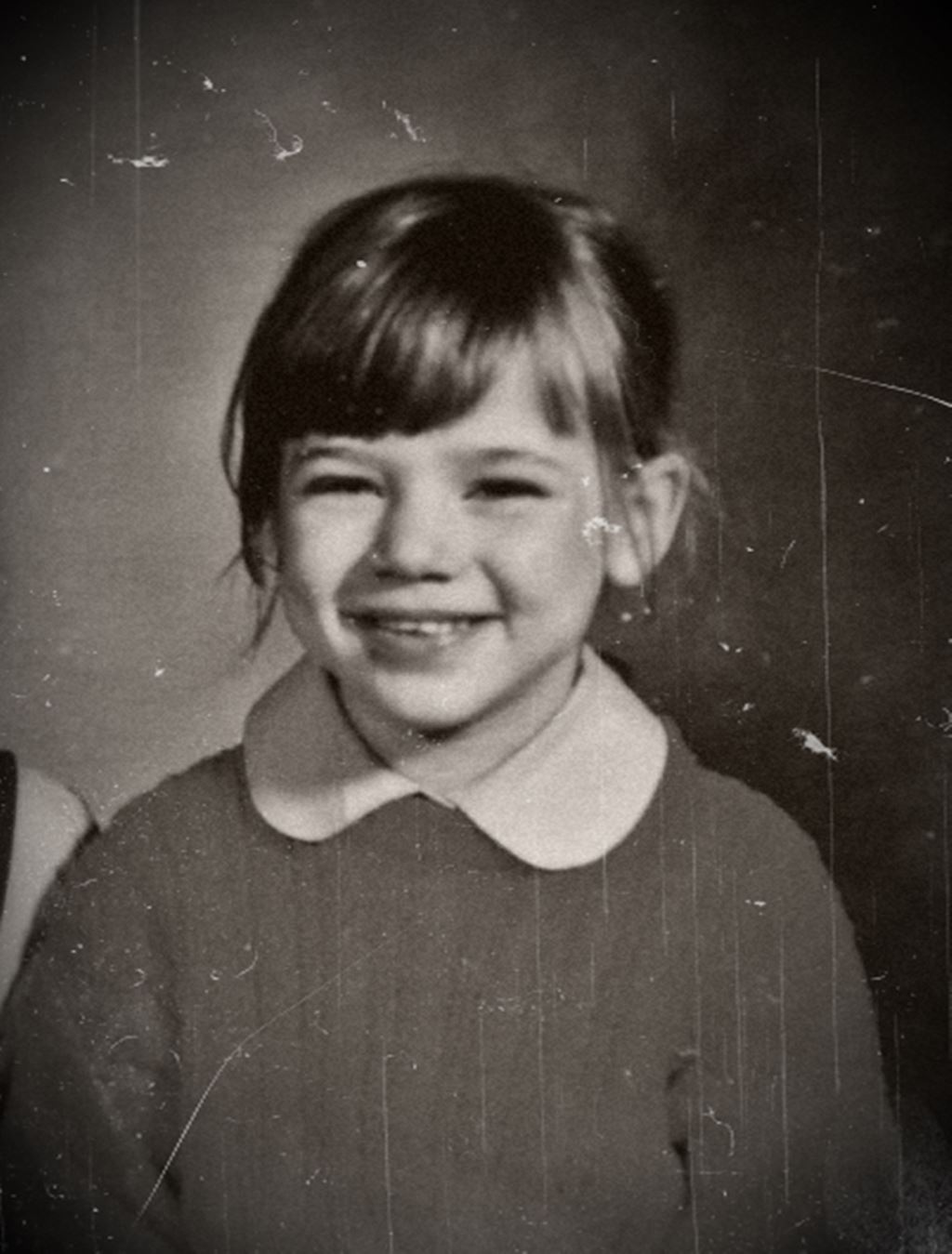
Seven-year-old Nikki Allan lived in the Wear Garths block of flats in Sunderland, northeast England, with her mother Sharon and her three sisters. On the evening of October 7th, 1992, the whole family was visiting Sharon’s parents, who occupied a residence in the same complex, only a short distance away from the Allan home.
At some time between eight-thirty and ten p.m., little Nikki decided she would like to go back to their own apartment. Though her mother Sharon normally wouldn’t allow the girl to walk there alone, the homes were so close together and the surrounding community so tight-knit that Sharon thought it would be all right just this once. She let Nikki set out for the one-hundred-fifty-yard trek to their own flat, and said she’d only be a few minutes behind.
True to her word, Sharon and the other three girls followed Nikki out the door only about ten minutes later. But by the time they arrived back at their home, Nikki had disappeared.
Police were called immediately, and neighbors fanned out in all directions, searching for the missing seven-year-old. The hunt continued all through the night and into the following day, when a chilling clue alerted searchers to Nikki’s location.
A party that included Nikki’s aunt noticed that a pair of child’s shoes had been placed neatly outside of the abandoned Quayside Exchange building, a derelict structure only about three-hundred yards from the block of flats where the Allans lived. When investigators entered the building, they found the body of Nikki Allan lying in a puddle of blood. She had been bashed in the head with a brick and stabbed thirty-seven times in the chest and abdomen.
Shortly after the appalling crime occurred, police seemed to have found their man: twenty-four-year-old George Heron, who had just moved to the Wear Garths flats a few months before and was staying with his sister. Numerous pieces of circumstantial evidence appeared to highlight his guilt: a knife found in his home was the same type as that used to kill Nikki Allan; blood spatter was discovered on his shoes; and more than one witness claimed they had seen George Heron in the nearby Boar’s Head pub on the night of the murder buying a bag of cheese and onion crisps, which were Nikki’s favorite snack.
In addition, George’s sister told authorities that when George had come home from the pub that night, he had gone straight up to the bathroom and had been in there washing for half an hour, which was unusual behavior for him. And some locals even alleged that George had been seen hanging around the Quayside Exchange building on more than one occasion prior to Nikki’s slaying.
George Heron was duly arrested and questioned, and though at first he said he had not gone to the Boar’s Head at all that night, and categorically denied having anything to do with Nikki Allan’s murder, after three days of intense interrogation, he finally buckled and confessed that he had killed the child.
His trial took place in Leeds, as it was believed that he would not receive a fair hearing in Sunderland. The judge immediately ruled that several of the police interview tapes—including the one containing Heron’s confession—were inadmissible, as Heron had not had a solicitor present at the questioning; the judge further opined that the police had used “oppressive tactics” and misrepresented the evidence they had in order to secure the confession from the suspect.
Moreover, there were some contradictory witness statements, and even people who claimed they had seen the killer on the night of the crime had given wildly differing descriptions of the man they saw, and most importantly had failed to pick Heron out of a lineup. Another witness later came forward and said that they had seen a man covered in blood in the neighborhood on the night of October 7th; this man also did not resemble Heron.
George Heron was eventually acquitted of the murder, much to the dismay of the Allan family and the community at large. Heron was later given a new identity and moved to a different location, due to the rancor that still festered in Sunderland. Nikki’s mother Sharon brought a civil lawsuit against him in 1994, which Heron did not show up to contest. Sharon was awarded seven-thousand pounds, but never received the money.
The tragic case then went dormant until 2014, when serial killer Steven Grieveson was arrested and questioned in connection with the murder. Though Grieveson—also known as the Sunderland Strangler—had been in the area at the time of Nikki’s death, he was thought to exclusively target young boys, and strangled them to death rather than stabbing them, though one of his known victims had been battered in the head in a similar fashion to Nikki Allan. Police ultimately dismissed his involvement, however.
In 2017, authorities announced that they had uncovered new male DNA relating to the case, and urged anyone involved in the investigation to come forward and have their own DNA tested in order to rule them out as suspects. And a year later, in April of 2018, police raided a house in Teesside and arrested an unnamed individual who they believed may have been linked to the case. As of this writing, however, there have been no further updates, and the murder of seven-year-old Nikki Allan is still an active inquiry.
 Crime Immemorial