

In California, in the spring of 1971, a teenage girl possibly went missing in a mysterious case that may or may not have been the bellwether of a terrifying series of murders of young, hitchhiking women that continued throughout the decade.

Seventeen-year-old Lisa Smith was thumbing a ride on Hearn Avenue in Santa Rosa, California on the early evening of March 16th, 1971 when she ostensibly vanished. Confusion later arose when it was reported in the media that a young woman using the name of Lisa Smith, who appeared to be about twenty-one years old, had been treated at Novato General Hospital for serious injuries sustained in a beating; this individual allegedly told hospital staff that she had been picked up by a motorist and assaulted at gunpoint. However, she left the hospital before authorities could interview her.
It remains unknown whether this Lisa Smith was the same girl as the one seen hitchhiking on March 16th, who was subsequently reported as a missing person by her foster parents. Though she has never come forward and her remains have never been found, she merits mention because she represents the first inkling of the set of slayings that would later come to be known as the Santa Rosa Hitchhiker Murders, a series that definitively began early the following year.

It was approximately nine p.m. on the evening of February 3rd, 1972, and twelve-year-old middle school students Maureen Sterling and Yvonne Weber had been enjoying themselves at the Redwood Empire Ice Arena in Santa Rosa when they decided it was about time to try to thumb a lift home, a method of transportation that many young people of the era didn’t even give a second thought to.
In the parking lot of the ice rink, the two girls were seen getting into a car. A later witness statement indicated that they had perhaps been speaking to a tall, thin man in his late teens or early twenties who had offered them marijuana, and in hindsight somewhat resembled serial killer Ted Bundy, but this report was not able to be confirmed with any certainty. Whatever the truth of the matter, what is known for sure is that the two girls subsequently vanished, though police treated them as runaways at first.
Unlike in the case of the earlier disappearance of presumed victim Lisa Smith from March of 1971, Maureen and Yvonne would eventually be found, but it would be nearly the end of the year before their fate was known.
A month after Maureen and Yvonne went missing, nineteen-year-old Kim Wendy Allen also vanished in Santa Rosa, apparently another casualty of the predator targeting young hitchhiking women in the area.
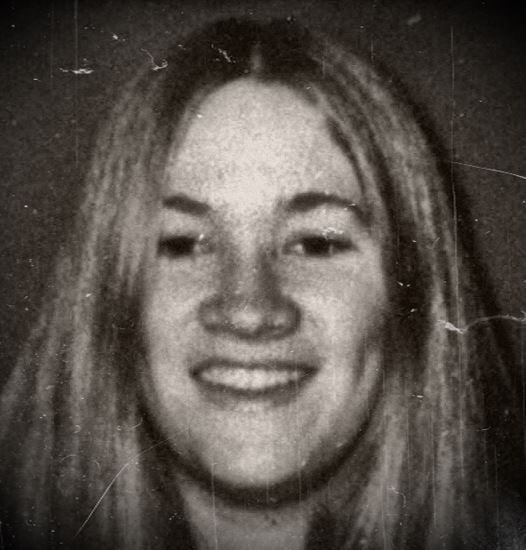
Kim was an art student at Santa Rosa Junior College, and also had a part-time job at Larkspur Natural Foods. On the afternoon of March 4th, 1972, she had got a ride from two men who dropped her off at the junction of Highway 101 and Bell Avenue at around twenty minutes past five p.m. She was last seen walking along the side of the highway, carrying a large wooden soy barrel with red Chinese characters on it.
The following day, Kim’s body was found in a dry creek bed off Enterprise Road in Santa Rosa. She had been bound at the wrists and ankles, raped, and slowly strangled with a cord. Authorities were able to collect a semen sample from Kim’s remains, and also recovered a gold hoop earring which may or may not have belonged to the killer. There was, additionally, a substance similar to machine shop oil found on the right side of her body.
Detectives further noticed a leg impression in the loam where Kim’s corpse lay, indicating that the killer had perhaps slipped while he was dumping her. Even more promisingly, twenty days after the remains were found, someone deposited Kim’s checkbook in a drive-up mailbox across the street from the post office in Kentfield, California. The checkbook yielded two fingerprints which might have been left by the murderer.
The two men who had given Kim a lift on March 4th and were apparently the last people to see her alive were extensively questioned by police, but subsequently cleared of suspicion. Kim Allen was therefore the first victim in the series of Santa Rosa Hitchhiker Murders whose remains were recovered.
But she would be far from the last. On April 25th, there would be an eerie repeat of Kim’s abduction, though in this instance, the victim’s body would never be found.
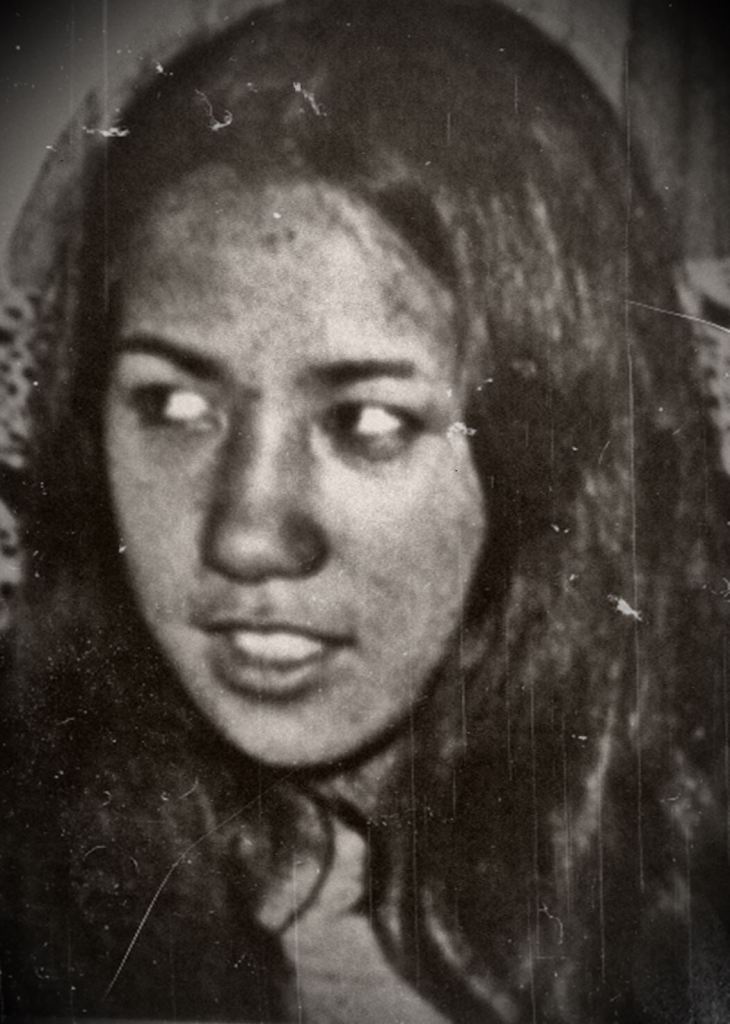
Twenty-year-old Jeanette Kamahele, also a student at Santa Rosa Junior College, was last seen hitchhiking on Highway 101, right near the Cotati on-ramp. According to a witness, Jeanette was spotted climbing into a faded, brown Chevy pickup driven by a white male in his twenties who sported an Afro. Jeanette was never seen again, and was assumed to have fallen prey to the perpetrator of the Santa Rosa Hitchhiker Murders.

Months went by, and autumn fell. Thirteen-year-old Lori Lee Kursa was having problems at home, and on November 11th, 1972, ran away from her mother while the two of them were grocery shopping at a U-Save Market. The eighth-grader was a habitual runaway, but her mother nonetheless reported her missing on the same day she took off.
On November 20th or 21st, Lori was spotted safe and sound at a friend’s house in Santa Rosa where she had been staying since running away from home. And ten days after that, a witness reportedly saw her hitchhiking.
But days later, another witness claimed to have seen the girl, who seemed impaired in some way, being pushed into a van on Parkhurst Drive by two men, one of whom was a white male with an Afro. Though the witness could not remember the exact date of this event, he thought it was at some point between December 3rd and December 9th. He said the vehicle containing Lori Lee Kursa had then sped off in a northerly direction on Calistoga Road.
Another eyewitness stated that he had seen a girl resembling Lori in the company of a white male with bushy hair driving a pickup truck, a similar description to the man who had allegedly been seen picking up Jeanette Kamahele, who had vanished on April 25th.
On December 14th, 1972, the frozen remains of Lori Lee Kursa were discovered in a ravine not far off Calistoga Road. She had not been raped, and cause of death was found to be a broken neck. The body had been tossed at least thirty feet down an embankment by the killer; alternately, Lori may have attempted to escape from the vehicle, and had fallen or been pushed from the van by her captors. The coroner determined that the girl had been dead for between one and two weeks, which closely aligned with the witness report of the time and place where she was last seen alive.
And two weeks after Lori Lee Kursa turned up dead, two more bodies were found in Santa Rosa. Pre-teens Maureen Sterling & Yvonne Weber, who had been missing since the previous February, were discovered lying sixty-six feet down an embankment off Franz Valley Road on December 28th. The skeletal remains provided police with no clue as to what had befallen the girls, and the only other evidence gathered from the scene was a gold cross necklace, a set of orange beads, and a single gold earring. No other items belonging to the girls, including their clothing, were ever recovered.
The year would end only days later, but more of the Santa Rosa Hitchhiker Murders were soon to come.
The summer months of 1973, in fact, would be gruesomely notable for the deaths of three more young women, who the FBI believes were all victims of the same assailant, perhaps the same person responsible for the other Santa Rosa Hitchhiker Murders.
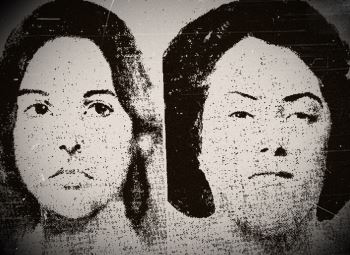
Twenty-year-old Rosa Vasquez, who worked at Letterman General Hospital on the Presidio in San Francisco, went missing on Saturday, May 26th, 1973. Three days later, she was found in some bushes several yards off the path in Golden State Park. She had been strangled.
On June 10th, in Bayview, the body of fifteen-year-old Yvonne Quilantang was discovered in a vacant lot. The teenager, who had been seven months pregnant and had left her home to go to the grocery store, had also been strangled.
On July 2nd, the body of sixteen-year-old Angela Thomas was found in Daly City, lying in the playground of Benjamin Franklin Junior High School. Unlike the other two victims of the Santa Rosa killer, she had been smothered to death. She had last been seen alive at the Presidio at nine p.m. on the evening prior to her murder. The only item found near her remains was a locket.
Whether this trio of slayings was connected or not, there would be several more of them in the surrounding area before the year was out.
On July 15th, less than two weeks after the remains of Angela Thomas were discovered, the nude and strangled body of twenty-four-year-old radiographer and Air Force veteran Nancy Gidley was found behind the gym of George Washington High School in San Francisco. The only item recovered from her nude body was a single gold earring shaped like a fish. According to witnesses, she had last been seen alive three days before, at a Rodeway Inn motel nearby.
As the inquiry into Nancy’s death progressed, investigators uncovered the troubling fact that Nancy had apparently lied to her family about the reasons for her journey to San Francisco from her home in Idaho, telling them that she was going there to attend a friend’s wedding. This detail proved to be false, though detectives were unable to determine why she had lied about her motives and what her true intentions for the trip had been. They also had few clues as to who had killed her and why.
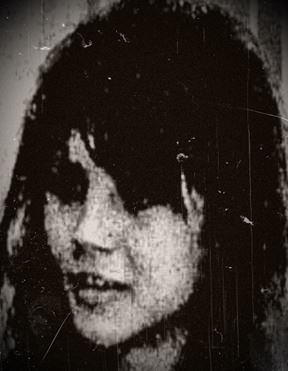
And shortly afterward, another young woman in the area would turn up dead. This time, it was twenty-two-year-old Nancy Feusi, last seen dancing at a Sacramento nightclub. She was found stabbed to death in Redding on July 22nd, 1973.
Later that month, there would be another victim that was definitively tied to the other Santa Rosa Hitchhiker Murders, by virtue of having last been seen thumbing a ride along the fateful Highway 101.

In an eerie replay of the disappearance and murder of thirteen-year-old Lori Lee Kursa, whose body had been found in December of 1972 after having been missing for several weeks, fourteen-year-old Carolyn Davis also began her grim march toward murder by running away from home.
Though she had left on February 6th, 1973, she had been staying with her older sister and then her grandparents in the same neighborhood in Garberville. Before absconding, Carolyn left a note for her mother stating that she never planned on returning home. During the ensuing five months, she reportedly had friends post letters to her mother from different cities, so that her mother wouldn’t be able to track her.
According to Carolyn’s older sister, Carolyn claimed to have witnessed a double murder in Shasta County, and was afraid that the killer or killers were looking for her. The sister didn’t quite believe this tale, but did note that Carolyn was clearly fearful and paranoid. At one stage, she hitchhiked to Illinois to visit her boyfriend, though she returned in time for her sister to give birth that summer. In early July, though, Carolyn told her sister that she was going back to Illinois, but was going to hitchhike south to Modesto, California first in order to visit some friends. Carolyn’s sister didn’t hear from her again after that point.
Carolyn was reportedly last seen alive on July 15th, 1973, after her grandmother dropped her off in front of the Garberville Post Office. Later that afternoon, witnesses reported seeing a girl fitting her description hitchhiking in Garberville, near the southbound ramp of Highway 101, a location only about two blocks from the post office. She subsequently disappeared.
Sixteen days later, on July 31st, the body of Carolyn Davis was found on Franz Valley Road, in almost the exact same spot where the remains of Maureen Weber and Yvonne Sterling had been discovered the previous December.
The coroner was unable to determine whether Carolyn had been raped, but one peculiar detail that made the crime stand out was that Carolyn had not been strangled or stabbed, but had rather been poisoned with strychnine at some point between ten and fourteen days before her body was found.
Even more ominously, an occult symbol made of twigs that was said to signify “carrier of spirits” was also found near her body. Though some investigators made much of this find, floating the possibility that the murder might be the work of the Zodiac, others believed the symbol was not related to the crime at all.
It remains unknown whether Carolyn Davis was killed by the same perpetrator as the previous Santa Rosa Hitchhiker Murders, and given the variation in the methods of killing among the other victims, it is a distinct possibility that several murderers were operating in the area at the time.
And more victims were soon to materialize. On November 4th, 1973, twenty-one-year-old Laura O’Dell went missing. Three days later, her body was found behind a boathouse in Golden Gate Park. Her hands had been bound behind her back, and she had been strangled to death, as well as sustaining severe head injuries.
The death of Laura O’Dell is considered a tangential crime to the Santa Rosa Hitchhiker Murders, and it remains unknown whether her death was related to the other homicides in the series.

Christmas of 1973 would feature yet another grim occurrence in Santa Rosa, the last instance of the Hitchhiker murders that year. On December 22nd, twenty-three-year-old Theresa “Terri” Walsh of Miranda, California was seen in Malibu, and it was believed that she was planning on hitchhiking to Garberville to visit her mother and son for the holidays. Unfortunately, the 25th would come and go with none of her relatives having any clue as to her whereabouts.
On December 28th, Theresa’s body was discovered partially submerged in Mark West Creek, more than four-hundred-fifty miles north of where she was last seen. She had been hogtied with a clothesline, raped, and then strangled. Authorities determined that she had likely been murdered very shortly after she was last spotted in Malibu on the 22nd, and that it was impossible to determine where exactly her body had been dumped, as recent flooding meant that the remains could have traveled several miles prior to being found.
Just as in the case of the other Hitchhiker murders, there were very few leads and even fewer suspects, and the homicide remains one of several linked and unsolved crimes in Sonoma County, California.
And a little more than a month later, another young woman perhaps fell victim to the serial killer or killers operating in and around Santa Rosa.
It was the evening of Thursday, January 31st, 1974, and nineteen-year-old Brenda Kaye Merchant was having dinner in the Marysville apartment she shared with her boyfriend George Stewart and her one-year-old son. Stewart left the apartment at around six p.m., after which Brenda went about her evening, cleaning up and getting into her nightgown to prepare for bed.
At around nine p.m., neighbors apparently heard raised voices coming from the direction of Brenda’s apartment, and the arguing was heard again several hours later, at approximately midnight
The following morning, which was a Friday, George Stewart returned to the apartment and found Brenda lying in a pool of blood in the corner of the living room. She was still clad in her nightgown, and had been stabbed more than thirty times. The one-year-old child was asleep in a crib in his room, unharmed.
Though Brenda had sustained numerous wounds from a long-bladed knife, the cause of death was actually found to be asphyxiation: Brenda had literally suffocated to death on her own blood.
While Brenda’s murder is usually tied in with the other Santa Rosa Hitchhiker murders, it is unclear whether she was killed by the same assailant as the more “canonical” hitchhiking victims. The FBI, however, has stated that they believe she was murdered by the same killer responsible for the deaths of previously discussed Santa Rosa victims, such as Rosa Vasquez, Angela Thomas, Nancy Gidley, and Laura O’Dell.
This killer, whoever he was, would strike again in fall of 1974. This time the victim was fourteen-year-old Donna Braun, whose nude and strangled body was spotted floating in the Salinas River near Monterey by the pilot of a crop-dusting plane on September 29th, 1974. She had last been seen by her mother, leaving their Salinas home at two in the morning on September 27th.
An investigator working on the Donna Braun case speculated that she had perhaps been a runaway, and had been killed by three men she had been associating with, because she expressed a desire to be taken back home. It does not appear that this line of inquiry has yielded any progress, however, and a serial killer has not been ruled out.
Months later, two families would have an agonizing holiday season after their teenaged daughters both went missing on a pleasant weekend afternoon.

It was December 16th, 1978, and fifteen-year-old Kerry Graham was planning a shopping trip with her best friend and next-door neighbor, fourteen-year-old Francine Trimble. The girls lived in Forestville, California, and on that Saturday afternoon, they were heading to the Coddingtown Mall in Santa Rosa to buy Christmas gifts for their families. Neither of them returned home.
The Trimble family reported Francine missing within twenty-four hours of her disappearance, though for some reason, the Grahams waited until Christmas Eve before filing a report for their daughter Kerry. Investigators theorized that this discrepancy might have been due to Kerry having allegedly run away from home before, and indeed, police were initially operating on the assumption that both girls were runaways, as there was no sign of struggle at the Trimble household, where the girls had last been seen alive.
However, there were some strange aspects to the case that suggested a more sinister scenario, even from the beginning. Neither of the girls had taken any of their personal belongings with them to the mall, and this included not only cosmetics and other similar items, but also Kerry’s prescription medication; the teenager had recently had her appendix removed, and was still recovering from the procedure.
Furthermore, according to a friend of the girls named Eileen Goetz, Kerry and Francine hadn’t actually been planning on going to the mall as they had claimed, and instead had met her on the grounds of El Molino High School and smoked a few cigarettes before telling Eileen that they were going to hitchhike to a party in Santa Rosa.
Whatever the truth of the matter, both families feared that their daughters had been kidnapped, and desperately clung to any hope of finding them alive, even seeking the aid of a psychic at one point. But it would be well into 1979 before any hint of the whereabouts of the two girls was uncovered.
And before that occurred, another casualty of the Santa Rosa Hitchhiker Murders would be discovered, though this victim has sadly never been identified.
On July 2nd, 1979, a set of skeletal remains was recovered from a ravine off Calistoga Road in Santa Rosa. Though cause of death could not be established with any certainty, it was clear the young woman had been murdered, for she was found hogtied, and her arm had been broken at around the same time as her death. Incidentally, her remains were found only about a hundred yards away from the spot where the body of thirteen-year-old Lori Lee Kursa had been dumped back in December of 1972.
As the skeleton had obviously lay undiscovered for several years, detectives at first believed that it might prove to be the remains of twenty-year-old Jeannette Kamahele, who disappeared in April of 1972 after having last been seen hitchhiking on Highway 101. However, a comparison of dental records ruled this theory out, and the identity of the victim is still unknown.
The Jane Doe is believed to be between sixteen and twenty-one years old, standing about five-foot-three, with reddish-brown hair. Neither weight nor eye color could be determined, and no clothing was found with the body. The victim had broken a rib that had healed prior to her murder, and also wore hard contact lenses that she kept in a metal candy tin with cherries on it. Authorities believed she had been murdered sometime between 1972 and 1974.
And on July 8th, only six days after her unidentified remains were found in Santa Rosa, two more bodies would be discovered nearly a hundred miles away, in Mendocino County.
Though the identity of the two victims was uncertain for many years, in 2015, DNA evidence finally confirmed that the remains were those of fifteen-year-old Kerry Graham and fourteen-year-old Francine Trimble, who had vanished in December of 1978 after leaving Francine’s Forestville home to ostensibly go shopping at a mall in Santa Rosa.
Kerry and Francine may have been murdered by the same individual responsible for some or all of the other Santa Rosa Hitchhiker Murders, and they are considered the last in the series to be found.
Suspects in the series of slayings include a handful of well-known serial killers, including Ted Bundy, the Zodiac, and Hillside Stranglers Ken Bianchi and Angelo Buono. In the specific case of Francine Trimble and Kerry Graham, serial killers Rodney Alcala (aka The Dating Game Killer), and Gerald and Charlene Gallego have also been considered persons of interest.
Zodiac suspect Arthur Leigh Allen, in fact, seemed a promising candidate for the Santa Rosa Hitchhiker Murderer: he owned a mobile home in Santa Rosa at the time the murders occurred, and he was a known child molester. Additionally, he was an avid collector of chipmunks and enjoyed studying the species, and according to one Santa Rosa County sheriff, most if not all of the Hitchhiker Murder victims were found with chipmunk hairs on their bodies. Allen died in 1992.
Forty-one-year old Fredric Manalli, a creative writing teacher at Santa Rosa Junior College, was also considered a suspect, as sadomasochistic drawings of victim Kim Allen, who was a former student of his, were found among his belongings after his death in a car accident on August 24th, 1976.
And in 2022, DNA linked serial rapist Jack Bokin to an unsolved 1996 murder in California’s wine country, at which point he became another person of interest in the Santa Rosa killings. Bokin died in prison in December of 2021.
Whether all the victims were slain by the same killer or killers remains to be seen, and at this stage, the case is still a frustrating puzzle that law enforcement has yet to solve.
 Crime Immemorial
The Department of Justice in a 1975 report based on analytical studies of the Santa Rosa Hitchhiker Murders and other young girls and women in the Golden State, known to do this dangerous ritual- hitchhiking- were fallen victims to one perpetrator doing these horrible things. I suspect there were at least two or more men who were involved with half of these murders. Not all because some of the women were badly tortured and sexually assaulted during or before the culprit raped them then strangulated. This by saying that, somewhere in rural Sonoma County, two people killers crossed paths nearly the same year. As one was an masochist sexual deviant picking up women in their 20s, and the other, choose young girls as his prey as in Yvonne Weber and Maureen Sterling, both 12 and 13 years of age. In any case , let’s hope the victims families get some piece of closure. Btw, Keep up the good work on your blog.