
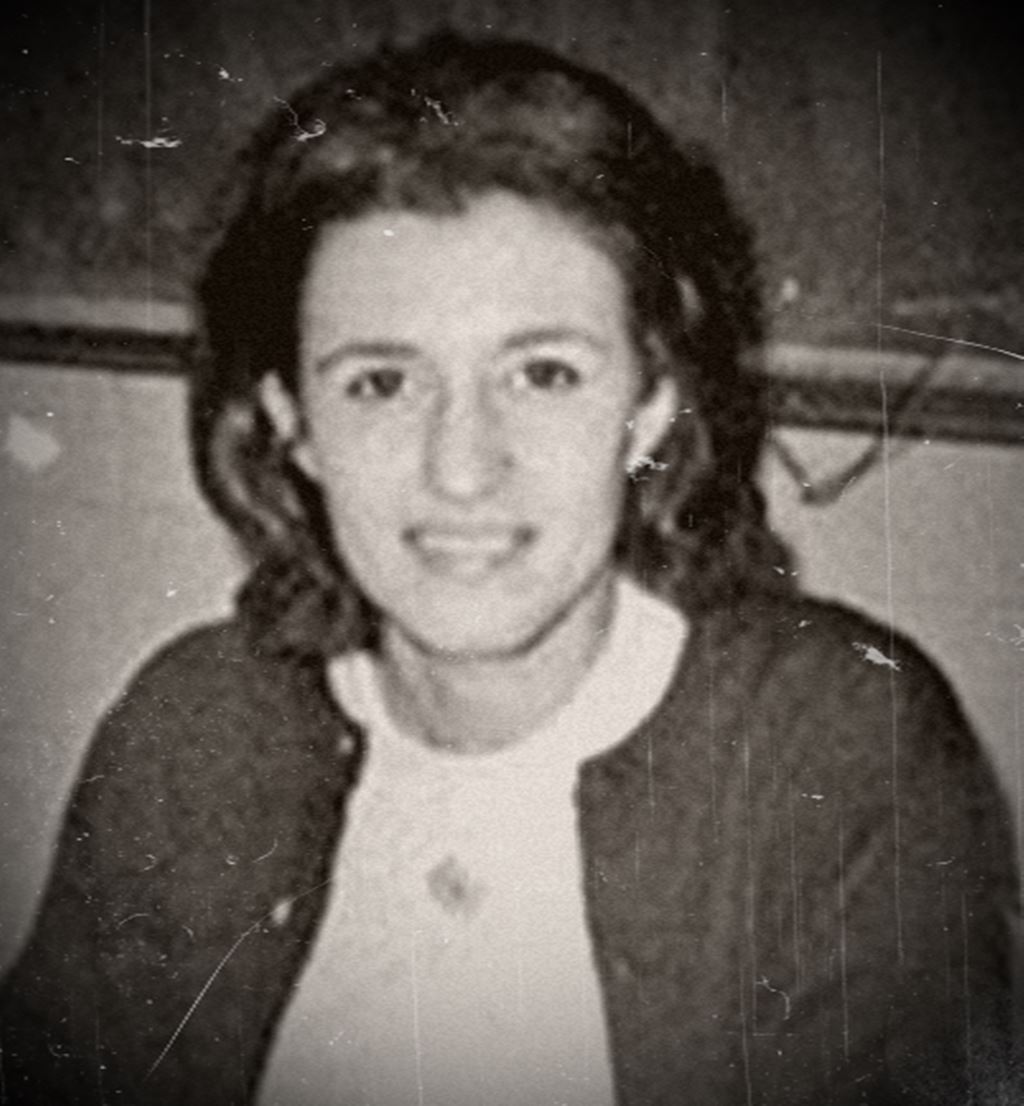
In the summer of 1969, a young teacher would mysteriously vanish, and although her remains would not be discovered for nearly thirty years, her suspected killer had possible links to at least one other case already mentioned on this site.
Twenty-nine-year-old Luella Blakeslee, an avid world traveler and an alumnus of both the University of New Hampshire and the prestigious Sorbonne in Paris, taught French at various schools around her home state before finally moving back in with her father in Hooksett, New Hampshire after her mother died. Once settled back in her childhood home, she took a job as a French teacher at a private school called Derryfield, in the town of Manchester.
Significantly, Luella was the English tutor of eleven-year-old Debra Horn, who had—as discussed earlier—gone missing from her Allenstown home on January 29th.
For the past several months, Luella Blakeslee had been dating a local unemployed carpenter by the name of Robert Breest, Jr. But according to family members, Luella had been thinking about breaking things off with him, as he had something of a violent nature and was attempting to pressure her into marriage, which she was definitely not ready for, and especially not with Breest. She had even been considering moving overseas, ostensibly to get away from him.
Worst of all, she had begun to have even more intense feelings of disquiet about Breest after police had come to the Derryfield school where she worked to question her about Breest’s possible involvement in the disappearance of Debra Horn. A later search of Luella’s possessions uncovered several newspaper clippings detailing the investigators’ interviews with Breest, as well as a diary in which she extensively noted her concerns about him.
On July 4th, 1969, however, it seemed that Luella had consented to go on a date with Breest, and left her father’s home in the early evening. The couple was seen leaving a bar in Queen City at a few minutes before midnight.
When Luella’s father returned home from his own outing at around eleven-thirty p.m., he noticed that Luella’s red Volkswagen was parked in the driveway, but that Luella herself was not home. He didn’t think much of it, assuming that Robert Breest had picked her up, and that the pair was out somewhere celebrating the Independence Day holiday.
However, when morning came and Luella was still nowhere to be found, her father George called the police and reported her missing.
Over the ensuing days, detectives sought to discover some trace of where Luella Blakeslee could have gone, but everywhere they turned, they came up empty. Shortly after her disappearance, Robert Breest was questioned, but claimed that she had never showed up for their date, a statement which seemed to conflict with witness accounts that placed both Luella and Robert in Queen City at midnight on the night of July 4th.
Though investigators did not have enough evidence to charge Breest, he was arrested only a month later for a separate incident in which he allegedly sexually assaulted an unnamed twenty-year-old French woman who was vacationing in New Hampshire. These charges were later dropped after the victim refused to return to the United States to testify, and after Breest consented to be committed to the New Hampshire State Hospital.
Years later, though, Breest was eventually tried and convicted in the 1971 murder and attempted rape of eighteen-year-old Susan Randall, who was beaten to death and thrown off a bridge into the Merrimack River in Concord, New Hampshire. Breest received life in prison, and though he continued to deny his involvement and made several appeals, even soliciting the help of the Innocence Project at one point, later DNA evidence definitively linked him with Susan Randall’s death, and all of his challenges were summarily dismissed.
Finally, in May of 1998, a pair of joggers happened upon a set of skeletal remains in Hopkinton, New Hampshire. Months later, the body was positively identified as Luella Blakeslee. Though the remains were too degraded to obtain a concrete cause of death, the coroner ruled that Luella had been the victim of “homicidal violence.”
Robert Breest remains the prime suspect in the murder.
 Crime Immemorial