
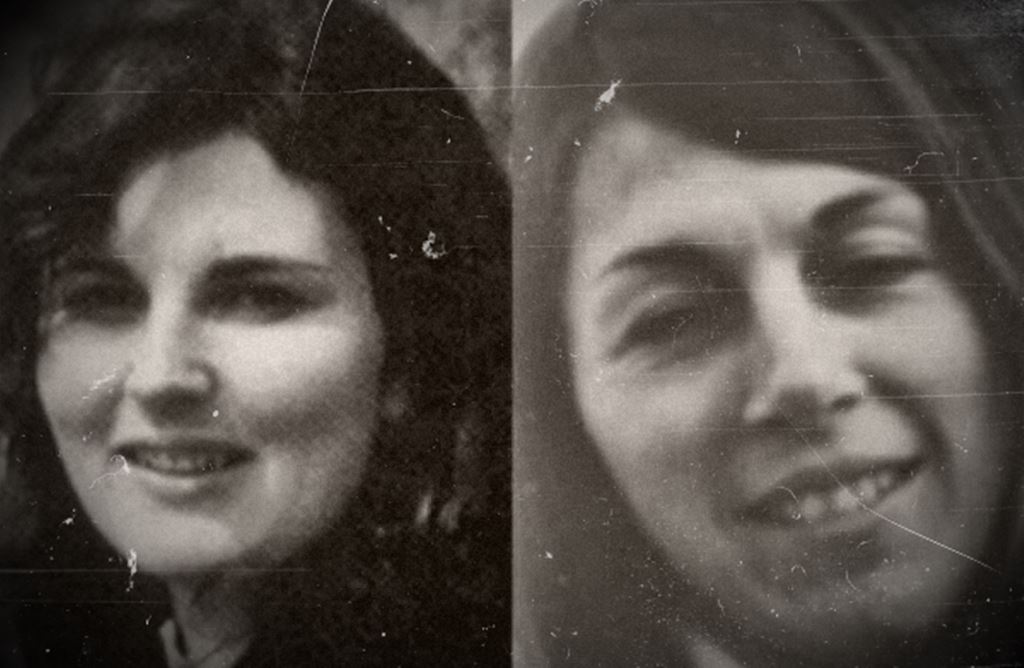
Collingwood was, in 1977, a fairly safe, working-class suburb of Melbourne, Australia, and it had seemed the perfect place for longtime friends and roommates—twenty-eight-year-old high school teacher Susan Bartlett and twenty-seven-year-old mother Suzanne Armstrong—to maintain a house and raise Suzanne’s sixteen-month-old son Gregory.
On the evening of January 10th, Susan’s brother and his girlfriend stopped by the house at 147 Easey Street to spend some time with Susan, Suzanne, and Gregory. It was apparently a pleasant visit, and the four of them made plans to all have dinner together sometime later in the week. But after the visitors left, another individual entered the home, and this time, the motive was murder.
The following day, Suzanne’s boyfriend Barry Woodard called the house, but received no answer. He wasn’t alarmed at first, but after he made repeated calls over the course of January 11th and into January 12th, he decided to drop by the Easey Street house to see what was what. He entered through the back door and called out for the women, but heard no sound, and assumed that they had gone out. He wrote a note to Suzanne telling her to call him, left the note on the kitchen table, and left.
In the meantime, neighbors had also noted that the puppy belonging to the two women had been wandering around the streets. One set of housemates—Ilona Stevens and Janet Powell—took the puppy in, and left a note on Susan and Suzanne’s front door informing them where their dog was.
On January 13th, these same neighbors heard the sound of a baby whimpering coming from 147 Easey Street, and thought they had better go investigate. Finding the back door unlocked, just as Suzanne’s boyfriend had the day before, they entered the residence, and immediately smelled blood. In fact, the entire hallway was awash with it, and a woman lay dead on the floor. A panicked Ilona Stevens retrieved the crying Gregory from his cot, and then ran back to her own home with her roommate to contact the authorities.
When police arrived, they discovered the body of Susan Bartlett lying face down in the hallway, having been stabbed over fifty times. Suzanne Armstrong was found in her bedroom, naked from the waist down. She had been raped, and stabbed more than two dozen times. Investigators surmised that Suzanne had been attacked first after the killer had climbed in through her unlocked window, and then Susan was killed when she attempted to come to her friend’s aid. Gregory, who had not been hurt, had been lying in the house alone since the two women were murdered, presumably on the night of January 10th.
Detectives also found bloodstains in the home’s bathroom, and a blood-stained towel on the sofa in the front room, indicating that the killer had cleaned himself up before leaving the scene of the crime. The knife that had been used as the murder weapon was later discovered near the Victoria Park Railway Station, and a thorough search of the surrounding area produced a bloody washcloth and shawl that had been thrown into a drain only two blocks from the Easey Street house.
In the aftermath of the crime, Gregory was adopted by Suzanne Armstrong’s sister, as the child’s biological father was a Greek citizen who Suzanne had met on a trip there some time before, and still lived in his native country. Though Gregory’s father was initially considered a suspect, he was quickly eliminated, as he had never set foot in Australia.
Suzanne’s boyfriend Barry was also suspected, but likewise dismissed, and later DNA evidence exonerated him definitively.
Investigators also briefly looked into a neighbor, artist Steve Cox, who was interested in the case and subsequently produced a series of artworks based on it, but it seems that no solid evidence linked him to the murders either.
By far the most popular theory surrounding the so-called Easey Street Murders connects them with the 1975 disappearance of American tourist Julie Garciacelay, who was working as a library assistant in Melbourne in July of that year when she vanished. According to sources, Julie was last seen at her own flat in the company of three men, one of whom was a known criminal by the name of Rhys “Tommy” Collins. The other two men have never been publicly named, though one is referred to as a journalist who coincidentally lived next door to Susan Bartlett and Suzanne Armstrong.
Investigators found it strange that the journalist claimed that Julie had simply gone out to make a phone call and never returned, while the other man gave apparently conflicting statements to police about where he had been at the time of the disappearance. Further, though Julie’s body was never found, the day after she went missing, her sister discovered a bloody towel and a pair of bloody underwear in Julie’s apartment.
Later DNA evidence, however, seemed to rule out the journalist’s involvement, and Rhys Collins died in 1998 without ever being formally charged. A link between the Easey Street Murders and the disappearance of Julie Garciacelay has never been established, and the murders of Susan Bartlett and Suzanne Armstrong are still unsolved, though Melbourne authorities are still offering a one-million-dollar reward for information leading to a resolution of the case.
 Crime Immemorial