
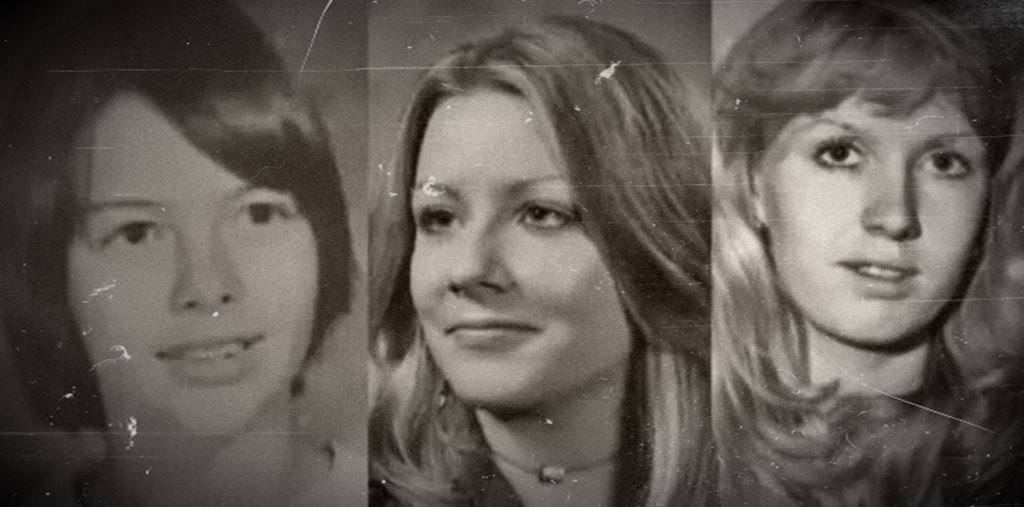
In the summer of 1971, a young teenager would go missing and later turn up murdered, the first casualty of a short series of possibly related homicides whose victims have come to be known as the Waverly Three.
It was Sunday, June 13th, 1971, and fourteen-year-old Valerie Lynn Klossowsky had been spending Sunday having a picnic with her friend LuAnn Hicks near her residence in Waverly, Iowa. She made her way home in the late afternoon to the house she shared with her father, grandmother, and two sisters.
A little while later, another friend named Cindy Newgren dropped by and asked Valerie if she wanted to go swimming at the city pool, located only a half-mile from Valerie’s home. Valerie agreed and set out with Cindy. As Valerie left the house, her grandmother told her to be home by nine.
Shortly afterward, though, Cindy arrived back at the Klossowsky home carrying Valerie’s swimsuit and towel, but ominously, Valerie was not with her. Cindy told Valerie’s grandmother that when they had arrived at the swimming pool, Valerie had seen some people she knew outside and had stopped to talk to them, telling Cindy to go on inside and she would be right behind her in a few minutes. But Valerie had never come inside, and when Cindy went back out to see where she was, she found Valerie’s towel and swimsuit, but Valerie herself was nowhere to be seen.
Strangely, later witness reports alleged that Valerie had been seen standing on a street corner near the home of her friend LuAnn Hicks at around eight-thirty p.m., but where she had gone after that was anyone’s guess. LuAnn had reportedly not seen Valerie since the end of their picnic earlier that afternoon.
When Valerie failed to return home by ten p.m., her father reported her disappearance to the police.
On the morning of Tuesday, June 15th, two boys walking along a creek bank near Denver, Iowa came across the nearly naked body of Valerie Klossowsky, which had been dumped off a bridge approximately ten miles from where she was last seen. An autopsy determined that she had been strangled with such savagery that her larynx was fractured. Though media reports did not specify whether she was raped, the only clothes that remained on the body had been pushed up around her shoulders, suggesting a sexual motive.
Leads were troublingly scarce, and there was little to no evidence to indicate who had abducted and murdered the teenager. The only nebulous clues investigators had were two reports of prowlers that had been seen in the Waverly neighborhood where Valerie lived; one of these reports had been logged on June 5th, more than a week prior to Valerie going missing, while the second report was generated on the Monday following her disappearance. This prowler, however, was never identified.
And nearly five years after Valerie Klossowsky was murdered, the town of Waverly would be haunted by two more eerily similar homicides that hinted at the presence of a serial murderer lurking in the small Midwestern town.
Late November of 1975 would mark the beginning of a missing persons and eventual murder investigation that would serve as the second crime in the so-called Waverly Three.
Eighteen-year-old Julie Ann Benning was a bright, creative, independent Iowa farm girl who loved to sing and make her own dresses, and dreamed of working for a radio station. Her parents couldn’t afford to send her to college right away, so after graduating high school in June of 1975, she decided to move to Waverly and find a job, not only so she could eventually attend college, but also so she could afford to have surgery to fix a “lazy eye” that had bothered her since childhood.
Jobs were fairly scarce in downtown Waverly, particularly for a recent high school graduate with no job experience, but Julie was eventually able to find work as a cocktail waitress at an upscale strip joint called the Sir Lounge. Her family was rather shocked at her choice of employment, especially since Julie had always been active in the church, but Julie herself was simply trying to make some money, though in her diary she complained of customers offering her money for sex, which she always refused, and stated that her job had made her very leery of people in general.
On Thanksgiving, which fell on November 27th that year, Julie was spending the holiday with her family on their Plainfield farm. She was scheduled to work later that night and the following night as well, and even though her mother thought she should call in sick and spend another day relaxing and recovering from the feast, Julie was a conscientious employee, and went back to Waverly that evening, where she was staying with her aunt and grandmother to be closer to her job.
On Friday, November 28th, 1975, Julie Ann Benning was seen on Bremer Street in Waverly, walking to the Sir Lounge. Some reports state that Julie was later seen at a nearby shoe store at around five p.m.; other reports claim that she was spotted getting into a vehicle.
According to the manager of the Sir Lounge, Jean Weston, Julie never arrived at work for her Friday night shift. Weston reported to the media that she was not alarmed at first, believing perhaps that Julie had decided to spend some extra time with her family, but that after Julie failed to show up on Saturday night, she phoned Julie’s parents to ask where she was.
However, other employees and customers of the Sir Lounge dispute this assertion, claiming that Julie showed up for work as usual on Friday night, though it’s not clear if she was present for her entire shift. What is known with absolute certainty, however, was that November 28th was the last day that Julie was seen alive.
On either Friday or Saturday, someone at the Sir Lounge contacted the Benning family and informed them that Julie was a no-show, and her parents and siblings immediately reported her disappearance to police. They also began a thorough search of the surrounding area, and went on television and the radio to make public pleas for any information as to her whereabouts.
Despite all their efforts, however, Julie failed to appear, and it would in fact be several more months before her fate was discovered.
On March 18th, 1976, a maintenance worker discovered a set of nude and decomposed remains in a ditch not far from Shell Rock, Iowa. Upon examination, these remains proved to be those of Julie Ann Benning, who authorities determined had been strangled to death and then crammed into a nearby culvert. The body had apparently stayed in the culvert all winter until the spring thaw swept it out to the ditch where it was eventually found. Unfortunately, the body was far too badly decayed to determine whether Julie had been sexually assaulted.
Since Julie had been such a friendly, outgoing young woman who seemingly had no enemies and no particular romantic attachments, police were baffled as to who would have a motive to kill her. The only remotely controversial incident in her recent past had been an editorial she had penned for her high school newspaper, in which she pleaded mercy for people convicted of crimes, encouraging a rehabilitative rather than a punitive model of criminal justice. Though the essay had been published only six months before her death, it hardly seemed a significant enough reason for someone to target her.
Detectives also suspected that Julie might have been killed by the same offender responsible for the June 1971 murder of fourteen-year-old Valerie Klossowsky, who had also been strangled and whose body was found near a creek not far from Denver, Iowa.
Months later, another similar crime in the same area would strengthen the hypothesis that Julie Ann Benning, as well as Valerie Klossowsky, had been victims of a serial killer roaming the streets of northeastern Iowa. Who this shadowy figure was, however, was still anyone’s guess.
On Sunday, September 5th, 1976, nineteen-year-old Marie “Lisa” Peak ended her summer vacation and arrived back on the campus of Wartburg College in Waverly, where she was due to begin her sophomore year, majoring in journalism. Like Julie Ann Benning, who had been found murdered less than six months before, Marie was a popular young woman with many friends and no enemies.
On the Monday following her arrival, Marie told a few friends that she was planning to spend the afternoon shopping, but by the time night had fallen, she had failed to return to her dorm, and her friends became concerned and contacted police.
At around eleven a.m. on the morning of Tuesday, September 7th, Marie’s dead body was found in a ditch just north of Waverly’s city limits. The area where her remains were found lay only six miles from where the body of Julie Ann Benning had turned up the previous March, and like that earlier victim, Marie was also found nude and likely strangled. She had also been sexually assaulted, and her neck was broken.
Because the circumstances surrounding the slayings of Marie Peak and Julie Ann Benning were so similar, police were operating under the assumption that both young women had been killed by the same assailant. Likewise, they suspected that fourteen-year-old Valerie Klossowsky was an earlier victim of the same offender.
However, in the case of Marie Peak, it’s possible that another motive lay behind her brutal death. According to authorities, Marie had actually been involved in giving evidence against a forty-year-old used car salesman named John Joseph Carmody, Jr., who was later convicted of rape and extortion in a wide-ranging scheme he devised whereby he would blackmail women into sex by telling them that he had Mafia connections and would have them killed if they said no. The FBI determined that Carmody had no link to the Mafia, but had sufficient evidence to put him in prison for forty years.
Marie Peak, a journalism student, had reportedly been working on a book about the Carmody case with another writer named Chuck Offenberger, and according to Offenberger, Peak had received several death threats from women of Carmody’s acquaintance.
Whether Marie Peak’s murder was related to her journalistic activities or whether she was the victim of a random sex maniac is still not clear. Her body was exhumed in 2010 in the hopes that her killer’s DNA might be extracted from her remains, but sadly, the body was too degraded to produce any new evidence.
The case remains open.
 Crime Immemorial