
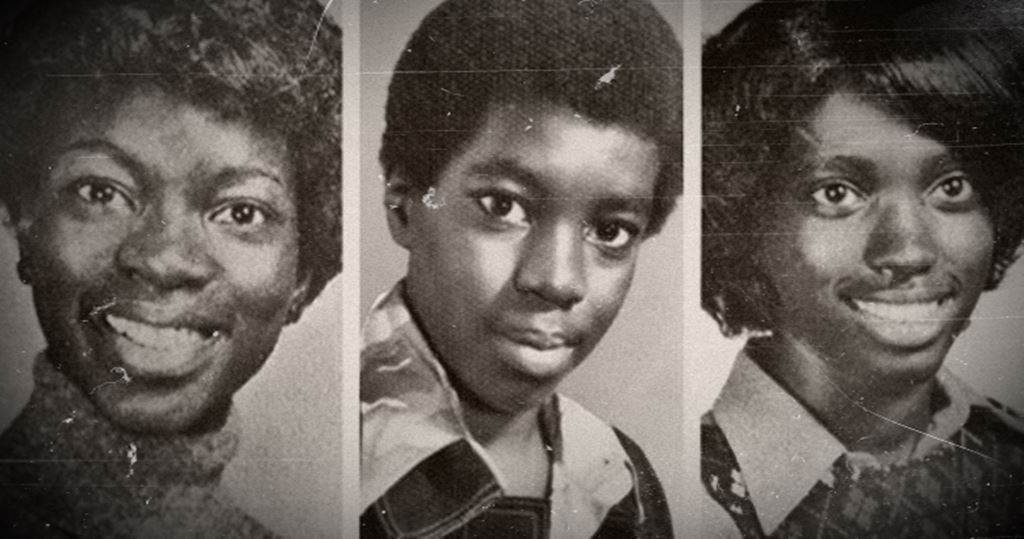
In early December of 1975, in New Jersey, the shocking massacre of nearly an entire family would leave a community reeling.
The Diggs’ were one of the first black families to move into the previously all-white suburb of Teaneck, New Jersey, an upper-middle class enclave housing many erstwhile New Yorkers. Patriarch Wesley Diggs owned four successful taverns, including one in Harlem called Diggs Den, and had recently moved his wife and children into a spacious, well-appointed home away from the hustle and bustle of Manhattan. In spite of widespread racial tensions in the United States at the time, it seems that the Diggs family was immediately accepted into the neighborhood.
Thirty-nine-year-old Jean Diggs worked part-time selling Avon, not only to supplement her husband’s income, but also to have something to focus on while Wesley spent up to eighteen hours a day working at his bars. The couple had four children living at home: nineteen-year-old Audrey, sixteen-year-old Allison, twelve-year-old Wesley Jr., and five-year-old Roger.
At approximately four p.m. on Saturday, December 5th, 1975, Wesley Diggs arrived home from work, and immediately knew that something was wrong; the house was deathly quiet. Upon investigation, Wesley discovered his daughter Audrey lying in a pool of blood on the floor of her bedroom. She had been shot five times in the head with what appeared to be a .22 caliber automatic pistol.
Wesley Diggs ran next door to fetch his neighbors—one of whom was a nurse—frantically yelling at them to call an ambulance because Audrey was hurt. When the neighbors arrived at the Diggs’ home, however, they found that not only was Audrey already dead, but the rest of the family had also been gunned down in cold blood.
Allison Diggs had been shot twice in the head in her attic bedroom. Roger and Wesley Jr. had likewise been shot multiple times in the room they shared. And Wesley’s wife Jean was found in the basement recreation room, having been shot once in the head and once in the chest.
Clearly, robbery had not been the motive for this wholesale slaughter; the home had not been ransacked, and there was no sign of forced entry. It also appeared that the family members might have known the shooter or shooters, as none of the victims evidenced any hint that they had struggled, and all had been shot where they sat. Police eventually recovered seventeen .22 caliber shell casings from the scene.
Wesley Diggs was extensively questioned about the murders to determine whether he had any involvement. He easily passed a polygraph test, however, and seemed so distraught that authorities thought it unlikely that he had been responsible for killing his family or hiring someone to do it for him. Wesley Diggs also petitioned then-president Gerald Ford to bring the FBI in on the investigation.
The tavern Wesley owned, though, might have had some link with the execution-style murders, and investigators looked into several possible leads and related crimes along those lines. Detectives theorized that the Diggs family massacre could have been connected to another homicide which occurred on December 10th: that of known heroin dealer Stanley Morgan. Morgan had been gunned down by two assailants wielding .22 caliber weapons at New York’s Shalimar Lounge, a bar only a mile from Diggs Den.
Perhaps even more to the point, an eighteen-year-old burglary suspect named Darryl Scullark had been shot dead at the Apollo Theater in Harlem on December 5th, and it came to light that Scullark had been kicked out of Diggs Den only a short time before, after participating in an altercation on the premises.
Speculations also arose that the Diggs family might have been the victims of a mob hit, perhaps engendered through some hypothetical shady dealings with Wesley Digg’s tavern businesses. It was also possible that the family was targeted because of their race, as it was not unheard of for successful black people to be victims of violence perpetrated by envious white men or rival business owners.
Whatever the motive, the quintuple homicide of Jean Diggs and her four children is still unsolved, nearly half a century later. Wesley Diggs passed away in 1987 without ever knowing who murdered his family.
 Crime Immemorial