
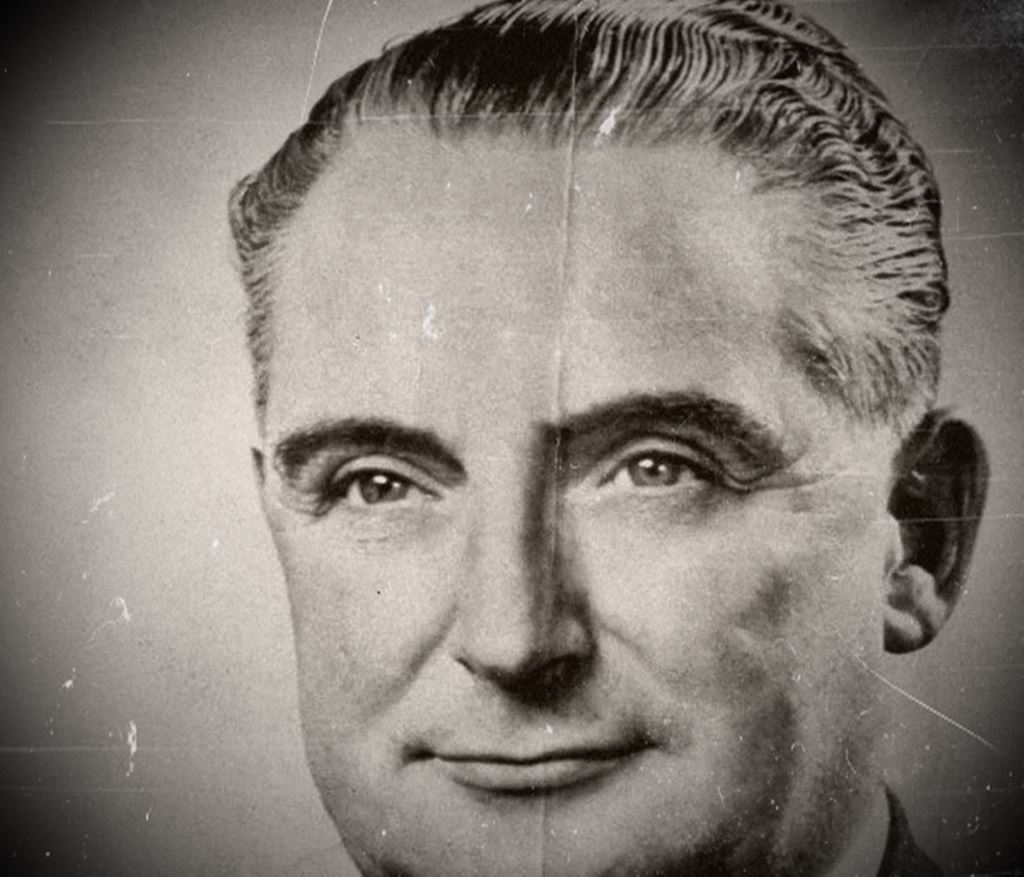
In the late winter of 1966, in Edinburgh, Scotland, fifty-five-year-old businessman David McMenigall was dining alone at the trendy L’Aperitif restaurant, a place to see and be seen among the city’s creative elite. David, who came from somewhat humble beginnings, had worked his way up as an appliance salesman before eventually starting his own successful refrigeration company, which had made him quite a wealthy man. He was known as something of a fixture around Edinburgh, mingling with the upper crust and often spotted with a rotating series of beautiful women on his arm.
At around nine-thirty p.m. on the evening of February 23rd, David finished his meal at L’Aperitif and left the establishment, heading back to his bungalow on Glasgow Road in Corstorphine.
The following morning, David’s housekeeper reported to work as usual, but was soon to discover that the day was going to be anything but routine. David McMenigall was lying dead in his front room.
Several skull fractures suggested that the victim had been bashed in the head multiple times with a blunt object, though a thorough search of the house and grounds by police officers turned up no obvious murder weapon.
It appeared that robbery might have been at least a partial motive, since an engraved signet ring and a few other items were found to be missing, though David’s brand new Mark 10 Jaguar remained untouched in the driveway.
It was determined shortly after the murder that another unusual item stolen from the home—a silver pony emblem from the hood of a Ford Mustang—had actually been used to kill David McMenigall. David, a car enthusiast, had apparently saved the horse as a keepsake of his previous vehicle. The silver pony has yet to be found.
Authorities pursued a few tenuous leads, including witness accounts of a black Hillman Minx sedan seen in the area at around the time of the slaying, and the alleged sighting of a man in a nearby park who had asked a dog walker for directions, but neither of these clues resulted in a break.
As the inquiry progressed, it was determined that David’s home had also been robbed on one prior occasion, on Christmas Day of 1965. The perpetrator of that burglary, eighteen-year-old John Wills, had stolen some articles of clothing and a few bottles of liquor. Wills was convicted of the robbery in March of 1966, but was never able to be linked to the killing of David McMenigall.
In 2012, the unsolved murder was placed on the docket of a new cold case unit established in Scotland, though as of this writing, no further developments in the investigation have occurred.
 Crime Immemorial
One thought on “David McMenigall”