
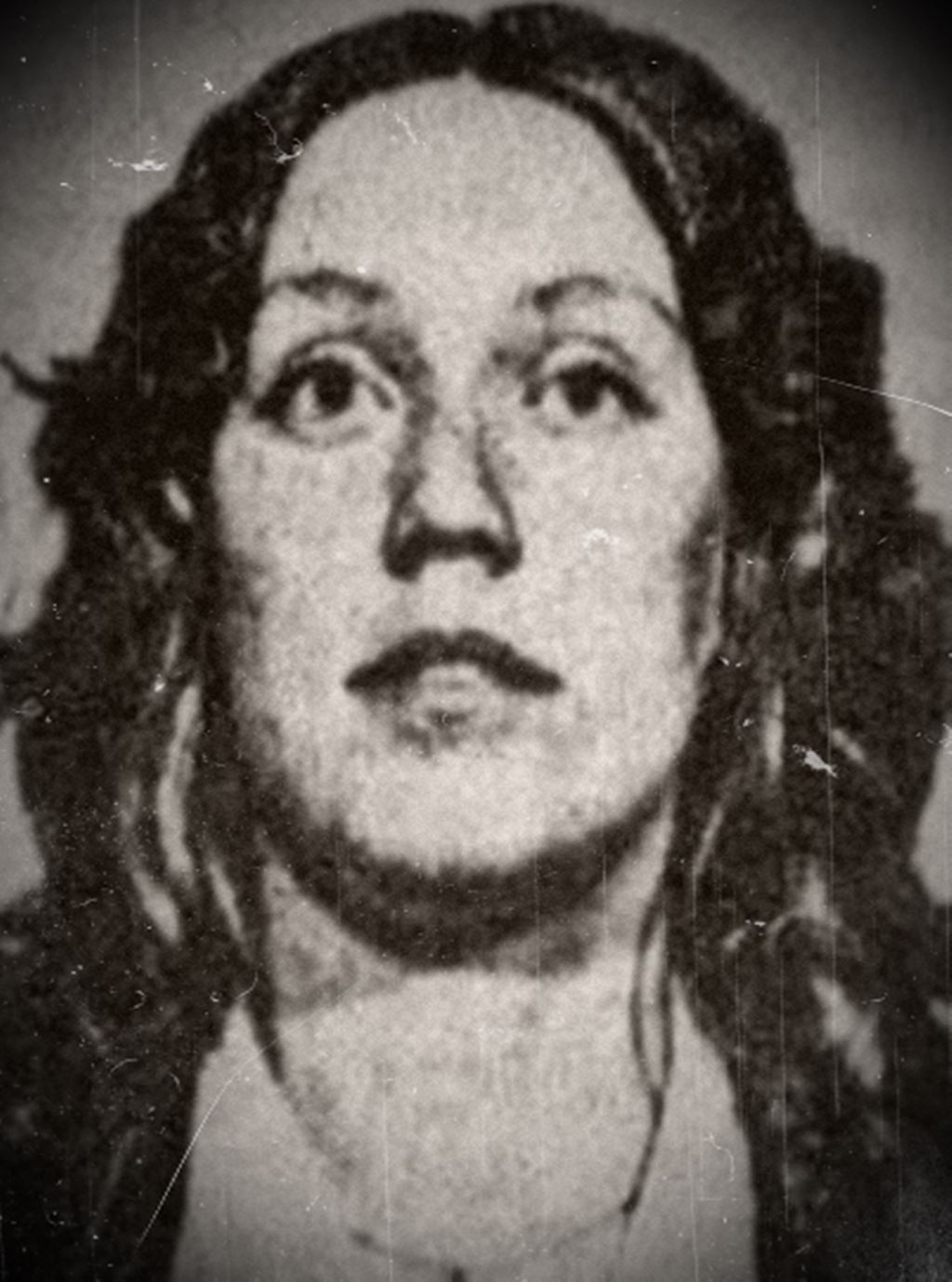
It was July 10th, 1976, and twenty-year-old Debra Bennett had just been evicted from her apartment in Madison, Wisconsin. She had only been living there for about seven months, having moved from her native Ridgeway, but apparently she had failed to come up with the rent, and neighbors saw her packing up her things and leaving the building on Loftsgordon Avenue that evening. Witnesses noted that she was barefoot and carried a denim jacket and a brown leather purse.
Later that night, Debra rented a room at the Cardinal Hotel in downtown Madison, paying for a week in advance. Eleven days later, on June 21st, Debra’s brother became alarmed that he hadn’t heard from her, and went to police to report her missing.
Coincidentally, on the very same day, two surveyors who were working in a rural area outside of Cross Plains discovered a badly burned body lying in a ditch. The remains turned out to be those of Debra Bennett.
Because of the charred state of the corpse, authorities were unable to determine cause of death, though they did establish that the body had likely been set on fire with accelerant on the spot where it was found. The coroner estimated that the victim had died approximately ten days previously.
Recovered from the area close to the body were several cans and bottles, and a distinctive striped bed sheet. The location of the remains was known locally as something of a party area, where young people would go to drink and do drugs away from the prying eyes of law enforcement. According to friends, Debra was known to experiment with drugs herself, but it was unclear whether this had contributed to her death.
In an eerie footnote to the case, Debra’s room key from the Cardinal was anonymously mailed back to the hotel three weeks after her body was identified. Detectives were never able to confirm whether the key had been sent by the killer, or whether a random individual had simply found it and mailed it back as a courtesy.
Tragically, Debra’s father, who had been suffering from a long illness, passed away only days after his daughter’s remains were found. The family was convinced that her death hastened his own, and both father and daughter were buried at a joint funeral.
To this day, it has never been conclusively verified whether Debra was the victim of a homicide, or whether she died accidentally in the presence of an individual who then burned her remains, perhaps to discourage identification so that a link between suspect and victim could not be made. More than four decades later, the case remains a mystery.
 Crime Immemorial