
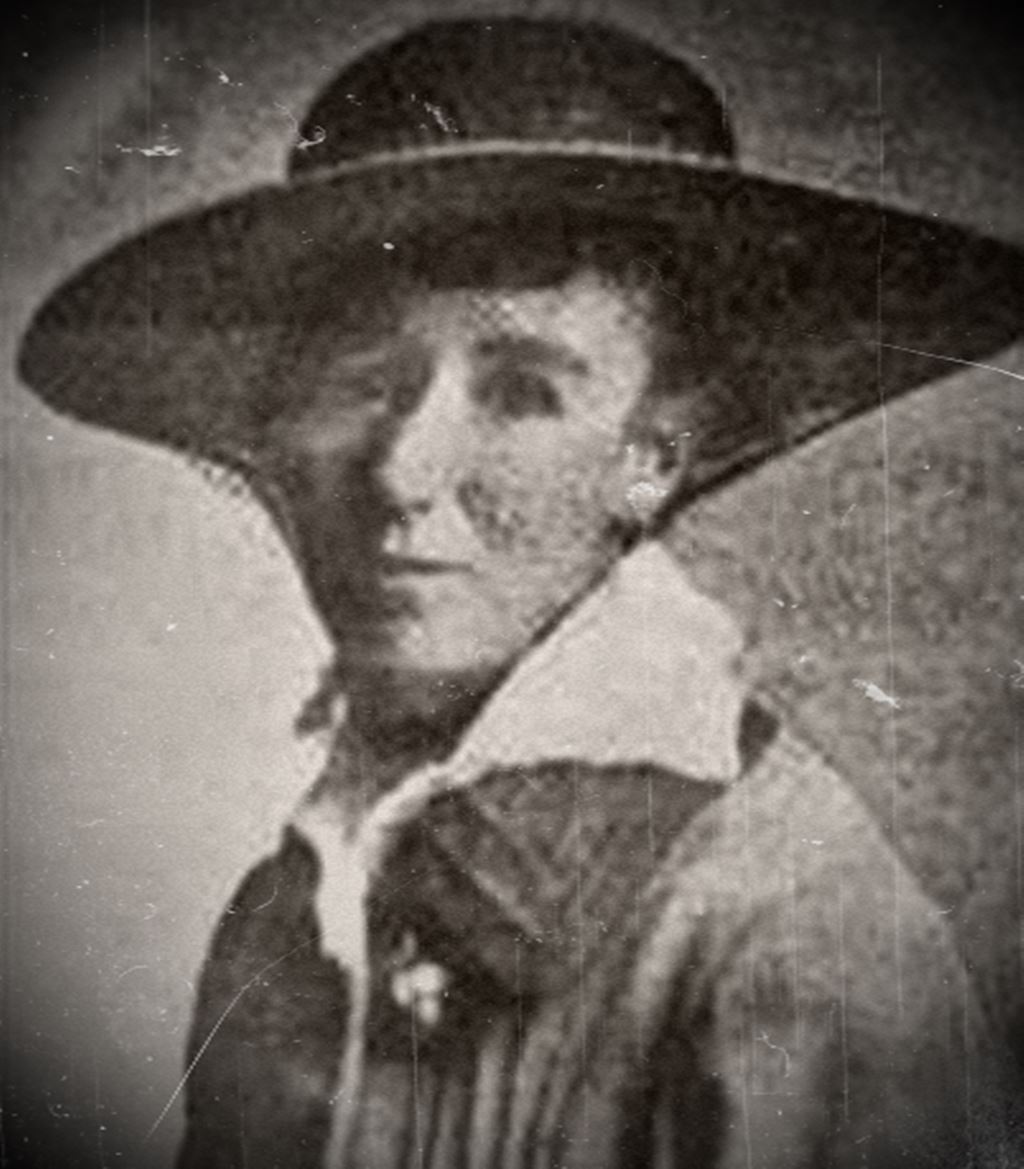
In the summer of 1919, Mabel Greenwood lived in a comfortable house in Kidwelly, Carmarthenshire, in southwest Wales. Her husband Harold was a solicitor, originally from Yorkshire, and the couple had four children.
On June 16th, Mabel was feeling under the weather and started complaining of stomach pains after eating gooseberry pie and a glass of wine for lunch. She didn’t seem overly concerned initially, as she stated that gooseberries always disagreed with her, and she was generally in poor health overall. Harold gave her some brandy, but then she began to vomit. Her condition seemed to deteriorate as the day went on, and finally, Harold summoned a physician to the house, Dr. Griffiths.
Unfortunately, in the early morning hours of June 17th, 1919, Mabel Greenwood passed away. The doctor listed her cause of death as heart disease, and Mabel was buried as normal, with seemingly nothing sinister about the death at all.
However, only a few months after Mabel died, her husband Harold married a much younger woman named Gladys Jones, and the townsfolk were scandalized, especially since Mabel had been such a beloved and active member of the local community. Rumors began to circulate that Harold had perhaps killed his wife to clear the way for him to remarry.
The gossip reached such a fever pitch that the police became involved and proposed exhuming Mabel’s body. Harold had no objections, so the deed was carried out.
According to the medical examiner, Mabel’s body contained a significant amount of arsenic, but no evidence of the heart disease that had supposedly killed her. As Harold Greenwood had been the only person with Mabel when she began feeling ill, and as it was further discovered that he had purchased some weedkiller containing arsenic not long before Mabel died, he was arrested in June of 1920, almost a year to the day from the time of his wife’s death.
At the trial, Harold’s solicitor, Sir Edward Marshall Hall, was able to demonstrate that the medication administered to Mabel Greenwood by Dr. Griffiths may have been the cause of her death and hammered home the point that the doctor’s story about the exact drugs he had given her had changed over time. Further, he was able to demolish the testimony of a parlormaid, who finally admitted that she had also changed her story several times and had been largely influenced by the police officers who interviewed her.
When Harold Greenwood himself took the stand, he held firm in his conviction that he was innocent of murder, and his testimony remained unshaken over several hours of cross-examination. Lastly, the Greenwoods’ daughter Irene attested that she had also drunk from the same wine bottle that was alleged to be the source of the alleged poisoning and had suffered no ill effect from it.
Given the evidence, the court concluded that Harold Greenwood was not guilty of the murder of his wife. Although they were satisfied that arsenic had been administered to Mabel, they were unable to determine if it had been introduced to her system accidentally or deliberately, if it had indeed been the cause of her death, and who had given it to her in any case.
Harold Greenwood changed his surname to Pilkington and moved to Herefordshire with his second wife. He died peacefully in 1929, and the death of his wife remains an unsolved mystery.
 Crime Immemorial