
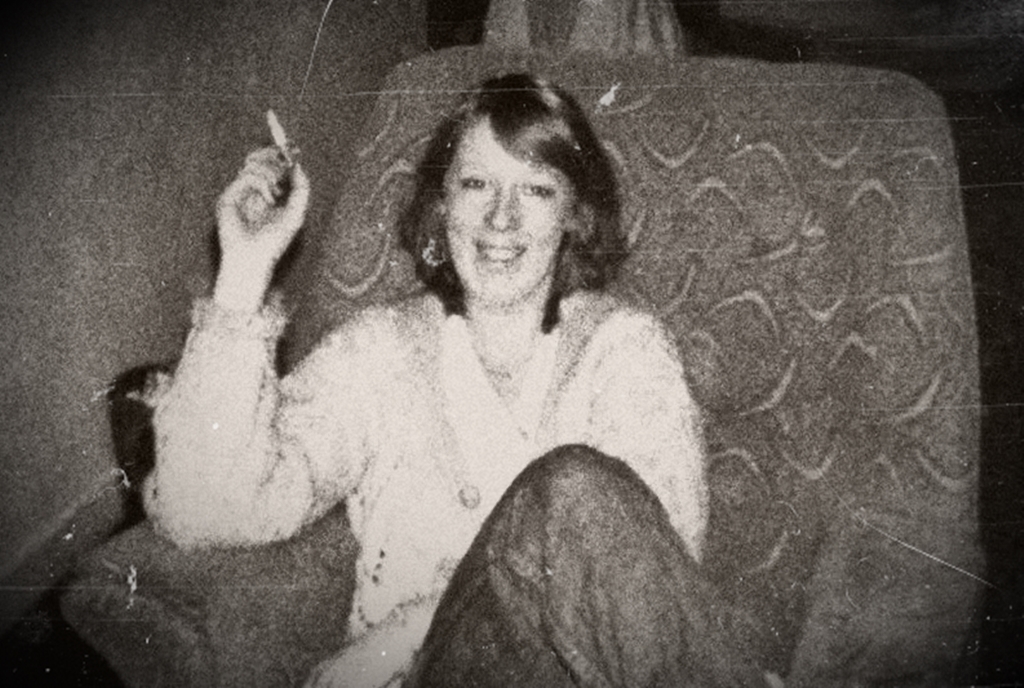
Twenty-four-year-old Sally Shepherd worked as a restaurant manager at the Young Vic Theatre in London, and lived on Staffordshire Street in Peckham, near the bus depot. On the night of November 30th, 1979, she spent some time with friends in Essex, then picked up some Indian takeout and boarded a bus for home. In the early hours of December 1st, she got off the bus and began the short walk back to her residence. Tragically, she never made it there.
The following day, her body was found in a builder’s yard behind the police station. It appeared that she had been grabbed by her assailant and dragged through a wire fence; her leather boots were still caught up in the wire.
Sally had been stripped, raped, and then beaten to death; from the extent of the injuries, which included several broken ribs and a damaged spine, it was determined that she had been stomped on. The food she’d been carrying was splattered all over the scene, as was a copious quantity of blood.
Upon questioning witnesses, it came to light that a bus driver had seen a white Ford Cortina with a dark patch of primer on it parked near where Sally had disembarked; the driver also stated she saw a man running away from Staffordshire Street.
Many years later, in 1991, police arrested a fifty-five-year-old man in connection with the crime, but no charges were ever brought. And in 2013, a retired police officer named Chris Clark called for the investigation to be reopened, theorizing that notorious Yorkshire Ripper Peter Sutcliffe may have been responsible for Sally’s brutal murder. Sutcliffe was a truck driver who was known to be in London at the time of the slaying, and he was very familiar with the Peckham area. The method of murder, particularly the dragging and the beating, was also very similar to what was seen in Sutcliffe’s confirmed victims. Despite this promising lead, Sutcliffe was never investigated in conjunction with Sally’s death; he died in prison in 2020.
In 2016, authorities announced that they were looking into Sally’s case once again, confirming that they were attempting to use new advances in DNA technology to re-examine three hairs found at the scene. The hairs had initially been all but useless because they had no roots, and though more could be done with this evidence in the modern era, investigators remained cautious, as they didn’t want to use up the samples during testing.
There have been no new developments in the case since then, but detectives are hoping the murder of Sally Shepherd will soon be solved.
 Crime Immemorial