
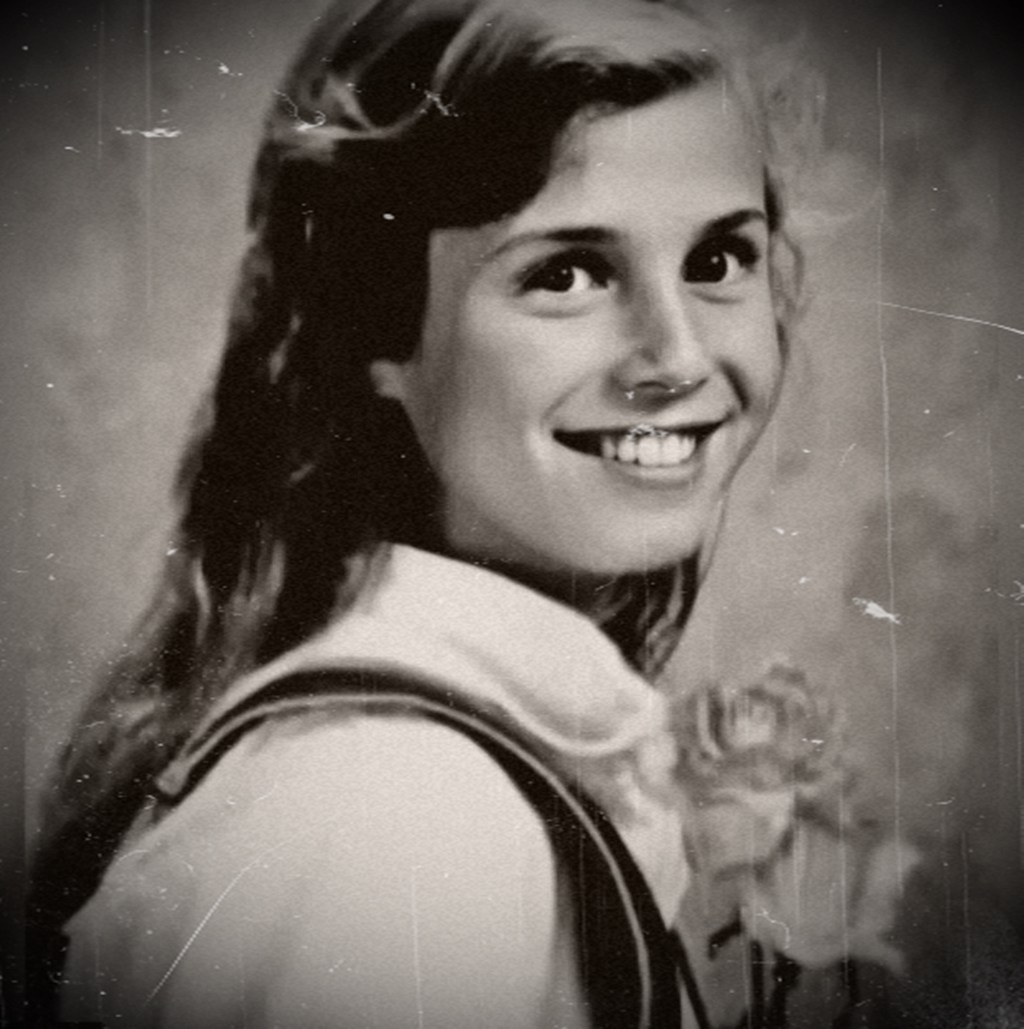
It was Labor Day weekend of 1990, and the Sousa family—thirty-six-year-old single mother Lora, her thirteen-year-old daughter Leah, and her nine-month-old son Michael—had just returned from a vacation to their home in Cumberland Beach, Ontario, Canada. Leah was preparing to start high school when the new week started, but sadly, she would never get the chance.
Just after midnight on September 1st, an intruder broke into the family’s home by smashing the glass of a back door window. He then proceeded into the bedroom, where he beat Lora into unconsciousness with a blunt object. Baby Michael was also in the bedroom but left unharmed in his crib.
The attacker then went into the living room, where thirteen-year-old Leah was sleeping on the couch. The man savagely raped the girl, then dragged her outside into the backyard and beat her to death with what was believed to be a length of pipe or a tire iron. Her bloody, battered body was found the next morning by a school friend.
Lora survived the assault, but her head injuries were severe, and she had no recollection of what the killer looked like. Investigators attempted hypnosis and even truth serum, but the memory could not be dislodged.
The only significant forensic evidence found at the scene was a bloody print from a man’s size nine or ten shoe, most likely a Nike leather court or tennis shoe.
While some detectives believed the family must have known the attacker, others weren’t so sure, though most agreed that the perpetrator likely was very familiar with the area, and might have been aware that Lora lived alone with her two children.
One suspect who came to law enforcement’s attention early on was Brian Elson, a young man whose grandmother lived down the street from the Sousas. Only four months after Leah’s murder, Elson stabbed a seventeen-year-old girl named Sandra Bannister to death at a party, and received six years in prison. He was questioned extensively in the Leah Sousa case, but denied involvement, and has never been charged.
In his 2014 book A Viable Suspect, retired Ontario Provincial Police Sergeant Barry Ruhl puts forward the theory that Leah Sousa was murdered by a serial killer who was also responsible for several other killings in the area spanning from 1959 to 1992. This suspect, whom Ruhl refers to as “Larry Talbot” in his book, is supposedly the same man who broke into Ruhl’s own home in 1971 and attacked his fiancée. Ruhl thankfully interrupted the assault, but the assailant fled and was never caught.
The pseudonymous serial killer was allegedly a traveling salesman who traveled frequently around Ontario but died before he could be thoroughly investigated for any of the crimes he was suspected of committing.
Leah’s mother Lora Sousa published her own book in 2015, called Poetic Justice: The Search for Leah’s Killers, in which she hypothesized that perhaps the assailant may have been looking for her brother, who was a drug dealer. It’s not clear how seriously police took this possibility, however.
The crime was one of the most brutal and shocking ever committed in Ontario, and tragically it remains unsolved.
 Crime Immemorial